
Quick answer: Microcement is a decorative cement-based coating applied in thin layers, typically 2 to 3 mm thick, that creates seamless, joint-free floors, walls, countertops, stairs and furniture. Its main benefits are a continuous surface with no grout lines, a thin profile that can often go over existing tiles without demolition, water resistance when sealed properly, and custom colours and textures. It suits homes, bathrooms and kitchens as well as retail stores, clinics, salons, offices and hospitality spaces.
This guide answers three practical questions: what microcement does well, which surfaces it can go on, and which kinds of projects it is right for. Each section points to a real Colortale project or a deeper guide where you need more detail.
What Is Microcement?
Microcement, also written micro cement, is a decorative coating made from cement, polymers and natural pigments. It is trowelled by hand in thin layers over a stable base and then sealed. Because it bonds to most stable substrates, including tiles, wood and concrete, it can often be applied over an existing surface instead of replacing it.
It is not the same as micro concrete repair mortar sold by the bag, and it is not a structural layer. If you are comparing the two, read micro cement vs micro concrete.
Benefits of Microcement
The benefits below come from how the material is made and applied. Each one matters more in some rooms than others, so read them against your own project.
1. A Seamless, Joint-Free Surface
Microcement forms one continuous surface with no grout lines. Rooms look calmer and larger, and there are no joints to collect dirt, which makes everyday cleaning simpler.
2. A Thin Profile That Suits Renovation
At typically 2 to 3 mm, it can often go over sound existing tiles after a surface check, usually without changing door heights or breaking up the old floor. See micro cement over existing tiles for when this works and when it does not.
3. Water Resistance When Sealed Properly
Sealed correctly, microcement is highly water resistant, which is why it is used in bathrooms, showers and kitchens. The decorative layer still needs a sound, correctly waterproofed build-up underneath in wet areas.
4. One Finish Across Many Surfaces
The same finish can run from the floor up the walls, across a vanity or countertop and onto stairs or furniture. That continuity is hard to achieve with tiles, which need different formats and trims for each surface.
5. Custom Colours and Textures
Colour, texture and sheen are chosen per project, from smooth to cloudy and from matte to satin or gloss. Warm greige, sand and clay tones work well alongside timber and brass. Explore the options in microcement colours and textures.
6. Consistent Material Quality
Colortale micro cement is 100% imported from Italy and applied by Colortale across India, so the system and the team stay consistent from sample to handover.
What to Weigh Up Before You Choose It
A balanced decision also looks at the limits:
- It depends on a stable base. Structural cracks, loose tiles or flexing boards can show through as fine lines.
- It is hand-applied in several layers, so it takes longer than laying tiles and needs a skilled applicator.
- Repairs mean re-coating a zone rather than swapping a single piece.
- A smooth sealed floor can be slippery when wet, so textured finishes are used in wet areas.
- It needs regular care to keep the finish looking its best.
For the full picture, read microcement disadvantages and microcement maintenance.
Where Can Microcement Be Used?
Microcement can be used on almost any stable surface, inside and out. The table below maps the common surfaces to what each one needs.
| Surface | Why microcement works here | Read more |
|---|---|---|
| Floors | Continuous flow across rooms with no grout lines | Micro cement flooring guide |
| Walls and feature walls | Depth and texture without joints | Microcement walls |
| Bathrooms and showers | Water resistant when sealed properly, floor to shower wall in one finish | Bathroom solutions |
| Kitchens and countertops | Matching worktops, splashbacks and floors | Microcement kitchen countertops |
| Stairs | The floor finish continues up treads and risers | Staircase solutions |
| Furniture | Tables, benches and built-ins that match the room | Microcement furniture |
| Exterior walls, terraces and balconies | Weather-resistant micro cement render for facades | Outdoor renovation |
Ceilings can also be finished in microcement where the design calls for one material wrapping the whole room. Whatever the surface, the base must be sound, clean, dry and stable before the first coat. The step-by-step process is in how microcement is applied.
What Kind of Projects Can Microcement Be Used For?
Microcement suits Indian homes, offices and hospitality spaces, and it is especially useful where a project needs one calm surface across a lot of square footage. These Colortale projects show the range. You can see more on our micro cement page.
Residential and Mixed-Finish Interiors
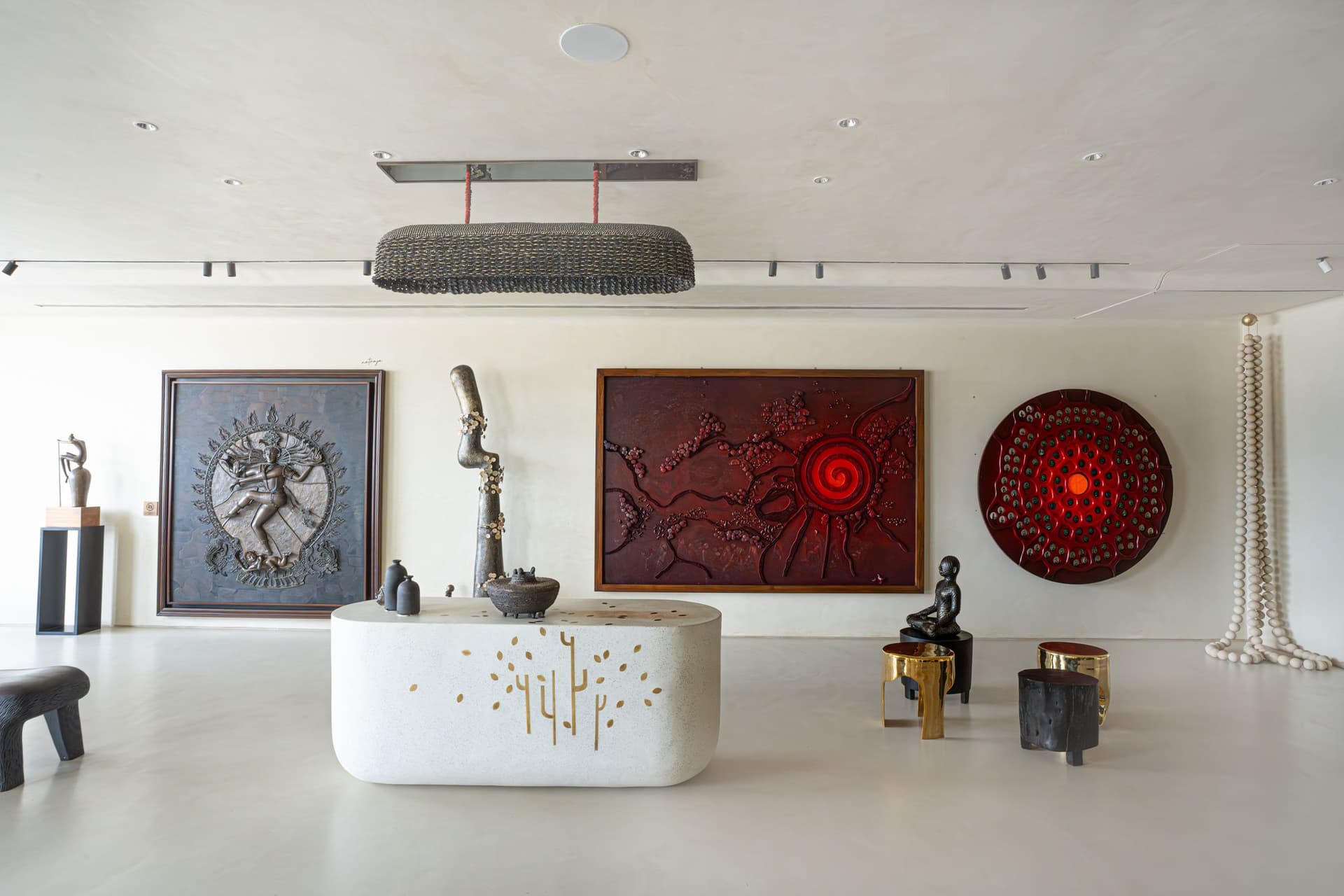
At Takshini, New Delhi, a seamless Cemento floor gives uninterrupted flow across the room while Carrara covers the walls and ceiling and a bespoke Pastellone table with brass inlays sits at the centre. A quiet floor lets the walls and furniture lead.
Homes and apartments are also where the renovation benefit matters most: a sound tiled floor can often be refinished without demolition.
Retail Stores and Showrooms
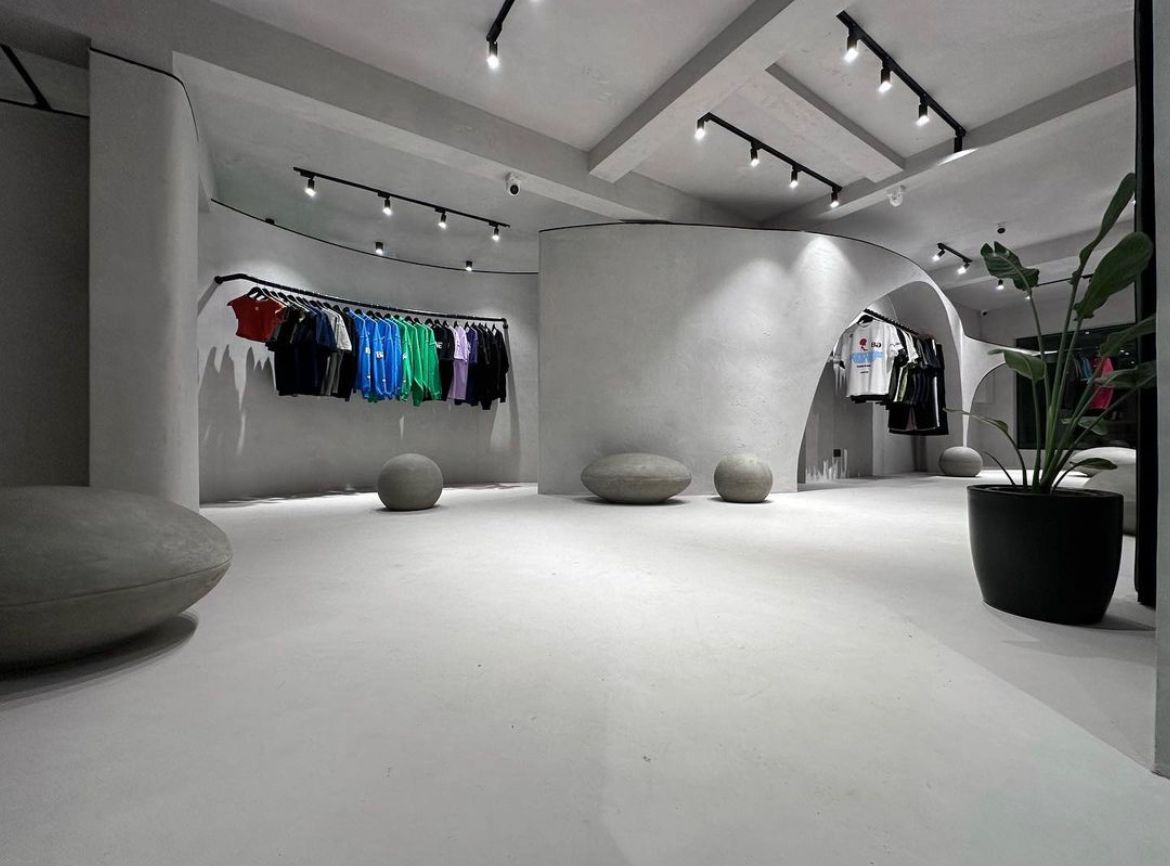
At Bluorng in Mumbai, Cemento flows seamlessly across the floor under Classico Casted walls and ceiling. The muted, continuous floor grounds the store and lets the merchandise and textured walls take the attention.
Clinics and Wellness Spaces
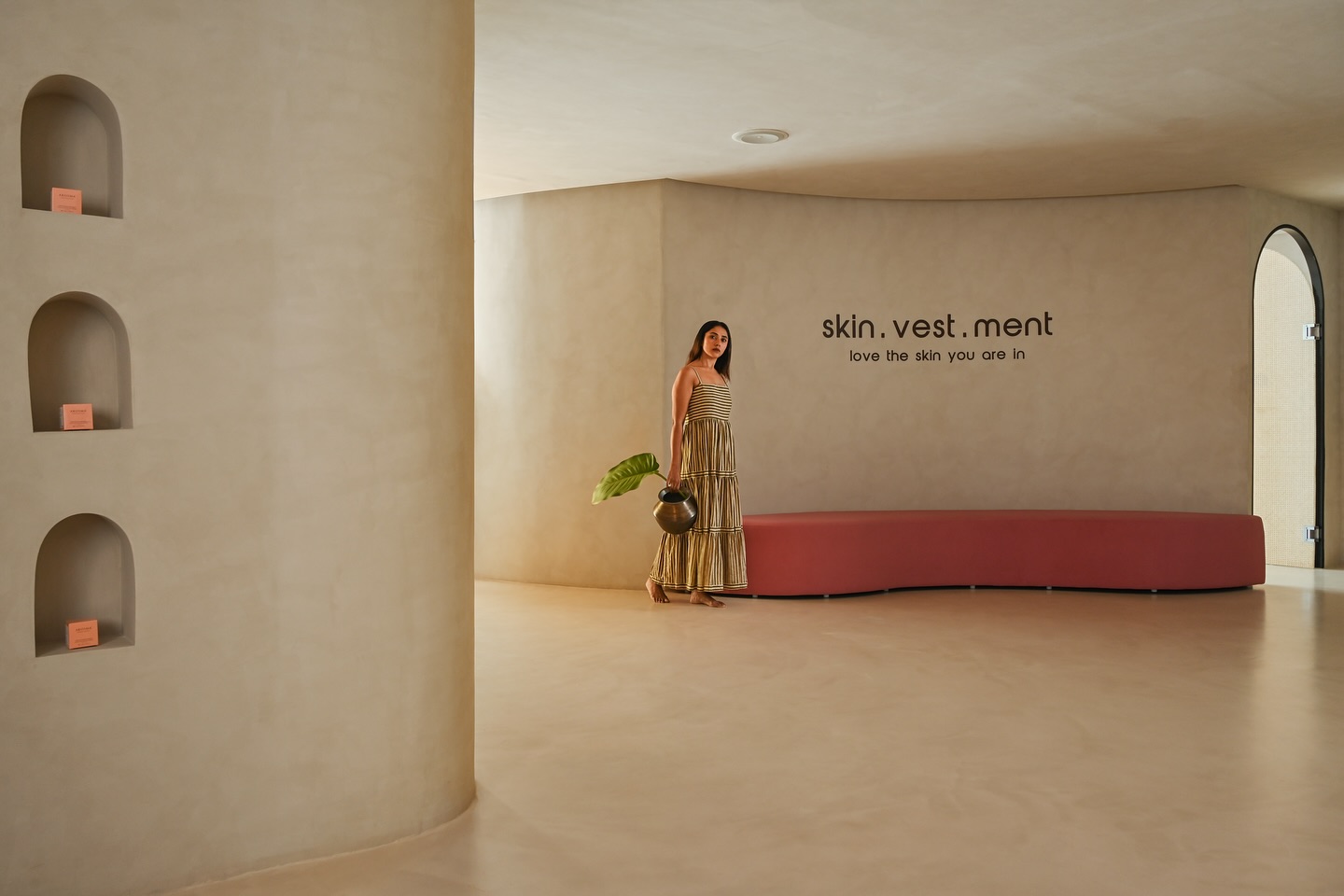
For the Skin Story clinic in Bangalore, created with Ark Architecture Studio, the brief was a durable yet graceful floor that would not pull attention from minimal, serene interiors. A seamless Cemento base delivered that quiet sophistication.
Salons and Hospitality
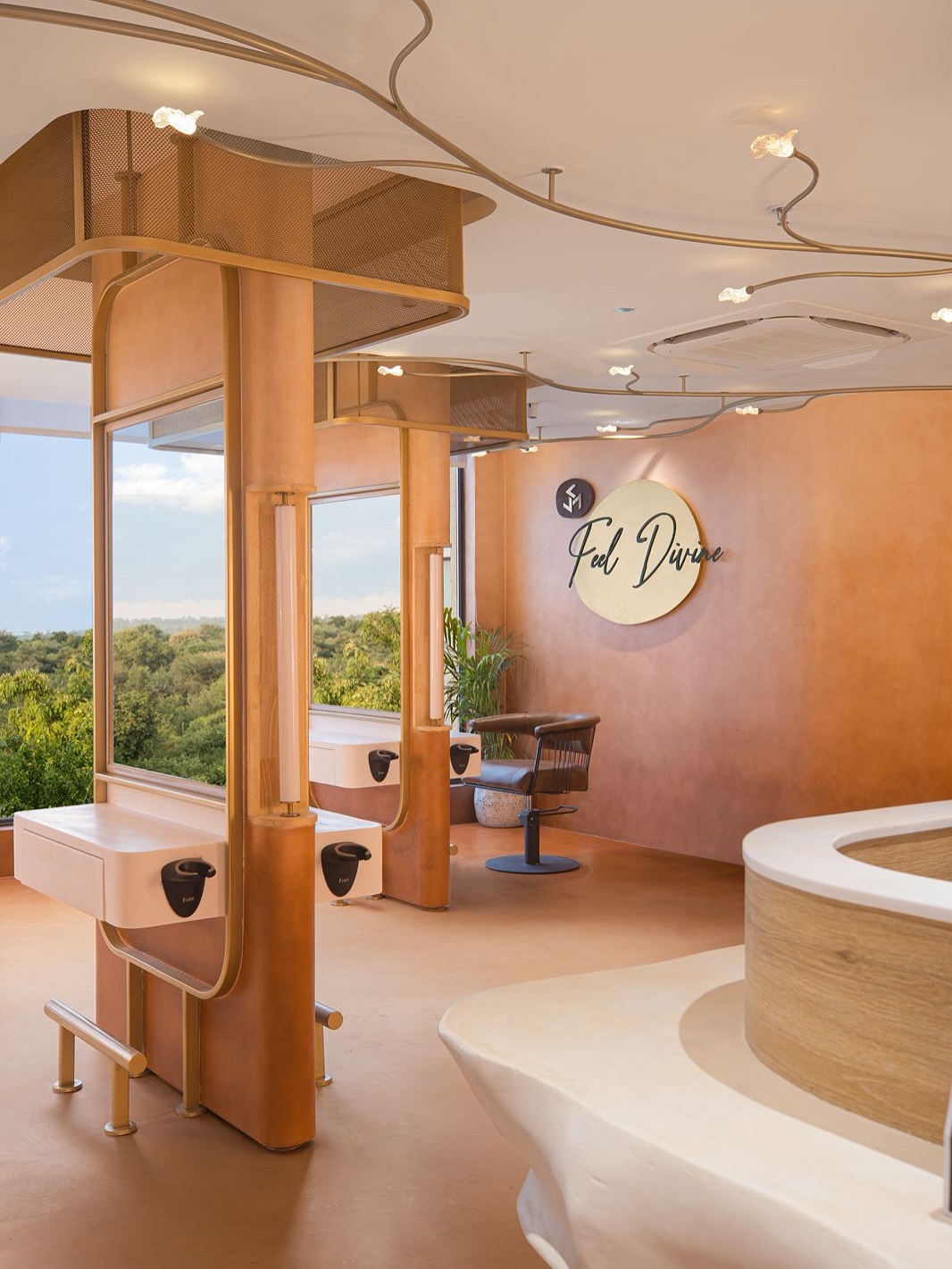
At The Ombre Retreat, Affinity Salon, Cemento AR was applied in carefully blended layers across walls and floors so the tone shifts gradually from one plane to the next. It is a specialist commission that needs precise control of tone and sequence.
Restaurants, cafes and hotel interiors use microcement for the same reasons: continuous surfaces, easy cleaning and a finish that can carry from floor to counter. For more commercial ideas, see wall finishes for restaurants, salons and retail stores.
Offices and Workspaces
Microcement flooring is used in offices for its modern look and durability, and the same finish can continue onto reception counters and feature walls to keep the space consistent.
How to Plan a Microcement Project
- Start with a site survey so the base can be checked for cracks, loose tiles and moisture.
- Approve a physical sample in the actual lighting of the room.
- Confirm the system and sealer for each surface, especially wet areas.
- Plan the sequence with other trades so the finish is not damaged before handover.
More floor ideas from real spaces are in microcement flooring ideas.
Is Microcement Right for Your Project?
Choose microcement when you want one seamless surface across floors, walls and furniture, when you are renovating over sound existing tiles, or when a bathroom or kitchen needs a joint-free finish. Choose another material if the base moves, if the area takes heavy point loads, or if you want single-piece repairs.
See more of our work on the projects page, or contact the Colortale team to discuss your space and arrange a sample.
Frequently Asked Questions
What are the main benefits of microcement?
Microcement gives a seamless, joint-free surface, a thin 2 to 3 mm profile that can often go over existing tiles, water resistance when sealed properly, one finish across floors, walls, countertops, stairs and furniture, and custom colours and textures.
Where can microcement be used?
It can be used on floors, walls, ceilings, bathrooms and showers, kitchens and countertops, stairs, furniture and, as a weather-resistant render, on exterior walls, terraces and balconies, provided the base is stable.
Is microcement suitable for commercial projects?
Yes. Colortale has used seamless Cemento floors in a retail store (Bluorng, Mumbai) and a clinic (Skin Story, Bangalore), and Cemento AR across the walls and floors of a salon (The Ombre Retreat, Affinity Salon).
Can microcement be applied over existing tiles?
Often, yes. Once the tiles are checked and found sound and well bonded, microcement can usually be applied over them without demolition. Loose tiles, cracks and moisture must be fixed first.