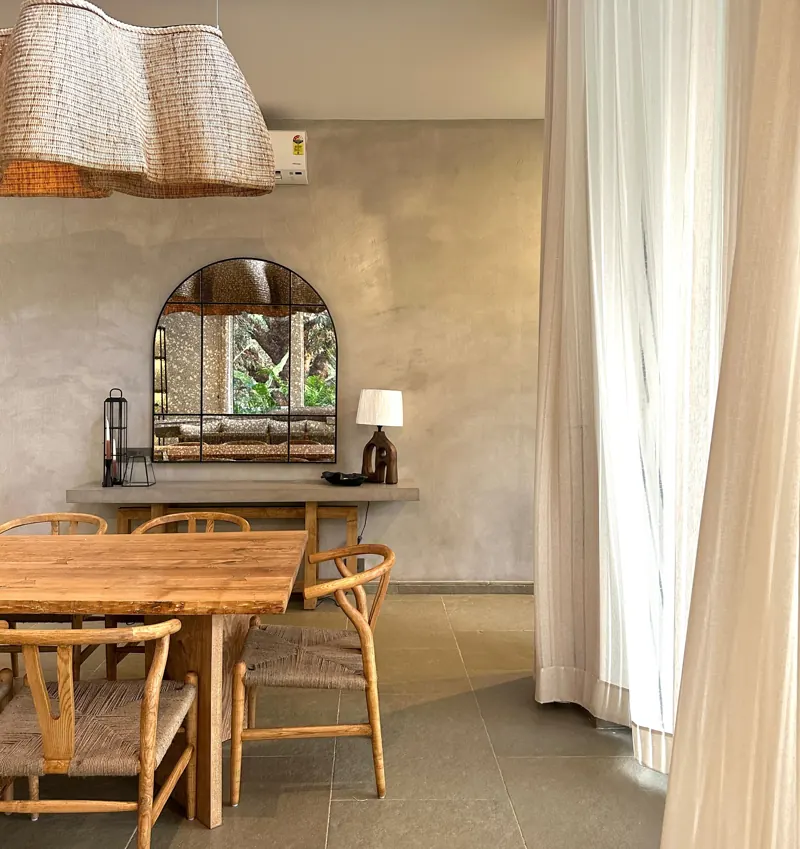

What Is a Microcement Wall Finish?
A microcement wall is a thin, hand-trowelled coating of cement, polymers and pigments that turns a plain wall into one seamless surface with no joints or grout lines. It is applied in thin layers, typically 2 to 3 mm in total according to Colortale's micro cement FAQ, then sealed. Because it bonds to plaster, concrete, sound tiles and boards, it can transform a wall without demolition. Read more about the material on our micro cement page.
Which Microcement Wall Textures Can You Choose?
Texture comes from how the final layers are trowelled and sealed. Colortale's wall range includes:
- Cemento: a concrete-based finish with a smooth matt look and minimal thickness, for a calm, minimal wall.
- Classico Eco: an engineered cement with polymers that gives a jointless wall finish.
- Classico Lime: natural lime aesthetics with the texture of a concrete finish, for a softer, more mineral look.
Within each, the applicator can push the look toward smooth and cloudy or toward visible trowel marks and a raw concrete feel. Always approve a sample panel in the room's own light.
Feature Wall or Whole Room?
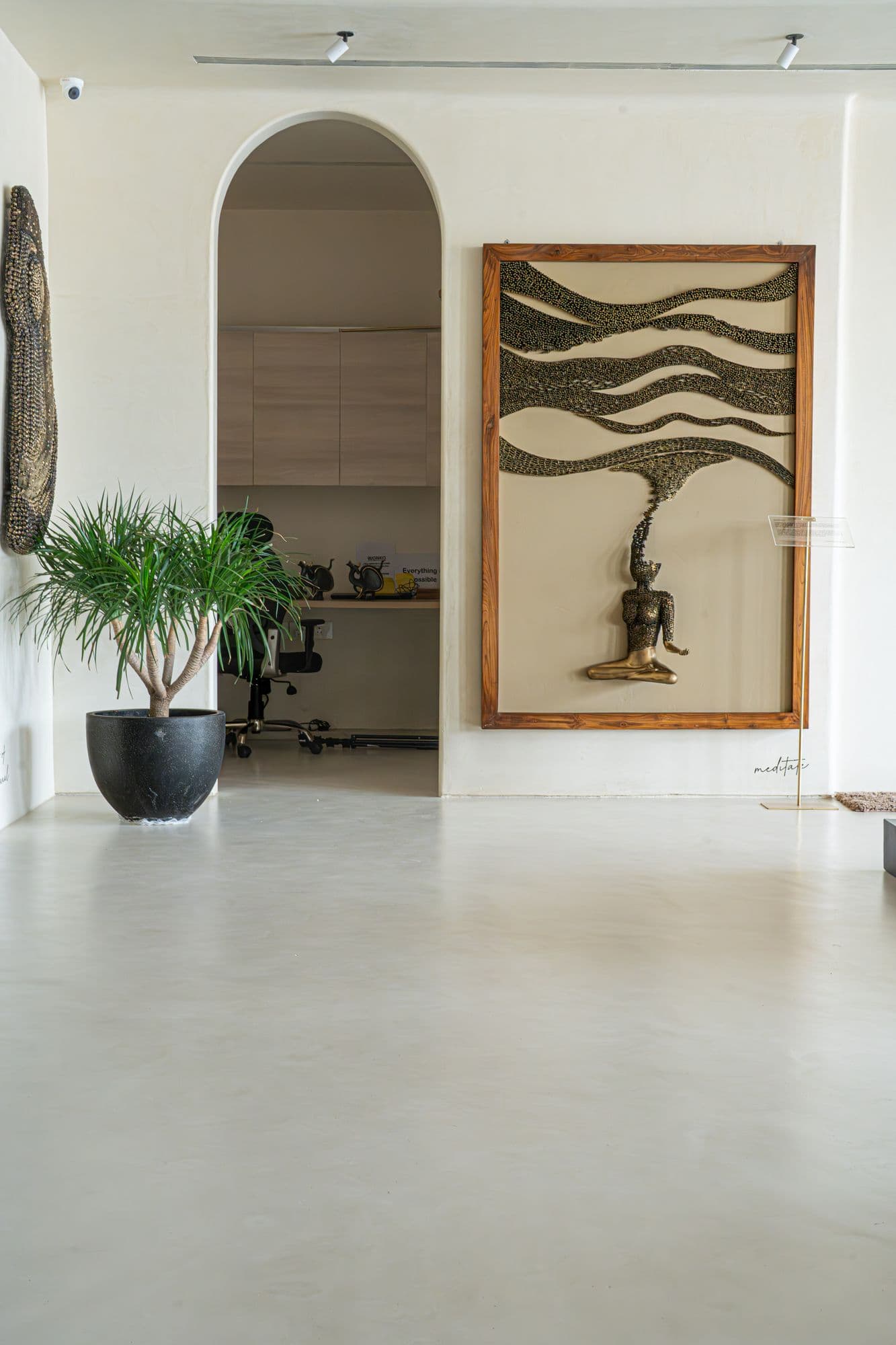
Both work, and the choice depends on light and mood. A single microcement wall behind a sofa, bed or TV gives a strong focal point while the other walls stay quiet. Wrapping a whole room, or running the finish from wall to floor, gives the continuous, monolithic look microcement is known for. At Takshini in New Delhi, the Cemento floor flows without joints beneath Carrara walls and ceiling, which shows how a seamless floor and a mineral wall finish can work together. Cooler grey tones suit bright rooms; warmer sand and clay tones keep bedrooms from feeling cold.
Can Microcement Go Over Tiles, Putty or Paint?
Often yes, after checks. Sound, well-bonded tiles can be covered after cleaning, priming and filling grout lines; loose or hollow tiles must be fixed first. Painted or puttied walls need loose material removed and the right primer, because microcement is only as strong as the layer beneath it. Our blog on microcement over existing tiles explains the steps.
Microcement on Bathroom and Exterior Walls
Bathrooms: yes, with waterproofing behind it and a proper sealer on top. Shower walls need the most care. See our microcement bathroom guide. Exteriors: Colortale's micro cement page notes that micro cement render is suitable for exterior facades, offering weather resistance. The system and sealer for outdoor walls differ from interiors, so confirm the specification for your facade.
What Are the Limits?
Microcement walls can show hairline cracks if the wall underneath moves, need a skilled applicator, and patch repairs are hard to hide. We set these out honestly in microcement disadvantages. On walls, these risks are lower than on floors because there is no foot traffic.
Applications
- Living and bedroom walls: feature walls behind sofas, beds and TV units, or full rooms in one tone.
- Bathrooms and powder rooms: seamless vanity and shower walls over waterproofing, with no grout to clean.
- Commercial interiors: retail walls, reception backdrops and restaurant interiors where a continuous surface reads as polished.
Benefits of Microcement Walls by Colortale
- Seamless: no joints, grout lines or panel edges.
- Thin build: can go over sound existing surfaces without demolition.
- Customisable: wide range of tones and textures.
- Easy to clean: sealed surface wipes down with a damp cloth.
- Pairs with floors: runs from wall to floor for a continuous look.
FAQ
Can microcement be used on walls?
Yes. It bonds to plaster, concrete, sound tiles and boards, and gives a seamless finish on feature walls, whole rooms, bathrooms and facades.
Can microcement be applied over wall tiles?
Yes, if the tiles are sound and well bonded. They are cleaned, primed and the grout lines filled first. Loose or hollow tiles must be fixed.
What textures are possible with microcement walls?
From smooth and cloudy matt to visible trowel marks and a raw concrete look. The texture depends on the product and how the final layers are trowelled.
Is microcement suitable for bathroom walls?
Yes, with waterproofing behind it and a proper sealer on top. Shower walls need the most care.
Can microcement be used on exterior walls?
Yes, with a system and sealer specified for outdoor use. Confirm the specification for your facade before starting.
Will a microcement wall crack?
It can show hairline cracks if the wall underneath moves. Fixing cracks, priming correctly and using mesh where needed reduce the risk.
How do I clean a microcement wall?
Wipe with a damp cloth and a pH-neutral cleaner. Avoid abrasive pads and harsh chemicals.
Contact Colortale: Your Microcement Wall Experts in India
Send us photos of your wall, what it is made of and how the room is used. We will advise on the right texture, preparation and sealer, and whether microcement, lime plaster or a Venetian finish suits the space best. Our studio is at Ghitorni, New Delhi.
Get in Touch with Colortale: Microcement Wall Experts in India
Planning a seamless wall for a home, store or restaurant? Call 09667757494, email info@colortale.in or use the form to ask for a sample. Contact Us