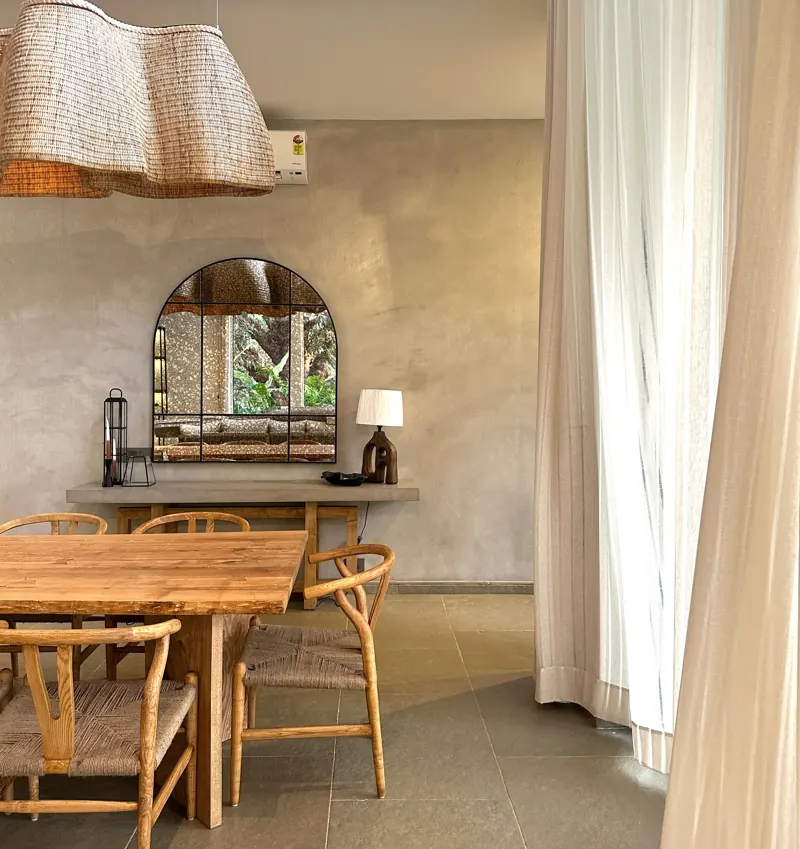
Renovating an existing home or commercial space often begins with one practical question:
Do the old tiles really need to be removed?
For many homeowners, architects, and interior designers, replacing existing flooring or wall tiles can mean additional demolition, construction waste, higher labour costs, extended project timelines, and disruption to daily life. Naturally, people start looking for alternatives that can modernise a space without starting from scratch.
This is where Micro Cement over tiles has become an increasingly popular renovation solution.
Its seamless appearance, contemporary aesthetic, and ability to transform existing surfaces make it an attractive option for residential, hospitality, retail, and commercial projects. Instead of replacing an entire tiled surface, it may be possible to create a completely new architectural finish over an appropriately prepared substrate.
However, there is one important detail that is often overlooked.
Many articles simply say:
"Yes, Micro Cement can be applied over tiles."
While technically true in many situations, that answer is incomplete.
The real question is not whether the surface has tiles.
The real question is:
Are the existing tiles and the substrate beneath them suitable for a Micro Cement system?
That distinction can determine whether a renovation project performs successfully over the long term.
In this guide, we'll explain when Micro Cement can be applied over existing tiles, when it shouldn't be, why substrate condition matters more than the tiles themselves, and what architects, designers, and homeowners should evaluate before choosing this renovation approach.
Can Micro Cement Be Applied Over Existing Tiles?
Yes, Micro Cement can often be applied over existing tiled surfaces, provided the tiles are stable, properly bonded, and the substrate is suitable for the complete Micro Cement system.
This is one of the reasons Micro Cement has become increasingly popular in renovation projects. Instead of automatically removing existing tiles, the project team can first evaluate whether the current surface can serve as an appropriate base for the new decorative finish.
That evaluation is essential.
Two tiled floors may appear almost identical, yet one may provide an excellent substrate while the other may require repairs—or even complete removal—before any new finish is considered.
The deciding factor is not the presence of tiles.
It is the condition of everything underneath and around them.
Questions that should always be answered include:
- Are the tiles securely bonded?
- Is there movement anywhere in the floor or wall?
- Are there hollow or loose tiles?
- Are there existing cracks?
- Is the substrate stable?
- Is there evidence of moisture-related issues?
- Can the surface be properly prepared for the specified Micro Cement system?
Only after these questions have been addressed can the project team determine whether Micro Cement on tiles is the right solution.
That is why professional assessment should always come before product selection.
Why Homeowners Choose Micro Cement Over Existing Tiles
Renovation decisions are rarely based on aesthetics alone.
Most homeowners want to improve the appearance of their interiors while minimising unnecessary disruption.
Applying Micro Cement over existing floor tiles can offer several practical advantages when the substrate is suitable.
A Modern Look Without Extensive Demolition
Removing an old tiled floor often involves breaking tiles, removing adhesive layers, generating significant dust, and preparing the substrate again before installing a new finish.
Where existing tiles are in suitable condition, using them as part of the substrate preparation process may reduce the need for complete demolition.
This allows the renovation to focus on transforming the visible surface rather than rebuilding the floor from the structural level upwards.
Seamless Contemporary Interiors
Traditional tiled floors naturally divide a surface through grout joints.
Micro Cement flooring creates a different architectural effect.
Instead of individual modules, the floor reads as a continuous surface, helping living rooms, kitchens, dining areas, offices, cafés, retail stores, and other interiors feel more visually connected.
For open-plan spaces, this continuity is often one of the biggest design advantages.
Ideal for Renovation Projects
Many renovation projects involve structurally sound spaces that simply feel visually outdated.
Replacing patterned ceramic tiles from previous decades can dramatically change the character of an interior.
Rather than rebuilding every surface, Micro Cement renovation allows designers to reimagine the space with a more contemporary material language while preserving suitable existing construction wherever possible.
Greater Design Flexibility
Another reason architects and interior designers increasingly specify Micro Cement is the creative freedom it offers.
Depending on the selected system, colour, texture, and finish, the surface can complement a variety of design styles—from understated contemporary homes to hospitality projects and premium commercial interiors.
Instead of selecting from hundreds of individual tile patterns, the design process shifts towards creating a customised architectural surface.
When Existing Tiles Can Become a Suitable Substrate
This is where many online guides oversimplify the process.
Existing tiles are not automatically suitable simply because they are already installed.
The project should first determine whether those tiles can function as a reliable substrate for the new decorative finish.
Several characteristics are particularly important.
The Tiles Should Be Securely Bonded
Tiles should remain firmly attached to the underlying surface.
Movement, lifting, or hollow-sounding areas may indicate that the substrate requires further investigation before any decorative finish is applied.
A decorative surface performs best when it is supported by a stable foundation.
The Surface Should Be Structurally Stable
The decorative layer follows the behaviour of the substrate beneath it.
If the underlying construction experiences movement, instability, or structural issues, these conditions should be addressed before the Micro Cement system is considered.
Ignoring the underlying problem simply because the finished surface will cover it rarely produces a successful long-term result.
Existing Cracks Need Assessment
Not every crack automatically prevents renovation.
However, every crack deserves investigation.
Is it an old, stable crack?
Or does it indicate ongoing movement?
Understanding the cause is far more valuable than simply covering the visible line.
This principle applies whether the project involves microcement over existing tiles, concrete, or another substrate.
You may also read: Micro Cement vs Micro Concrete
Moisture Should Never Be Ignored
Moisture-related issues require careful evaluation before decorative surface systems are specified.
Bathrooms, ground-floor areas, older buildings, and certain renovation projects may require additional investigation depending on site conditions.
Rather than assuming a new finish will solve every moisture-related concern, the project should identify and address the underlying issue first.
Surface Preparation Must Be Possible
Finally, the substrate must be capable of being prepared appropriately for the selected system.
Preparation forms an essential part of the finished floor or wall—even though it is no longer visible once the project is complete.
A beautifully finished Micro Cement surface begins with proper preparation long before the final decorative layer is applied.
When Existing Tiles Should NOT Be Covered
One of the biggest mistakes made during renovation planning is assuming that every tiled surface can simply receive a new decorative finish.
That isn't always the right decision.
In some situations, removing the existing tiles may actually produce a better long-term outcome than attempting to build over them.
Understanding these situations helps homeowners make informed decisions rather than relying solely on the appeal of avoiding demolition.
Loose or Hollow Tiles
If tiles are no longer securely bonded to the substrate, they should not simply be hidden beneath a new finish.
Loose or hollow areas may indicate problems with adhesion beneath the tile itself.
Applying a decorative system over an unstable base does not eliminate that instability.
Before considering Micro Cement over tiles, the existing surface should first provide a sound and reliable foundation.
Significant Movement in the Floor or Wall
Movement deserves careful investigation.
Doors that no longer align properly, recurring cracks, uneven settlement, or noticeable movement within the substrate may indicate underlying structural conditions that need attention.
Decorative finishes are intended to enhance a stable surface—not compensate for ongoing structural movement.
Extensive Moisture Problems
Persistent moisture should never be treated as a purely cosmetic issue.
Before specifying any decorative surface, the source of moisture should be identified and appropriately addressed.
Simply installing a new finish over an unresolved moisture problem is unlikely to produce the desired long-term result.
Severely Damaged Existing Surfaces
Where large sections of the tiled surface are broken, detached, significantly uneven, or otherwise unsuitable, extensive preparation may no longer be the most practical solution.
In certain projects, removing the existing finish and rebuilding the substrate may provide a better foundation for the intended architectural surface.
Choosing demolition in these circumstances is not a failure of Micro Cement.
It is an example of good specification practice.
Why the Substrate Matters More Than the Tiles
One of the biggest misconceptions about Micro Cement over existing tiles is that the tiles themselves determine whether the renovation will succeed.
In reality, the substrate beneath the tiles is usually far more important than the visible ceramic surface.
Think of it like painting a wall.
A premium paint cannot permanently solve problems caused by a damaged plaster surface underneath. In the same way, Micro Cement is a decorative architectural finish—not a structural repair material.
If the existing substrate has movement, instability, unresolved moisture, or significant defects, those conditions should be understood before a new decorative surface is installed.
This is why experienced architects and surface specialists spend time evaluating the floor before discussing colours or textures.
The appearance of the final finish depends heavily on the quality of what supports it.
Micro Cement Follows the Existing Surface
Unlike modular flooring materials that are installed as individual units, Micro Cement creates a continuous decorative surface.
Because of this, the existing substrate becomes part of the finished system.
If the substrate is well prepared, stable, and appropriate for the selected system, it provides a reliable foundation for the new finish.
If it is unstable or deteriorating, simply covering it does not remove the underlying issue.
That is why every successful micro cement renovation begins with understanding the condition of the existing construction rather than focusing only on the final appearance.
Renovation Is More Than Applying a New Finish
Many people think renovation begins when the decorative finish is applied.
In reality, it begins much earlier.
Professional renovation involves understanding:
- the condition of the existing floor or wall
- previous construction methods
- moisture exposure
- structural movement
- preparation requirements
- compatibility with the proposed finish
Only after these factors have been evaluated should the project move towards material selection.
This approach may seem more cautious than many online guides suggest, but it significantly reduces the likelihood of unexpected problems later.
Surface Preparation Is Part of the Finished Project
Preparation is often invisible once the project is complete, yet it remains one of the most important contributors to the overall result.
Clients naturally admire the beautiful finished floor.
Architects often appreciate something else as well—the preparation that allowed the finish to perform as intended.
For this reason, the preparation stage should never be viewed as an unnecessary delay.
It is an essential part of creating a high-quality decorative surface.
Can Micro Cement Be Applied Over Existing Floor Tiles?
Yes, Micro Cement can often be applied over existing floor tiles, provided the substrate and tiled surface meet the requirements of the specified system.
Floor renovations are among the most common reasons people explore this solution.
Replacing an entire tiled floor can involve demolition, debris removal, floor repairs, and installation of a completely new flooring system. Where the existing tiles are suitable, Micro Cement offers an alternative approach that focuses on transforming the visible surface.
However, every room should still be considered individually.
Living Rooms
Living rooms are often ideal candidates for seamless finishes because they connect multiple functional areas within a home.
Replacing old ceramic or vitrified tiles with Micro Cement can help create a more continuous visual experience, particularly in open-plan interiors where living, dining, and circulation spaces flow together.
Instead of multiple tile joints dividing the floor, the interior benefits from a cleaner architectural language.
Bedrooms
Bedroom renovations generally involve lower levels of foot traffic than many commercial spaces.
Here, the emphasis often shifts from durability alone to atmosphere.
Micro Cement allows designers to create calm, understated flooring that complements timber furniture, textiles, and softer lighting without dominating the room.
Warm neutral tones are particularly effective in moving away from the stereotypical industrial concrete appearance that many people incorrectly associate with all cement-based finishes.
Kitchens
Kitchens combine aesthetic and practical requirements.
Many homeowners want a floor that visually connects with adjacent living areas while remaining suitable for everyday household use.
When considering Micro Cement over existing floor tiles in kitchens, the existing tiled substrate should first be assessed to ensure it provides a suitable foundation for the proposed finish.
Particular attention should also be given to areas exposed to frequent cleaning, moisture, and heavy daily use.
Commercial Floors
Retail stores, cafés, offices, hospitality projects, and showrooms frequently use seamless flooring to reinforce a contemporary design identity.
For these environments, architects and project managers should evaluate not only the appearance of the finish but also the operational demands placed on the floor.
Expected traffic, furniture movement, cleaning schedules, and maintenance planning should all form part of the specification process.
The result is a flooring decision based on performance as well as design.
Can Micro Cement Be Applied Over Existing Wall Tiles?
Absolutely—but the same principle still applies.
The wall should first be evaluated to determine whether the existing tiled surface provides an appropriate substrate.
Walls often experience fewer structural loads than floors, but they still deserve proper assessment before any decorative finish is applied.
Bathroom Walls
Bathrooms are among the most requested applications for micro cement on tiles.
Many homeowners want to replace dated ceramic wall tiles with a seamless contemporary finish without removing the entire tiled surface.
Where the existing substrate is suitable and the complete specified system is appropriate for the environment, this can provide a dramatic visual transformation.
However, bathrooms should always be approached as complete systems.
Waterproofing, moisture management, junctions, penetrations, and protective treatments remain just as important as the decorative finish itself.
Kitchen Splashbacks
Kitchen splashbacks can also be updated using decorative cementitious finishes where appropriate.
The attraction here is continuity.
Instead of individual tiles creating visual breaks behind cabinetry and worktops, a seamless surface can help simplify the overall material palette.
Again, preparation and substrate suitability remain essential.
Feature Walls
Feature walls allow architects and designers to introduce texture and material character without overwhelming an interior.
Depending on the selected finish, Micro Cement can create subtle tonal movement that changes throughout the day as natural and artificial light interact with the surface.
Because these walls are often viewed from relatively close distances, craftsmanship and finishing quality become especially important.
Commercial Wall Applications
Reception areas, hospitality interiors, retail environments, cafés, restaurants, offices, and other commercial projects increasingly use decorative cementitious finishes to create distinctive architectural spaces.
Unlike modular wall tiles, continuous finishes help establish a cleaner visual identity while allowing branding, lighting, artwork, and furniture to become more prominent.
As always, the suitability of the existing tiled wall should be assessed before specification.
How Existing Tiled Surfaces Are Prepared Before Applying Micro Cement
One of the reasons high-quality Micro Cement projects perform well is that preparation receives as much attention as the decorative finish itself.
This preparation should never be viewed as a simple "coat over the tiles" process.
Instead, it is a systematic evaluation and preparation of the existing substrate before the architectural finish is installed.
The exact preparation method depends on the project, the substrate, and the specified Colortale system, so this section should not be interpreted as a DIY application guide.
Instead, it explains the purpose behind each stage.
Initial Surface Assessment
Every project should begin with an inspection of the existing tiled surface.
The objective is to understand:
- overall condition
- tile stability
- substrate integrity
- visible damage
- moisture concerns
- existing cracks
- previous repairs
- suitability for the selected system
Only after this assessment can preparation requirements be determined.
Cleaning the Existing Surface
Before any preparation work begins, contaminants that could interfere with the system should be addressed.
Dust, grease, oils, previous coatings, or other surface contamination may affect how preparation materials interact with the substrate.
A clean surface provides a more reliable starting point for the subsequent preparation stages.
Addressing Surface Defects
Minor defects, joints, or localised issues may require attention depending on the condition of the existing tiled surface and the specified system.
The objective is not simply cosmetic improvement.
Preparation aims to create an appropriate base capable of supporting the decorative finish according to the manufacturer's recommendations.
Building the Complete Surface System
One of the most common misconceptions is that Micro Cement consists of a single decorative layer.
In reality, the visible finish is only one component within a broader surface system.
Preparation layers, reinforcement where required, decorative coats, and protective treatments all contribute to the final performance and appearance.
Looking only at the final colour or texture ignores much of the work that makes the finished surface successful.
That is why architects, designers, and experienced applicators often spend as much time discussing the system beneath the finish as they do the finish itself.
Common Mistakes People Make When Applying Micro Cement Over Existing Tiles
One of the biggest reasons renovation projects fail to meet expectations isn't necessarily the material itself—it is making decisions too early without properly evaluating the existing surface.
Whether the project involves a home, office, café, retail space, or hotel, avoiding a few common mistakes can significantly improve the chances of achieving a successful result.
Assuming Every Tiled Surface Can Be Covered
Perhaps the most common misconception is that every tiled floor or wall automatically qualifies for Micro Cement.
While many tiled surfaces may be suitable, the decision should always begin with the condition of the substrate.
Loose tiles, movement, moisture issues, significant cracks, or structural concerns should never be ignored simply because the final finish will cover them.
The best renovation projects start with an honest assessment of the existing surface.
Choosing Based Only on Appearance
Social media has made seamless decorative finishes incredibly popular.
Beautiful photographs can inspire ideas, but they rarely reveal what happened before the final image was taken.
They don't show:
- substrate preparation
- repairs
- moisture treatment
- reinforcement
- application process
- protective system
- project-specific detailing
Choosing Micro Cement over tiles should therefore involve more than saving attractive reference images.
The project should first determine whether the existing construction is capable of supporting the intended finish.
Ignoring Physical Samples
Digital images are helpful for inspiration.
They should not become the final basis for specification.
The colour and texture of a decorative cementitious finish can appear very different depending on natural light, artificial lighting, camera settings, and screen calibration.
Reviewing physical samples alongside flooring, timber, stone, fabrics, cabinetry, and other project materials provides a much more reliable understanding of how the finished surface will contribute to the interior.
Treating Micro Cement as a DIY Product
Micro Cement is a specialist architectural finish.
Although application videos online can make the process appear straightforward, the finished quality depends on much more than applying decorative layers.
Surface assessment, preparation, environmental conditions, workmanship, detailing, and finishing all contribute to the result.
For projects where appearance and long-term performance matter, professional execution should always be considered part of the overall specification.
Focusing Only on the Decorative Layer
Clients naturally pay attention to colours and textures.
Professionals often focus just as much on the layers that remain hidden.
Preparation, reinforcement where required, substrate condition, and protective treatments are all part of the finished system.
Ignoring these elements because they are not visible after completion can compromise the overall project.
Micro Cement Over Existing Tiles for Renovation Projects
Renovation is where Micro Cement over existing tiles offers some of its greatest advantages.
Rather than viewing the existing tiled surface as something that must always be demolished, the project team first asks a different question:
Can the existing construction become part of the new architectural solution?
If the answer is yes, the renovation process can become considerably more efficient while still delivering a completely transformed interior.
Residential Renovations
Many Indian homes still feature ceramic or vitrified tiles installed years ago.
While these floors may remain structurally sound, their appearance may no longer reflect the homeowner's preferred style.
Where the existing substrate is suitable, Micro Cement can help create a seamless contemporary finish that feels entirely different from the original tiled surface.
Open-plan living spaces, bedrooms, kitchens, staircases, and selected bathroom applications can all benefit from a more unified architectural language.
Apartments and Villas
Apartment renovations often present additional practical considerations.
Removing existing flooring can create noise, dust, debris, and disruption—not only for the occupants but sometimes for neighbouring homes as well.
Where appropriate, using the existing tiled substrate as part of the renovation strategy may reduce unnecessary demolition while still achieving a significant visual transformation.
The same principle can apply to villas, where continuity between multiple spaces often becomes a major design objective.
Hospitality and Commercial Projects
Hotels, cafés, restaurants, retail stores, and offices frequently operate under strict project timelines.
Where the existing tiled surfaces are suitable, renovation solutions that minimise unnecessary demolition may help simplify certain stages of the project.
However, commercial environments also require careful consideration of traffic, maintenance routines, operational requirements, and project sequencing.
This is why specification should always balance design aspirations with practical performance.
When Removing Existing Tiles Is Actually the Better Option
One of the reasons clients trust experienced professionals is that they do not recommend the same solution for every project.
Sometimes, removing the existing tiles is the better engineering and architectural decision.
That recommendation should never be viewed as a limitation of Micro Cement.
Instead, it demonstrates that the project is being evaluated according to its actual conditions rather than forcing one solution onto every surface.
Removal may be appropriate when:
- the existing substrate has significant structural issues
- large areas of tiles are loose or detached
- moisture problems remain unresolved
- previous repairs have left the surface unstable
- floor levels require major correction
- the existing construction cannot reliably support the proposed system
Although demolition may involve additional work initially, it can provide a stronger foundation for the finished architectural surface where existing conditions demand it.
Good specification sometimes means saying "not yet" before saying "yes."
Should You Choose Micro Cement Over Existing Tiles?
Choosing Micro Cement over existing tiles shouldn't be a decision based solely on appearance or the desire to avoid demolition. Every renovation project is unique, and the right choice depends on how well the existing surface can support the new decorative finish.
Before moving ahead, take a step back and evaluate the project as a whole rather than focusing only on the visible tiles.
What substrate exists?
The first question isn't about the tiles—it's about what's underneath them.
Is the existing substrate stable? Is it concrete, screed, or another construction layer? Understanding the base beneath the tiles helps determine whether it can support the complete Micro Cement system.
Is There Any Movement?
Movement is one of the first things that should be investigated.
Loose tiles, hollow sounds, recurring cracks, or signs of structural movement may indicate that the existing surface requires attention before a decorative finish is considered.
A stable substrate always provides a better foundation for long-term performance.
Are There Any Moisture Issues?
Bathrooms, kitchens, ground floors, and older buildings may require additional attention where moisture is concerned.
Rather than assuming a new decorative finish will solve every issue, the source of moisture should first be identified and addressed where necessary.
What Finish Are You Trying to Achieve?
Different projects have different design objectives.
Are you looking for a subtle seamless floor?
A textured architectural wall?
A warm contemporary interior?
Or a concrete-inspired commercial space?
The desired surface character should influence the choice of finish just as much as the technical requirements of the project.
How Much Traffic Will the Surface Receive?
A private bedroom and a busy café do not place the same demands on a decorative finish.
Expected foot traffic, furniture movement, cleaning routines, and day-to-day use should all influence the specification of the complete surface system.
Has the Surface Been Professionally Assessed?
Professional assessment is one of the most valuable parts of a successful renovation.
An experienced surface specialist can evaluate the existing substrate, identify potential issues, and determine whether Micro Cement over existing tiles is the right approach—or whether removing the existing tiles would provide a better long-term solution.
Have You Reviewed Physical Samples?
Photographs are excellent for inspiration, but they cannot fully represent colour, texture, or how a handcrafted finish interacts with light.
Reviewing physical samples alongside the project's timber, stone, fabrics, cabinetry, and lighting helps ensure the selected finish complements the overall design rather than appearing different once installed.
Ultimately, the goal isn't simply to avoid demolition.
It's to create a surface that performs well, complements the architecture, and remains appropriate for the way the space will actually be used.
Can Micro Cement Be Removed Later?
Yes, it can be removed, but it should not be viewed as a simple peel-off finish.
Because Micro Cement becomes part of a complete decorative surface system, removal generally involves mechanical methods and the extent of work depends on the substrate, the installed system, and the future finish being planned.
If there is any possibility that the space may undergo another major renovation in the future, it's worth discussing long-term flexibility during the planning stage.
How Long Does a Micro Cement Renovation Take?
There is no single timeline that applies to every project.
The duration depends on several factors, including:
- the size of the area
- the condition of the existing tiled surface
- the amount of preparation required
- the complexity of the project
- curing times within the specified system
- site conditions and construction coordination
Rather than focusing only on the number of days, it's more useful to establish a realistic project schedule after the existing surface has been assessed.
For larger residential or commercial renovations, planning the sequence of work in advance can help minimise disruption while ensuring each stage of the system is completed correctly.
Conclusion
Applying Micro Cement over existing tiles can be an excellent way to modernise a space without automatically resorting to extensive demolition. It offers the possibility of transforming dated interiors into seamless, contemporary environments while making use of suitable existing construction.
However, the success of the project depends on much more than the decorative finish.
The condition of the substrate, careful preparation, the complete specified system, and skilled application all contribute to the final outcome.
Rather than asking:
"Can Micro Cement go over tiles?"
A better question is:
"Is my existing tiled surface suitable for a Micro Cement system?"
That shift in thinking leads to more informed renovation decisions and, ultimately, better architectural results.
Micro Cement doesn't succeed because it covers old tiles. It succeeds because the right surface system is applied over the right substrate with the right preparation.
That's why the most successful renovation projects don't begin with choosing a finish—they begin with understanding the existing surface.
If you're considering Micro Cement over existing tiles, Colortale can help assess your existing substrate, recommend the most suitable decorative finish, provide physical samples, and guide you towards a renovation solution that balances design intent, technical performance, and long-term durability.