
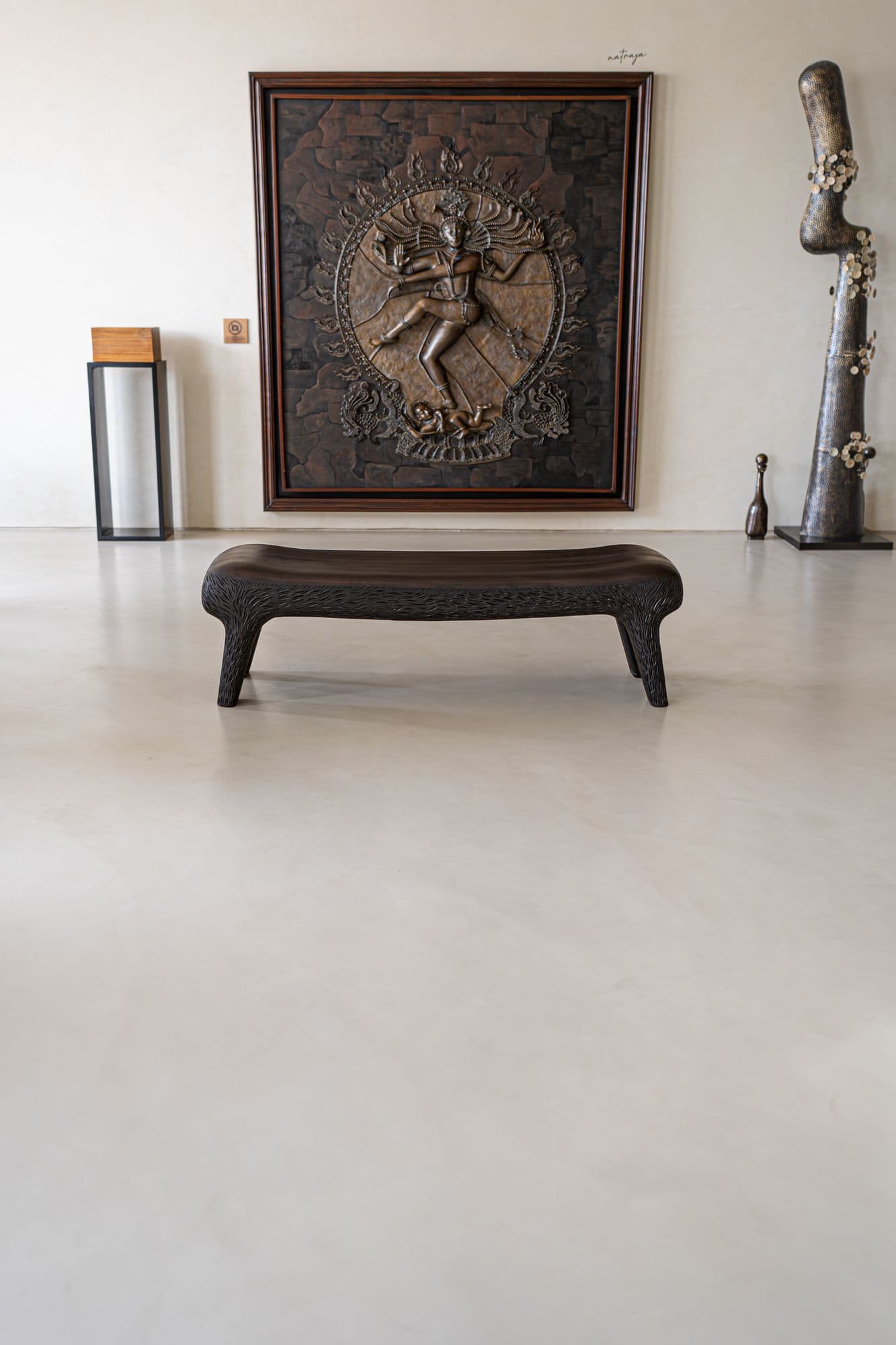
Microcement's main disadvantages are that it depends heavily on the applicator, it can show hairline cracks if the surface underneath moves, it needs sealing and occasional resealing, and repairs are hard to hide. It is also the wrong choice over unstable floors or for very heavy, gritty traffic. Most failures people share online trace back to poor preparation or sealing rather than the material itself.
Microcement is a thin coating of cement, polymers and pigments, applied by hand in layers to create one continuous surface on floors, walls and furniture. Because it is thin, it borrows its strength from whatever is underneath. Every disadvantage below follows from that.
Does Microcement Crack?
It can, if the base moves. Microcement is thin (Colortale's micro cement page gives a typical layer of 2 to 3 mm) and bonded to the surface below, so a structural crack, a loose tile, a flexing board or an expansion joint can telegraph through as a fine line. Good practice reduces the risk a lot: fix cracks and loose tiles first, use a primer suited to the base, embed a reinforcing mesh where needed, and carry building movement joints through the finish rather than covering them. Colortale's micro cement FAQ states that, applied correctly over a stable substrate, it will not crack, and that flexible base coats are used to prevent this. Our article on substrate preparation explains the checks.
Is It Only as Good as the Applicator?
Yes, more than most finishes. Layer thickness, trowel work, drying between coats and sealing all decide the result. One forum user summed it up after comparing installers: the material is fine, but "the right procedures to apply several layers is the key", otherwise "it will crack and chip easily". Ask any applicator for finished projects you can visit or photos with locations, and a sample on your own surface.
Does It Need Sealing and Resealing?
Yes. The sealer is what makes microcement water- and stain-resistant, and it wears with traffic. Colortale's product page states that microcement is waterproof when sealed properly. Colortale advises cleaning with mild soap and water and resealing every few years; high-traffic floors and counters need it sooner than walls. Skipping it leads to dull patches and stains.
Does Microcement Scratch or Stain?
It resists everyday wear, but it is not indestructible. Grit under shoes and dragged furniture can scratch the sealer, and acidic spills (lemon, vinegar, harsh cleaners) can dull a worn seal. Felt pads, doormats and pH-neutral cleaners prevent most issues.
Can It Be Repaired?
Yes, but a repaired patch rarely matches the surrounding surface exactly. Because the finish is hand-trowelled with natural variation, a repaired spot can look slightly different. Usually the area is re-coated and the whole zone resealed. This is the opposite of tiles, where one broken tile can be swapped, if you still have a matching tile. See microcement vs tiles for the full trade-off.
Is Microcement Slippery?
A smooth, sealed finish can be slippery when wet. In showers, bathroom floors and outdoor areas, ask for a textured finish or an anti-slip sealer. Our microcement bathroom guide covers wet zones.
Is Microcement Toxic?
Cured and sealed microcement is generally considered inert. During application, cement dust and some primers and sealers need ventilation and protective equipment. Ask for the product safety data sheets for the specific system.
How Long Does Microcement Last?
With a stable base and a maintained sealer, many years. The coating itself is durable; the sealer is the wearing layer. How long it lasts depends on traffic, cleaning, resealing and the base.
When Is Microcement the Wrong Choice?
| Situation | Why it is risky | Better option |
|---|---|---|
| Floor with active cracks or loose tiles | Movement shows through | Fix the base first, or tile |
| Wooden or flexing floors | Movement and moisture | Engineered wood or vinyl |
| Very heavy, gritty commercial traffic | Sealer wears fast | Epoxy, granite or vitrified tiles |
| You want zero upkeep | Needs resealing | Vitrified tiles |
| Large DIY project | Skill shows | A trained applicator |
| Rising damp in the slab | Can lift or stain | Treat damp, then reassess |
So Is Microcement Worth It?
For the right space, yes. Its advantages are real: no grout lines, one continuous look across floors and walls, a thin build that can go over sound existing tiles (see microcement over existing tiles), and a huge range of tones. At Takshini in New Delhi (2024), Cemento on the floor runs uninterrupted through the room alongside Carrara walls. It is worth it when the base is stable, the applicator is experienced, and you accept occasional resealing.
Is Microcement Right for Your Project?
Ask three questions: is the base stable, who is applying it, and are you comfortable resealing? If all three are yes, microcement gives you a seamless surface few other materials can. If not, tiles or epoxy may suit you better. Architects can read what architects should know before specifying micro cement, and if you are weighing a thicker system, read microcement vs micro concrete. Then contact us and we will check your surface before recommending anything.
Frequently Asked Questions About Microcement Disadvantages
What are the main disadvantages of microcement?
It depends heavily on the applicator, can show hairline cracks if the base moves, needs sealing and resealing, and repairs are hard to hide.
Does microcement crack easily?
Not on a stable, well-prepared base. Cracks usually come from movement underneath, such as loose tiles, structural cracks or uncovered movement joints.
Is microcement waterproof?
It is waterproof when sealed properly. The sealer does that job, so it must be applied well and maintained.
Is microcement slippery?
A smooth sealed finish can be slippery when wet. Ask for a textured finish or anti-slip sealer in wet areas.
Can damaged microcement be repaired?
Yes, by re-coating and resealing the area, but a perfectly invisible patch is difficult because the finish is handmade.
How long does microcement last?
Many years on a stable base with a maintained sealer. Traffic, cleaning and resealing decide how long it looks its best.
Is microcement toxic?
Cured and sealed microcement is generally considered inert. Ask for safety data sheets and VOC figures for the primer and sealer used.
When should I not use microcement?
Avoid it over cracked or flexing bases, on wooden floors, for very heavy gritty traffic, or if you want a surface that never needs resealing.