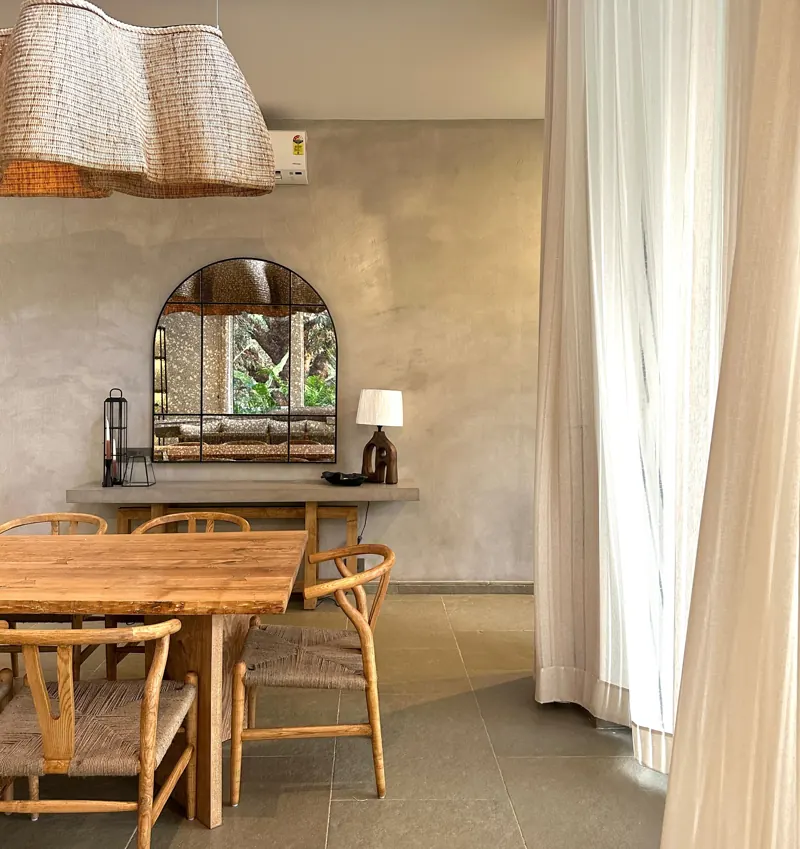
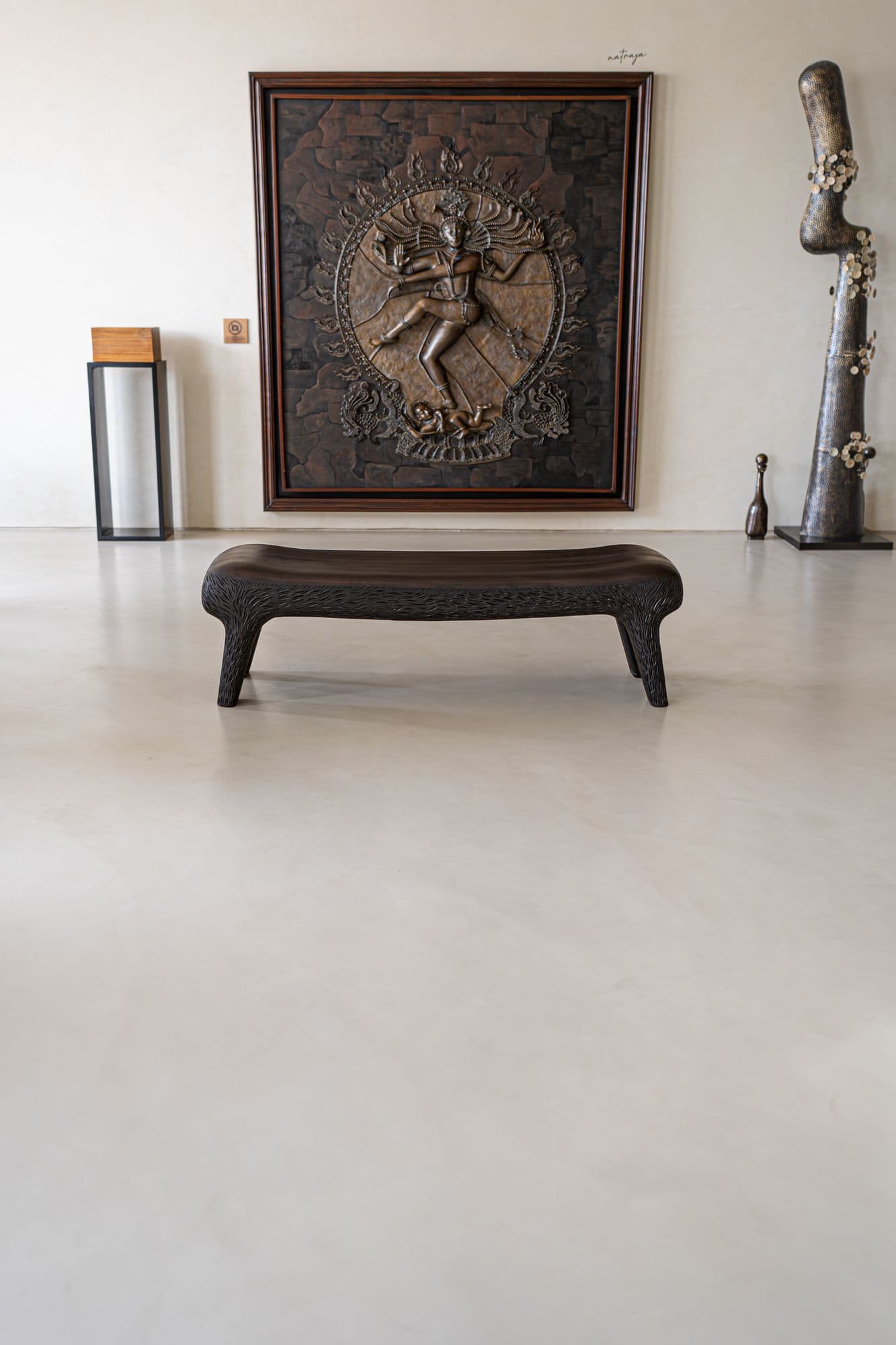
Microcement comes in a wide range of pigmented colours, from chalk whites and warm greys to sand, taupe and terracotta, and its texture is shaped by the trowel: smooth and calm, softly cloudy, or more visibly textured. The final sheen, matt or satin, comes from the sealer.
Because micro cement is a blend of cement, polymers and pigments applied by hand, no two surfaces are identical. That variation is part of the appeal.
Popular Microcement Colours
| Colour family | Look | Works well in |
|---|---|---|
| Whites and off-whites | Bright, airy, soft movement | Small bathrooms, minimal interiors |
| Light and mid greys | Classic concrete feel | Living floors, modern kitchens |
| Charcoal and dark greys | Dramatic, shows texture | Feature walls, powder rooms |
| Taupe and greige | Warm, calm | Bedrooms, open-plan homes |
| Sand and beige | Earthy, soft | Japandi and Mediterranean rooms |
| Terracotta and clay | Warm, rustic | Courtyards, cafes, accent walls |
Light colours show dust less on floors; dark colours show more texture and water marks.
Can Microcement Be Made in Custom Colours?
Yes. Colortale states its micro cement can be tinted to match any desired shade (Micro cement, FAQ). Ask for a physical sample on site, since lighting and texture change how a colour reads.
Microcement Textures
Texture depends on the product grain and trowel technique.
- Smooth: calm, close to polished concrete. Colortale's Cemento is a smooth matt finish with minimal thickness.
- Cloudy or marbled: soft tonal movement from layered trowelling, the classic microcement look.
- Textured: visible grain and trowel marks for a more rustic, handmade feel.
- Related Colortale finishes: Classico Eco is an engineered cement with polymers; Classico Lime gives a lime look with a concrete-finish texture; Classico Metallic uses metallic powders for a lustrous effect.
Matt, Satin or Gloss?
Sheen comes from the sealer. Matt looks most natural and hides small marks; satin adds a gentle sheen and is easy to wipe; gloss is less common and shows scratches. Showers and kitchen counters may need a particular sealer whatever the sheen. Colortale offers matt, satin and glossy finishes (Micro cement, FAQ).
Choosing by Room
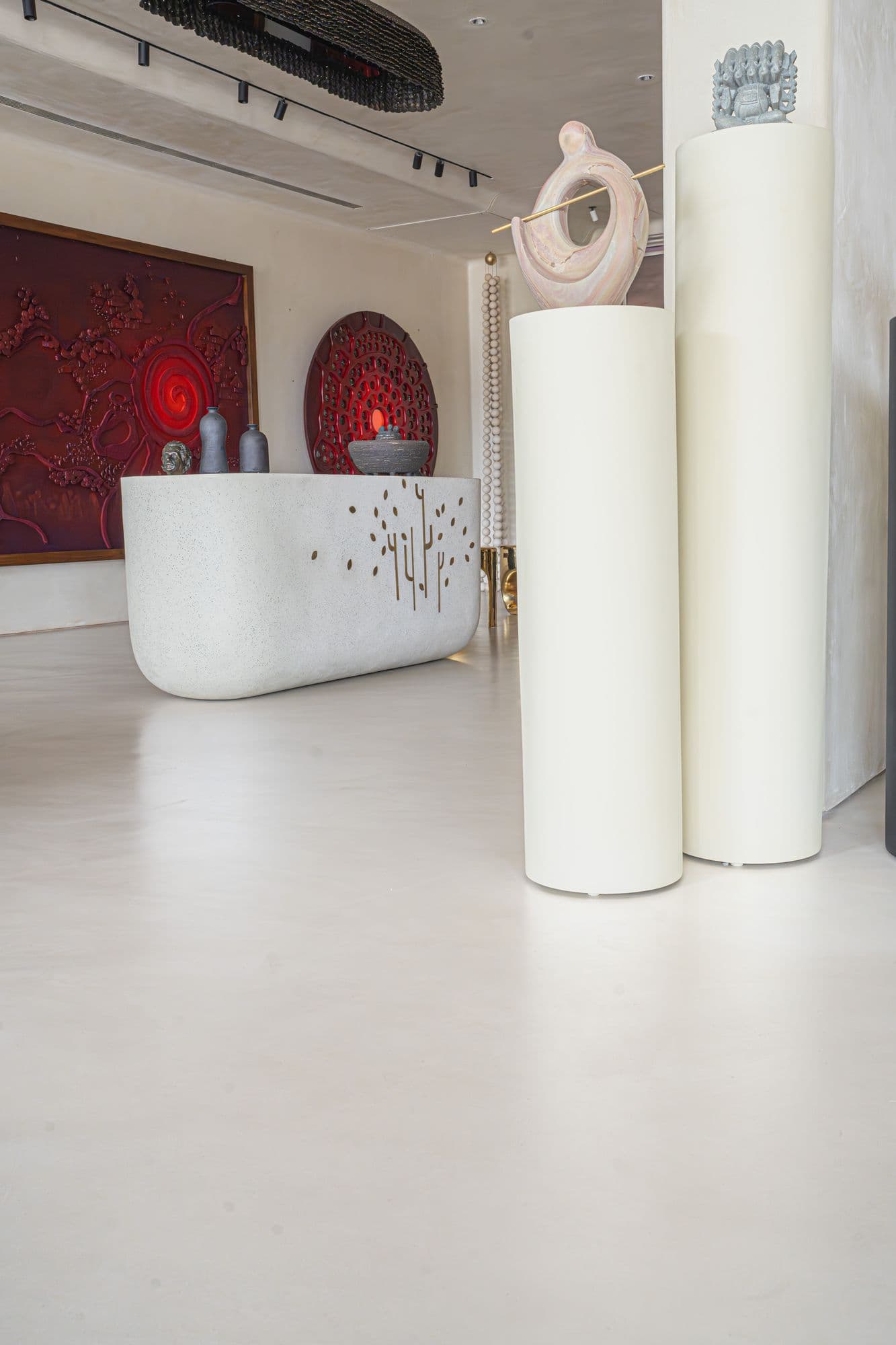
- Bathrooms: light greys, whites or warm sands keep small rooms bright; a seamless colour across floor and walls makes them feel larger.
- Kitchens: mid tones hide crumbs and spice marks better than very pale or very dark colours.
- Living and dining floors: warm greys and greige suit most furniture and timber.
- Feature walls: charcoal, terracotta or metallic effects make a statement. See microcement walls.
Will It Look Exactly Like the Sample?
Close, but not identical. Hand application, the substrate, lighting and sealer all affect the result. Approve a sample on your site, under your lighting, and expect natural tonal variation. How the layers create that variation is covered in the microcement application process.
Do Microcement Colours Fade?
Mineral and inorganic pigments are generally colour-stable indoors. Strong sun outdoors and worn sealer can change the look over time; keeping the sealer in good order helps (see microcement maintenance).
Start With Samples
Shortlist two or three colours, decide on texture and sheen, and see samples in your own light before choosing. Contact us to see Colortale micro cement samples.
Frequently Asked Questions About Microcement Colours and Textures
What colours does microcement come in?
A wide range, including whites, greys, charcoal, taupe, sand, beige and terracotta.
Can microcement be made in a custom colour?
Usually yes, because it is pigmented during mixing. Always approve a sample on site.
What textures are possible with microcement?
Smooth, cloudy or marbled, and visibly textured, depending on the grain and trowel technique.
Is microcement matt or glossy?
Its sheen comes from the sealer. Matt and satin are the most common.
What is the best microcement colour for a small bathroom?
Light greys, whites or warm sands keep a small bathroom bright and feel spacious.
Which colour shows dirt least on floors?
Mid tones such as warm grey and greige usually hide dust and marks best.
Will my microcement match the sample exactly?
It will be close, but hand application, lighting and the surface create natural variation.
Does microcement colour fade?
Indoors it is generally stable. Strong sun and worn sealer can change it over time outdoors.