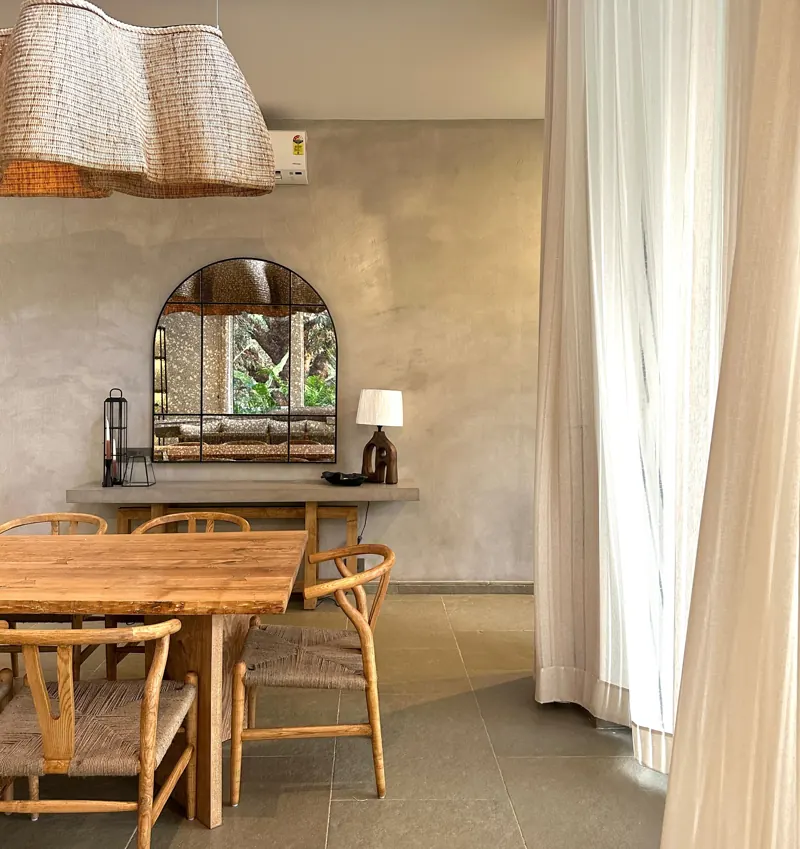

Microcement is applied by hand in thin layers: the surface is checked and repaired, primed, given base coats (often with a reinforcing mesh), sanded, given finish coats, and sealed. The total build is only a few millimetres, and the work usually spans several days plus curing time before full use.
Every manufacturer's system differs slightly, so treat the steps below as the typical sequence. Colortale confirms the layer count and timings for your project during a site assessment.
Step 1: Surface Assessment and Preparation
Most problems start here. The surface must be sound, clean, dry and stable. Loose tiles are fixed, cracks are treated, and grease, dust and old coatings are removed. Micro cement from Colortale adheres to tiles, wood and concrete, but each needs its own preparation. Our guide to substrate preparation goes deeper.
Step 2: Primer
A primer is applied to help the microcement bond and to control absorbency. Non-absorbent surfaces such as glazed tiles get a bonding primer.
Step 3: Base Coats and Mesh
The structural layers. Base coats are applied first; Colortale uses flexible base coats to help prevent cracking (Micro cement, FAQ). Many systems embed a reinforcing mesh where the base needs it. Joints in tiles are filled during this stage so they do not show through.
Step 4: Sanding
Each coat is lightly sanded once dry to remove trowel ridges and prepare for the next layer.
Step 5: Finish Coats
The decorative layers. Usually two thin finish coats with pigment, trowelled to create the chosen look, from smooth and calm to cloudy and textured. Trowel technique is what makes each surface unique; see microcement colours and textures.
Step 6: Sealing
The sealer makes the surface water and stain resistant. Floors, showers and counters need the most protection. Colortale states its micro cement is waterproof when sealed properly.
Step 7: Curing and Handover
Allow time before use. Light foot traffic, furniture, water exposure and full use each come at different stages after sealing. Protect the surface during curing and keep other trades off it.
Typical Sequence at a Glance
| Stage | What happens | Purpose |
|---|---|---|
| Preparation | Repair, clean, level, fix loose tiles | Sound base |
| Primer | Bonding or sealing primer | Adhesion, absorbency control |
| Base coat 1 + mesh | Structural layer with fibreglass mesh | Crack resistance |
| Base coat 2 | Second structural layer | Strength, flatness |
| Sanding | Between coats | Smoothness |
| Finish coats | Pigmented decorative layers | Colour and texture |
| Sealer | Protective topcoats | Water and stain resistance |
| Curing | Rest period | Strength before use |
How Thick Is Microcement?
Typically 2 to 3 mm, according to Colortale's micro cement FAQ, which is why it can go over existing tiles without demolition and usually without changing door heights. The exact build depends on the system, substrate and whether mesh is used. Read more on micro cement over existing tiles.
How Long Does Application Take?
Each layer must dry before the next, followed by curing, so allow several days. Colortale says most residential projects take from a few days to a couple of weeks or a month, depending on size (Micro cement, FAQ).
What Can Go Wrong?
Poor preparation, moving substrates, skipped mesh, rushed drying and thin sealing are the usual causes of cracks, stains and peeling. That is why it is a specialist job, not a DIY one. We are open about the limits in microcement disadvantages.
What to Ask Your Applicator
Ask what preparation your surface needs, how many base, finish and sealer coats are included, the total thickness, the timeline and cure times, and how to care for it afterwards (see microcement maintenance). Contact us to book a site assessment.
Frequently Asked Questions About Microcement Application
How is microcement applied?
By hand in thin layers: preparation, primer, base coats often with mesh, sanding, finish coats and a protective sealer.
How thick is microcement?
Only a few millimetres in total. The exact thickness depends on the system and surface, and is confirmed after a site assessment.
How many coats of microcement are needed?
Typical systems use two base coats and two finish coats, followed by several sealer coats.
Can microcement be applied over tiles?
Yes. Colortale's micro cement adheres to tiles once they are sound, clean and primed, and grout lines are filled during the base coats.
How long does microcement take to apply?
Usually several days for a room, plus curing time before full use.
When can I walk on microcement?
Light foot traffic is allowed sooner than full use. Your applicator will give exact times for the system used.
Why is mesh used in microcement?
A fibreglass mesh in the base coat helps resist movement and cracking.
Can I apply microcement myself?
It is not recommended. Results depend on preparation, trowel skill and sealing, so it is best done by trained applicators.