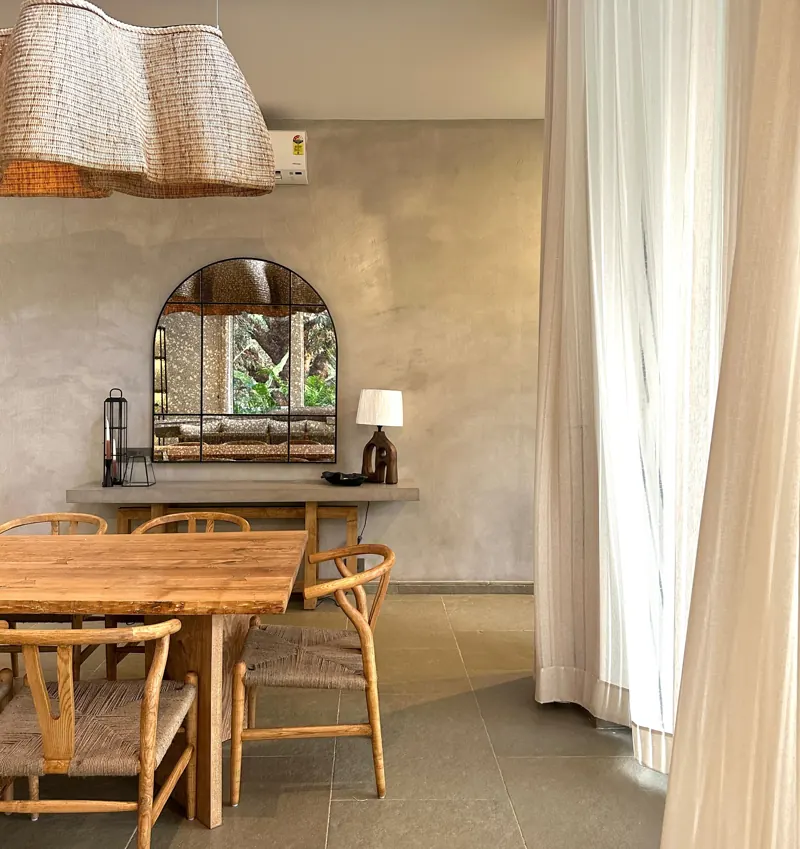
Choose microcement when you need one sealed, seamless surface that can also cover floors, showers, counters or old tiles. Choose limewash for a soft, breathable, chalky wall. Choose Venetian plaster for polished, stone-like depth on walls and ceilings. Choose paint when speed, washability and a plain finish matter most.
The quickest way to decide is the table below: start with where the surface is and how wet it gets, then pick the look.
Decision Table: Which Finish Should You Choose?
| If you need... | Microcement | Limewash | Venetian plaster | Paint |
|---|---|---|---|---|
| Floors as well as walls | Yes | No | No | No |
| Shower walls | Yes, sealed | No | Wet-area product only (Venetian Facade) | No |
| To go over existing tiles | Yes, after preparation | No | No | No |
| A breathable wall | Low once sealed | High | High unless sealed | Low to medium |
| Look | Concrete, seamless | Chalky, cloudy matt | Polished stone, depth | Flat, uniform |
| Sheen | Matt to satin via sealer | Matt | Matt to high gloss by burnishing | Matt to gloss |
| Cleaning | Wipe, neutral cleaner | Gentle dusting | Wipe gently | Washable (most emulsions) |
Lime plaster is the other natural option: Colortale describes its lime plaster as natural, breathable and made with low VOC products, against microcement's seamless finish that is waterproof when sealed. Choose lime plaster for breathable, textured walls and microcement where you need a sealed, wipeable surface or a floor.
| Touch-ups | Local repair, may show | Brush fresh coat over old | Local repair by applicator | Easy repaint |
|---|---|---|---|---|
| Exterior | Yes, exterior render | Yes, weathers softly | Venetian Facade | Exterior paints |
| Skill needed | Specialist | Skilled brushwork | Specialist trowel work | Any painter |
Microcement: What It Is and Where It Wins
Micro cement blends cement, polymers and pigments, is trowelled in thin layers and sealed. Colortale's micro cement can go on walls, floors, countertops, stairs and furniture, adheres to tiles, wood and concrete, and is waterproof when sealed properly. It wins wherever a surface must be seamless and wipeable, or continue from wall to floor. See microcement walls.
Microcement vs Limewash
Limewash is slaked lime, water and mineral pigments brushed onto porous brick, plaster, concrete or stone. It dries to a velvety matt finish and lets walls breathe. It is not for splash zones or floors and cannot go over tiles; read is limewash waterproof. Microcement is the choice for bathrooms and floors; limewash for living rooms, bedrooms, ceilings and facades where a soft, breathing wall matters. Renewing limewash is simple: a fresh coat goes over the old one.
Microcement vs Venetian Plaster
Venetian plaster is lime-based and burnished. Colortale's Veniso is slaked lime and ground marble, polished to varying gloss with a chiaroscuro effect from the trowel, and described as robust against wear; Seta adds mica for a silk-like shimmer. Venetian plaster is a wall and ceiling finish, not a floor. For wet areas, Colortale's Venetian Facade is a hydraulic lime plaster described as suitable for saunas and showers; see Venetian plaster in bathrooms. Choose microcement for a calm concrete look and floors; Venetian plaster for polished depth that changes with the light.
Microcement vs Paint
Paint forms a film on the surface: quick, inexpensive, washable and easy to change, but flat and uniform. Microcement and the lime finishes are built by hand and carry texture and variation that paint cannot copy. Texture paints imitate the look; see Venetian plaster vs texture paint and limewash vs regular paint.
Can You Combine Them?
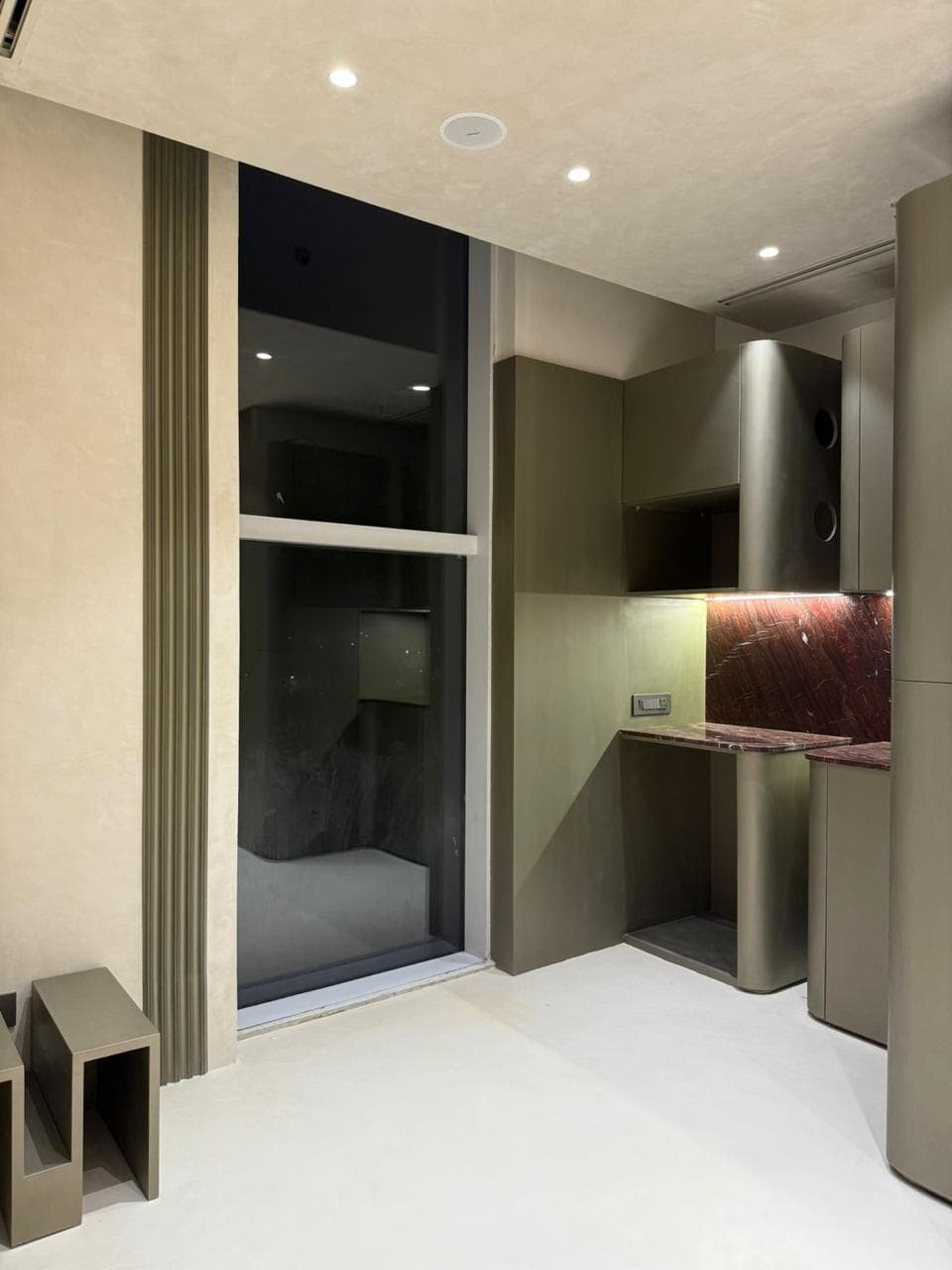
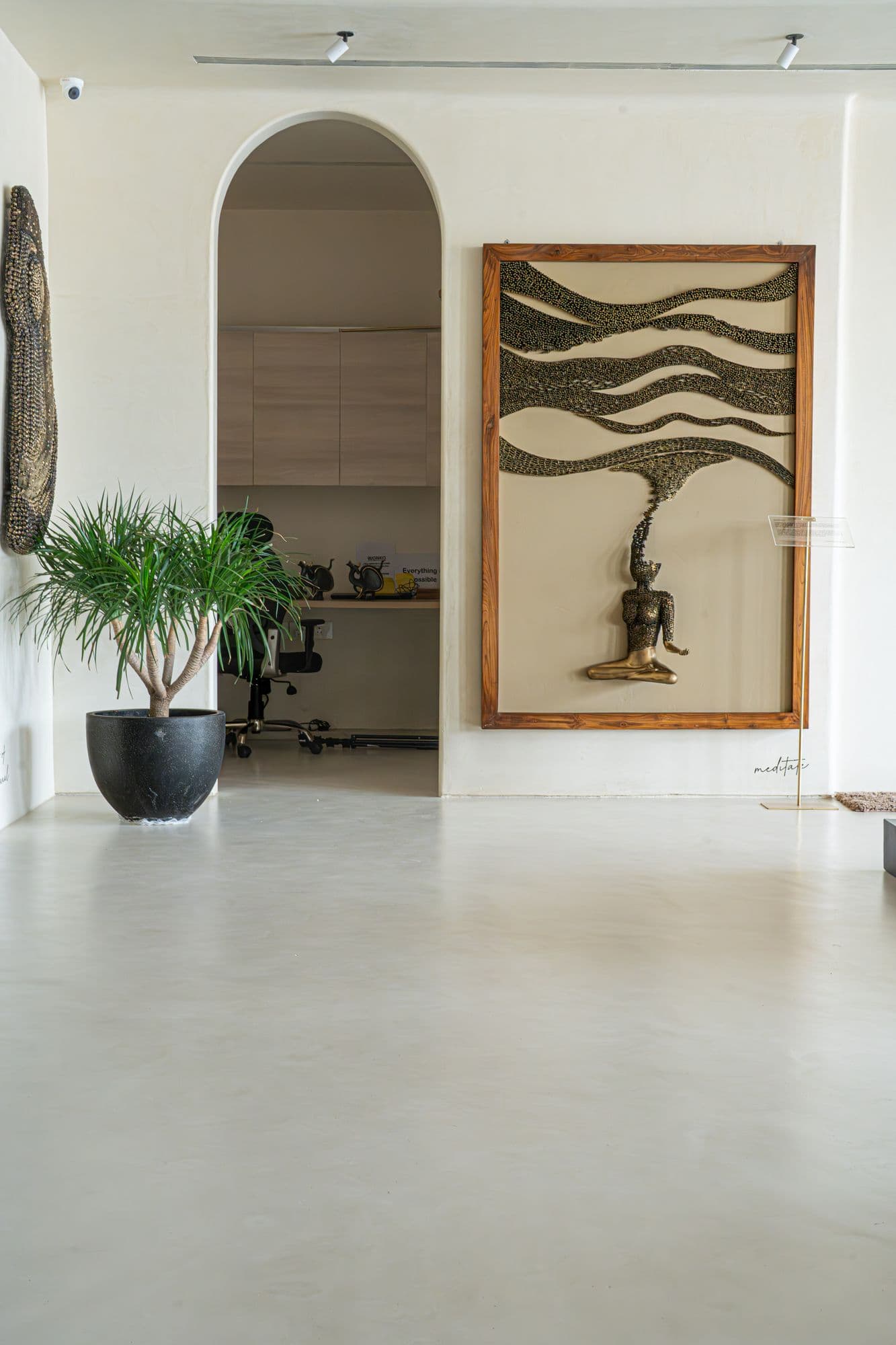
Yes, and many rooms do. Colortale's Faridabad Office used limewash on walls and ceiling with a Pastellone floor. At Takshini in New Delhi, Carrara Venetian plaster covers walls and ceiling over a Cemento floor. A common home pattern is limewash or Venetian plaster on walls, microcement in bathrooms and on floors.
What About Stucco?
Stucco is a broader term for textured lime or cement plasters, often used outdoors. See what is stucco. To compare the two lime finishes directly, read limewash vs Venetian plaster.
The Short Answer
Wet zones, floors or over tiles: microcement. Soft, breathable walls: limewash. Polished stone depth: Venetian plaster. Fast, plain and washable: paint. Contact us to see samples side by side.
Frequently Asked Questions About Microcement vs Other Wall Finishes
What is the difference between microcement and limewash?
Microcement is a sealed, seamless cement-based coating for walls, floors and wet areas. Limewash is a breathable matt lime paint for walls and ceilings.
What is the difference between microcement and Venetian plaster?
Microcement has a concrete look and suits floors and showers. Venetian plaster is burnished lime, often with marble, for polished walls and ceilings.
Which is best for a bathroom?
Microcement, because it is waterproof when sealed. Colortale's Venetian Facade is also described as suitable for showers and saunas. Limewash and paint are not for shower walls.
Which can go on floors?
Only microcement of these four. Limewash, Venetian plaster and paint are wall finishes.
Which can go over tiles?
Microcement, after the tiles are sound, cleaned and primed.
Which is most breathable?
Limewash, followed by unsealed Venetian plaster. Sealed microcement and most paints are far less breathable.
Which is easiest to touch up?
Paint and limewash. Microcement and Venetian plaster need local repairs by the applicator.
Is lime plaster or microcement better for walls?
Lime plaster for a breathable, natural textured wall; microcement for a seamless, sealed surface that also works on floors and in showers.
Can I use more than one in a home?
Yes. Lime finishes on walls with microcement floors and bathrooms is a common combination.