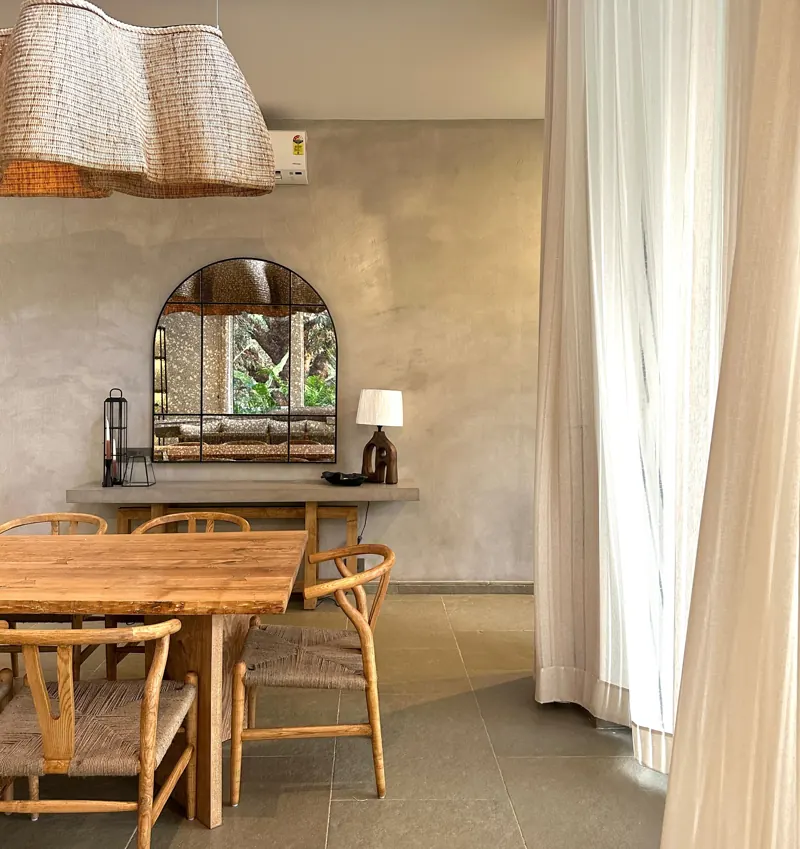
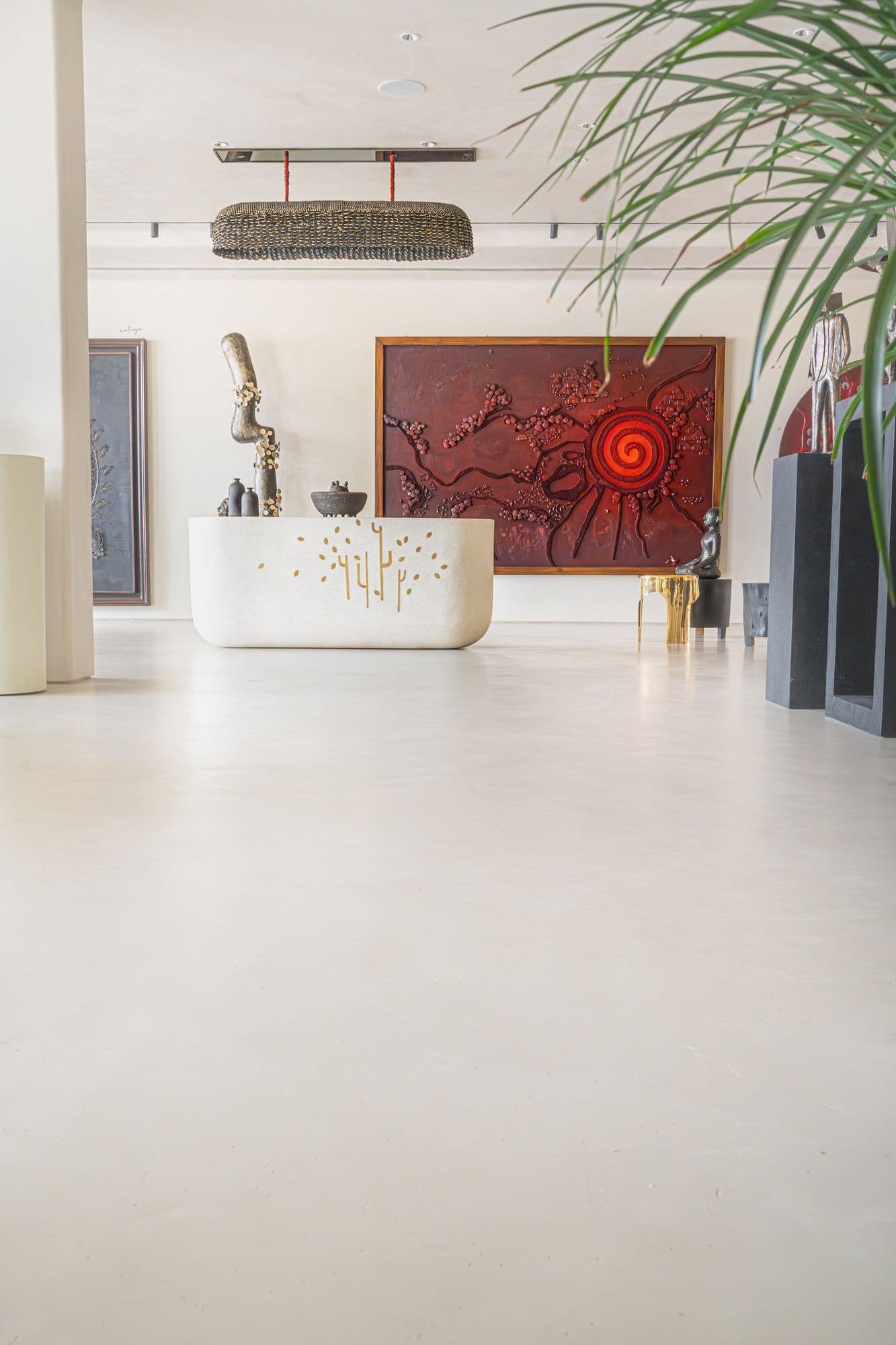
Choose Venetian plaster if you want real depth, a stone or marble look that improves with age, and a breathable lime finish that lasts for many years. Choose texture paint if you need a lower-cost, faster finish for an accent wall, a rental home or a look you may change in a few years.
Venetian plaster is slaked lime and marble, trowelled and burnished by hand in thin layers. Texture paint is an acrylic paint with fillers, shaped with rollers, combs or trowels. One becomes part of the wall; the other is a coating on it. That shows in how each looks up close, how it ages and how it is repaired.
What Is the Real Difference?
Material and method. Venetian plaster builds up translucent layers of lime and marble that are compressed with a steel trowel, so light enters the surface and comes back out, giving depth. Texture paint creates a pattern on the surface, so the effect is in relief rather than in depth. Up close, real Venetian plaster looks like stone; most texture paints look like paint with a pattern.
Comparison Table
| Factor | Venetian plaster | Texture paint |
|---|---|---|
| Material | Slaked lime and marble (mineral) | Acrylic or polymer with fillers |
| Look | Depth, movement, stone or marble effect | Raised pattern or effect in relief |
| Sheen | Matt to high gloss, by burnishing | Usually matt; some metallic or pearl |
| Breathability | High | Low to moderate |
| Ageing | Hardens and develops patina | Can look dated; may fade or yellow |
| Cleaning | Wipe with damp cloth; wax adds protection | Smooth effects wipeable; deep patterns trap dust |
| Repairs | Skilled re-trowel or re-burnish | Patches often show; usually repaint the wall |
| Wall prep | Flat, well-prepared wall | Tolerates more unevenness |
| Application | Skilled artisan, several coats | Faster, more painters can do it |
| Changing it later | Needs skimming or priming | Paint over after preparation |
Which Lasts Longer?
Venetian plaster, typically by a wide margin. Lime keeps hardening as it cures, and a burnished surface resists wear well. Texture paint lasts as long as the paint film; it is usually redone when you redecorate. Magicbricks' comparison for Indian homes describes texture paint as the choice for owners who want flexibility to change the look in five to eight years, and Venetian plaster as a long-term investment.
Why Does Venetian Plaster Cost More?
Labour and skill, more than material. A Venetian finish needs a very flat base, several thin coats, drying between them, and hand burnishing by a trained applicator. Texture paint goes on in one or two passes. This page does not give rates. When you compare quotes, check what each includes: wall preparation, number of coats, burnishing, wax or sealer, and site protection.
Is "Marble Texture Paint" Venetian Plaster?
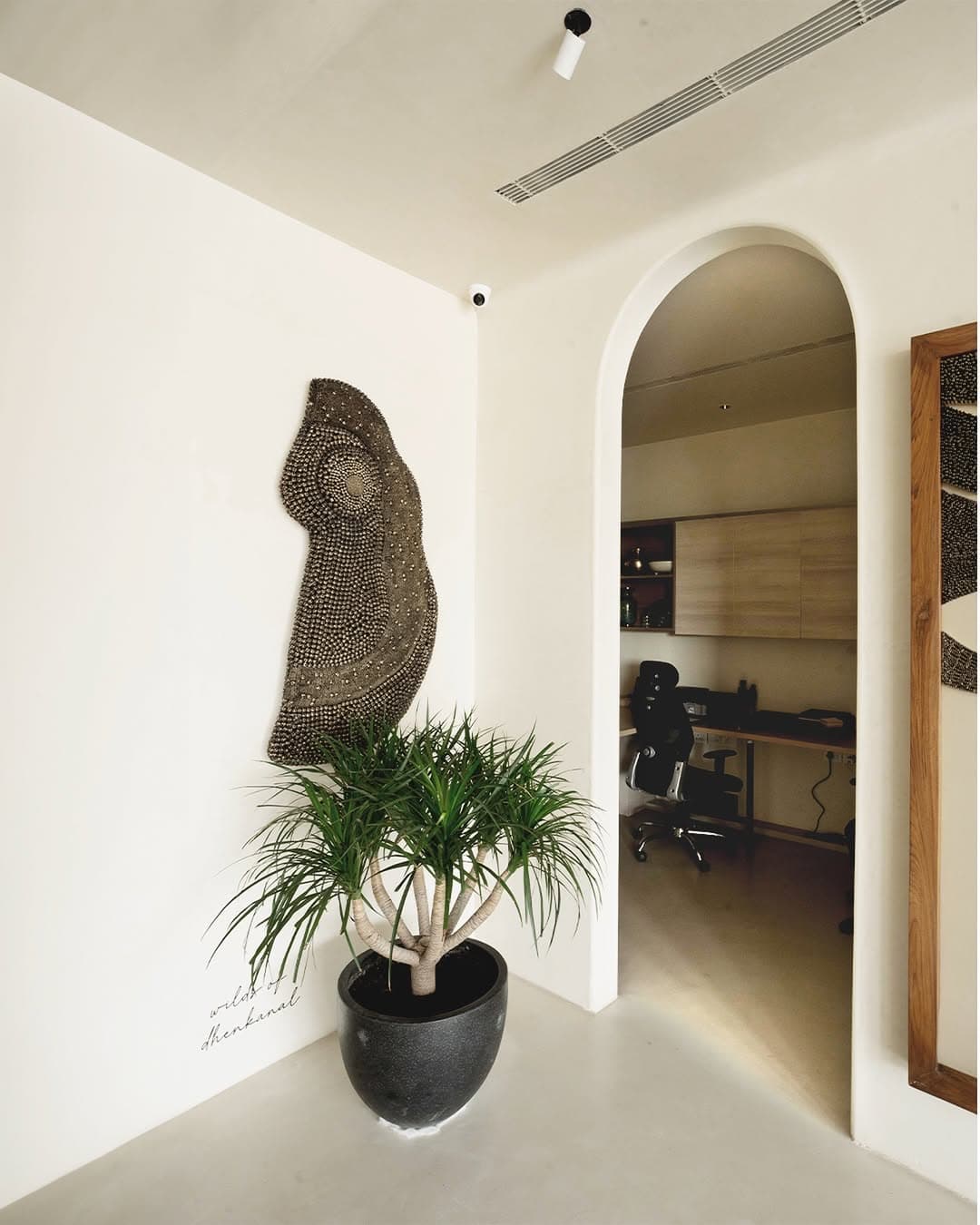
Usually not. Many products sold as marble, Venetian or Italian texture paint are acrylic paints that imitate the look. They can be good value for an accent wall, but they do not have the depth, breathability or ageing of lime and marble. Ask what the binder is. If you want a true marble effect, Colortale's Carrara is a Venetian plaster crafted with coarser marble granules, and Veniso draws on the interiors of Venetian palaces. For a soft metallic pearlescence instead of a patterned metallic paint, look at Epoque.
Which Is Easier to Live With?
Both are easy to live with in the right place. Texture paint suits busy corridors and children's rooms if you choose a smooth, washable effect. Venetian plaster is wiped with a damp cloth, and polished finishes are often waxed for extra protection. A scuff on Venetian plaster can sometimes be re-burnished; a scuff on texture paint usually means repainting the wall.
Which Room Needs Which?
- Entrance foyer or double-height wall: Venetian plaster. It is the first impression, and depth reads from across the space.
- Living room feature wall: Venetian plaster for a long-term home; texture paint for a quick or budget refresh.
- Bedroom: a matt Venetian or marmorino finish, or a subtle texture paint. Avoid high gloss behind the bed.
- Children's room and corridors: smooth washable texture paint.
- Rental or short-term home: texture paint.
- Exteriors: neither standard version; use an exterior lime plaster such as Venetian Facade or a proper exterior texture coating.
Is Venetian Plaster Worth It for You?
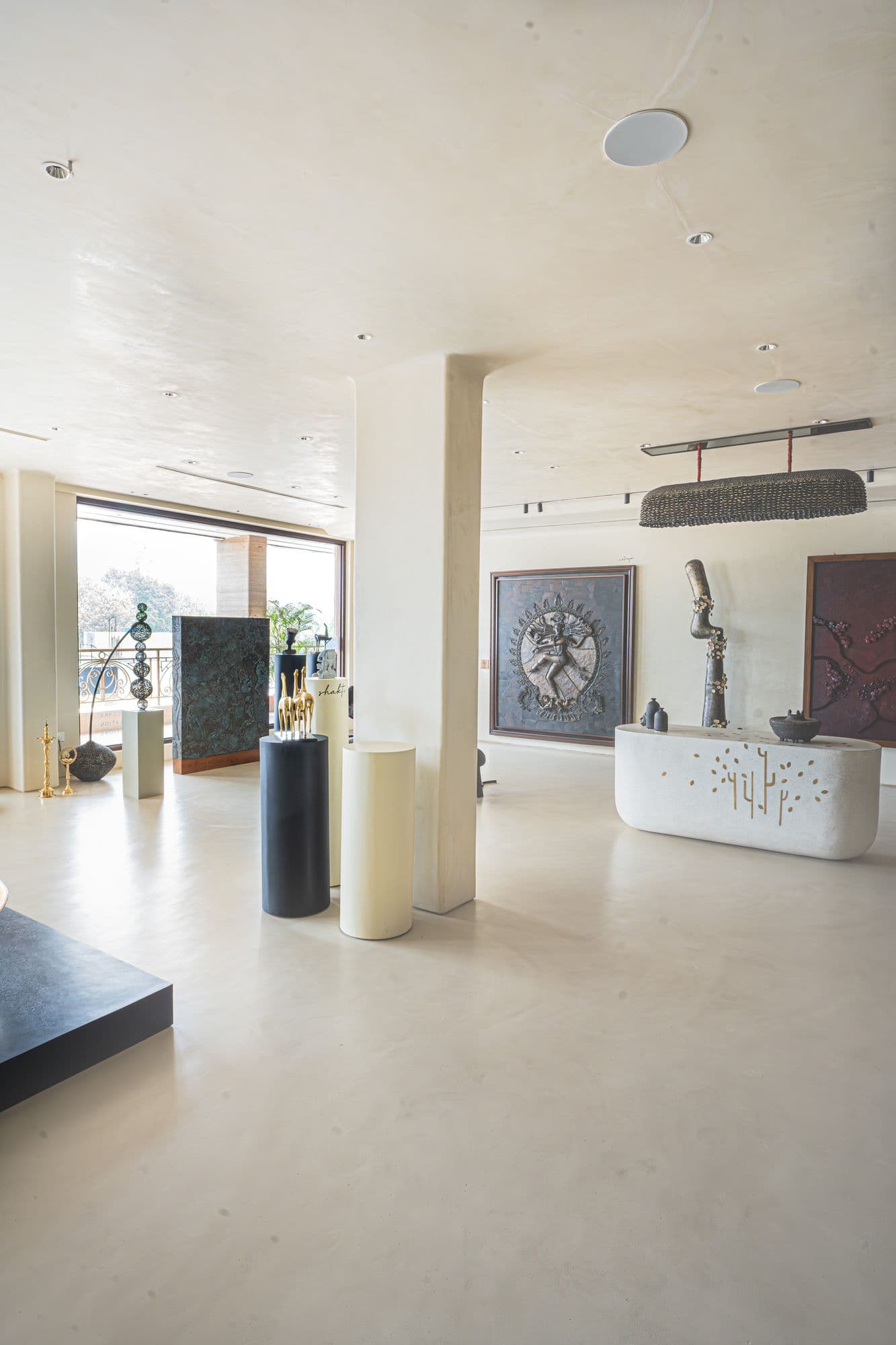
If you plan to stay, want a wall that looks better in ten years than it does today, and have a space where light can show it off, Venetian plaster is worth it. At Takshini in New Delhi, Carrara on the walls and ceiling gives the room a quiet stone envelope that paint cannot imitate up close. If budget, speed or flexibility matter more, a good texture paint from our decorative paints range is the practical choice. Still deciding between Venetian looks? Read Venetian plaster vs marmorino, compare limewash vs texture paint, or browse all Italian plaster finishes. Then contact us for samples.
Frequently Asked Questions About Venetian Plaster vs Texture Paint
What is the difference between Venetian plaster and texture paint?
Venetian plaster is lime and marble trowelled in thin layers for real depth. Texture paint is an acrylic paint shaped into a pattern on the surface.
Is Venetian plaster worth the extra cost?
For a long-term home and a wall that gets good light, yes. It lasts much longer and ages well. For a short-term or budget refresh, texture paint is more practical.
Which lasts longer?
Venetian plaster, because lime keeps hardening as it cures. Texture paint is usually redone when you redecorate.
Why is Venetian plaster more expensive than texture paint?
Mainly labour and skill: a flat base, several thin coats and hand burnishing by a trained applicator.
Is marble texture paint the same as Venetian plaster?
Usually not. Many marble texture paints are acrylic imitations. True Venetian plaster is made from lime and marble.
Can Venetian plaster be cleaned?
Yes. Wipe it with a soft damp cloth. Polished finishes are often waxed for extra protection.
Can I paint over Venetian plaster later?
Yes, after preparation, usually a suitable primer or a skim coat, because the surface is dense and may be waxed.
Which is better for a living room feature wall?
Venetian plaster for a long-term home with good light. Texture paint if you want a quicker, lower-cost change.