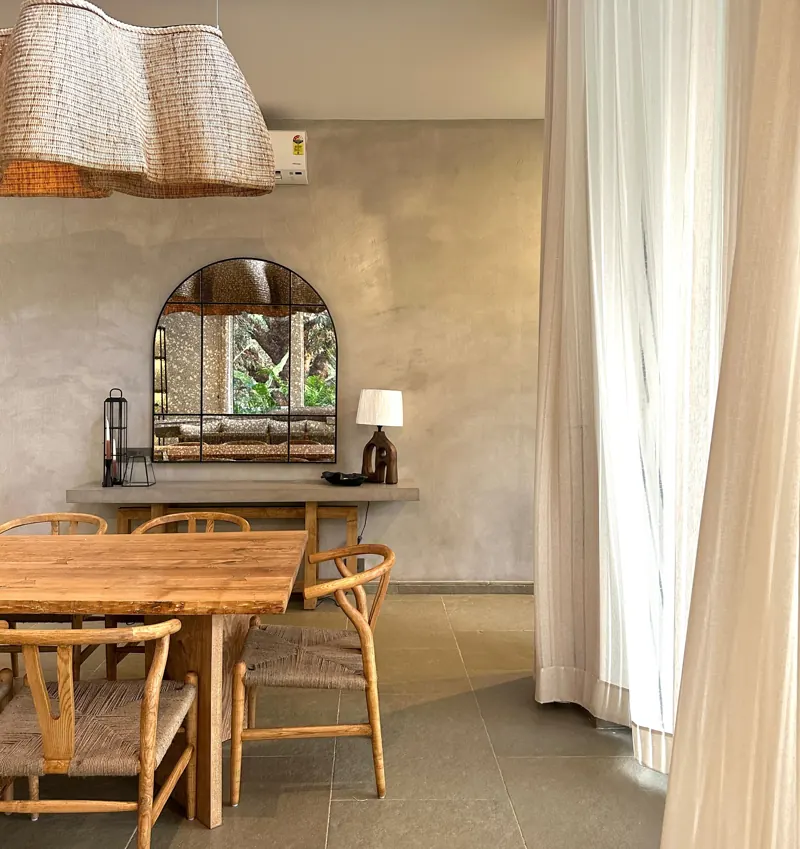
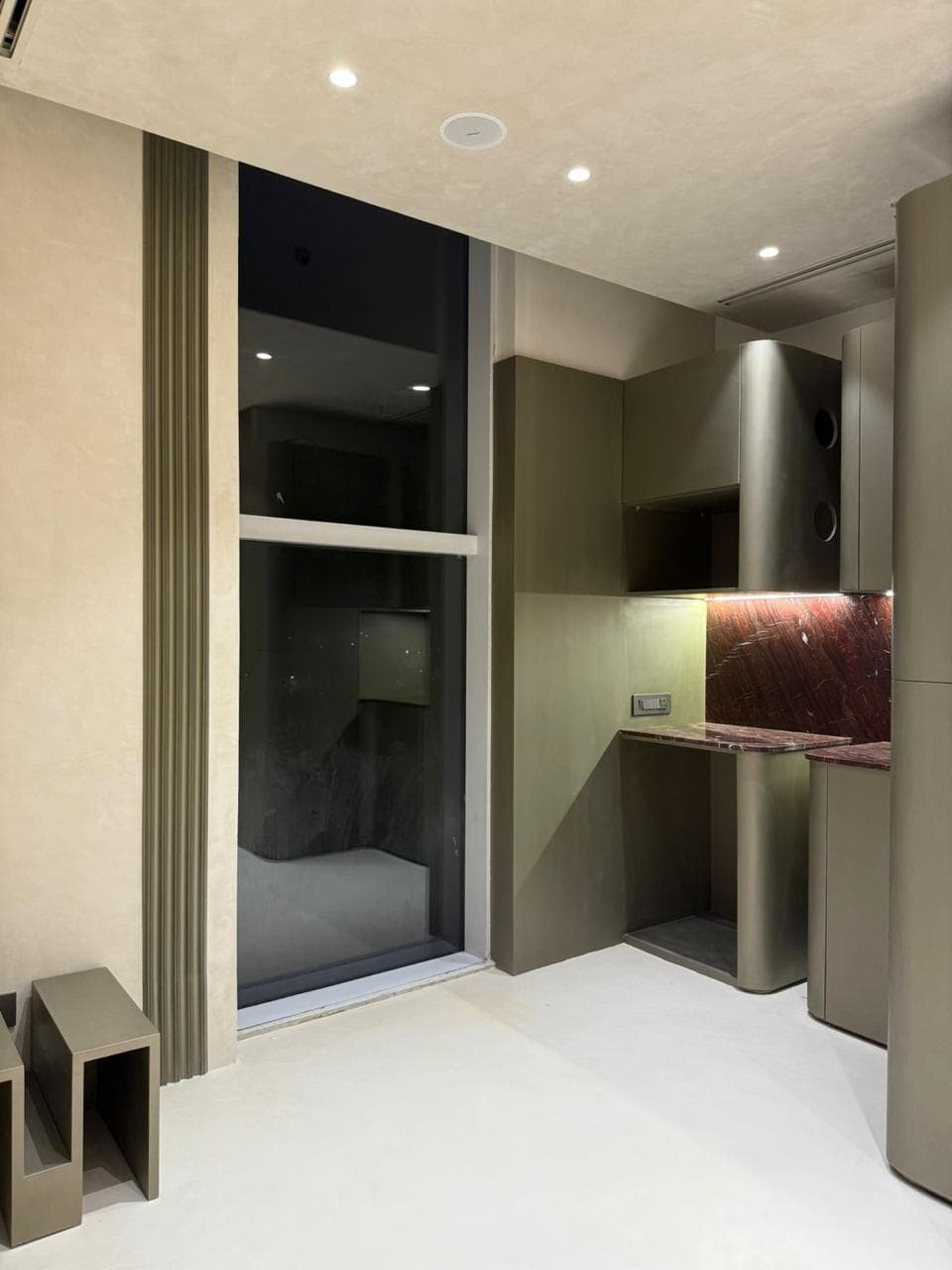
Choose limewash if you want a soft, matt, breathable wall with gentle cloud-like movement, on plaster, brick or a properly primed surface. Choose texture paint if you need to hide uneven walls, want a raised pattern, or need a surface that can take regular wiping.
Both are sold as "textured walls", but they are different materials. Limewash is slaked lime, water and mineral pigment that soaks into the wall. Most texture paints are acrylic coatings with fillers that sit on top of it. That one difference drives almost everything below: how the wall handles damp, how it ages and how you repair it.
What Is the Difference Between Limewash and Texture Paint?
Limewash is a mineral wash; texture paint is a thick acrylic film. Limewash is brushed on in thin coats and cures by absorbing carbon dioxide from the air, hardening back into a limestone-like layer within the wall surface. The movement you see comes from brush strokes and natural variation in how the lime dries.
Texture paint is a heavy-bodied paint applied with rollers, trowels, sponges or combs to build a raised pattern. Indian brands sell dozens of effects, from sand and stucco looks to metallic and 3D patterns. The pattern comes from the tool, not the material.
Comparison Table
| Factor | Limewash | Texture paint |
|---|---|---|
| What it is | Slaked lime, water, mineral pigments | Acrylic or polymer paint with fillers |
| Look | Soft, cloudy, matt; changes with light | Raised or patterned; depends on the effect chosen |
| Feel | Smooth to slightly chalky | Rough, gritty or sculpted |
| Breathability | High; lets moisture leave the wall | Lower; most form a closed film |
| Best base | Bare plaster, brick, stone, concrete, or primed paint | Most sound interior walls, including putty and emulsion |
| Hides wall flaws | Softens minor flaws | Hides more, especially deeper effects |
| Cleaning | Dry dust or gentle damp sponge; not for scrubbing | Wipeable if smooth; deep patterns collect dust |
| Repairs | Recoat the area or wall; blends well | Patch repairs often show; pattern is hard to match |
| Ageing | Develops patina; renewed with a fresh coat | Can look dated; repaint or skim to change |
| Wet zones | Not for showers or splash zones | Depends on product; not for showers either |
Which Looks More Refined?
Limewash usually reads as more refined, because its movement is subtle and changes through the day. Texture paint can look striking, but heavy or geometric effects date faster. 2026 trend pieces from Indian brands point the same way: JK Cement's wall texture guide notes that bold geometric and high-contrast textures are being phased out in favour of layered neutrals and soft limewash-style finishes. If you want depth with more polish than limewash, a trowelled lime finish such as Classico Lime or a Venetian plaster is the next step up; see Venetian plaster vs texture paint.
Which Is Better for Damp or Humid Walls?
Limewash, as long as the source of water is fixed first. Because it is vapour-open, moisture in the wall can escape rather than push the coating off. A closed acrylic film over a damp wall is a common cause of blistering and peeling in Indian monsoons. A 2024 study of lime-plastered houses in India found that non-porous coatings on plaster led to mould, while breathable lime surfaces in ventilated rooms did not (PMC, 2024). Neither finish is a fix for leakage or rising damp.
Which Is Easier to Clean and Repair?
Texture paint is easier to wipe; limewash is easier to repair. A smooth, washable texture can be wiped, but deep patterns trap dust and are hard to clean. Limewash should only be dusted or sponged gently. When it marks, you brush a fresh coat over the area and it blends in, because limewash has no film edge. A damaged texture-paint patch usually needs the whole wall redone to hide it.
Is "Limewash Texture Paint" Real Limewash?
Not always. Several paint brands sell a "limewash effect" or "limewash texture" that is an acrylic paint applied with a brush to mimic the look. It can be a good budget option, but it will not breathe like lime and it repairs like paint. Ask the supplier what the binder is. If it is acrylic, treat it as texture paint in the table above.
Can You Put Limewash Over Texture Paint?
Sometimes, but it is not ideal. Limewash needs a porous surface, so a texture-painted wall needs a mineral primer first, and a deep texture will show through the thin limewash. For a heavily patterned wall, a skim coat back to smooth before priming gives a much better result. Our guide on how limewash is applied covers preparation.
Which Should You Choose, Room by Room?
- Living room feature wall: limewash. Its soft movement reads well in daylight and lamplight.
- Bedroom: limewash. Calm, matt and breathable.
- Children's room and corridors: a smooth, washable texture paint. More contact and cleaning.
- Kitchen splash zone: neither. Use a sealed finish that can handle grease and water.
- Uneven old walls: texture paint, or skim the wall smooth and then limewash.
- Exterior masonry: limewash on brick or plaster, which breathes and weathers evenly.
Is Limewash Right for Your Walls?
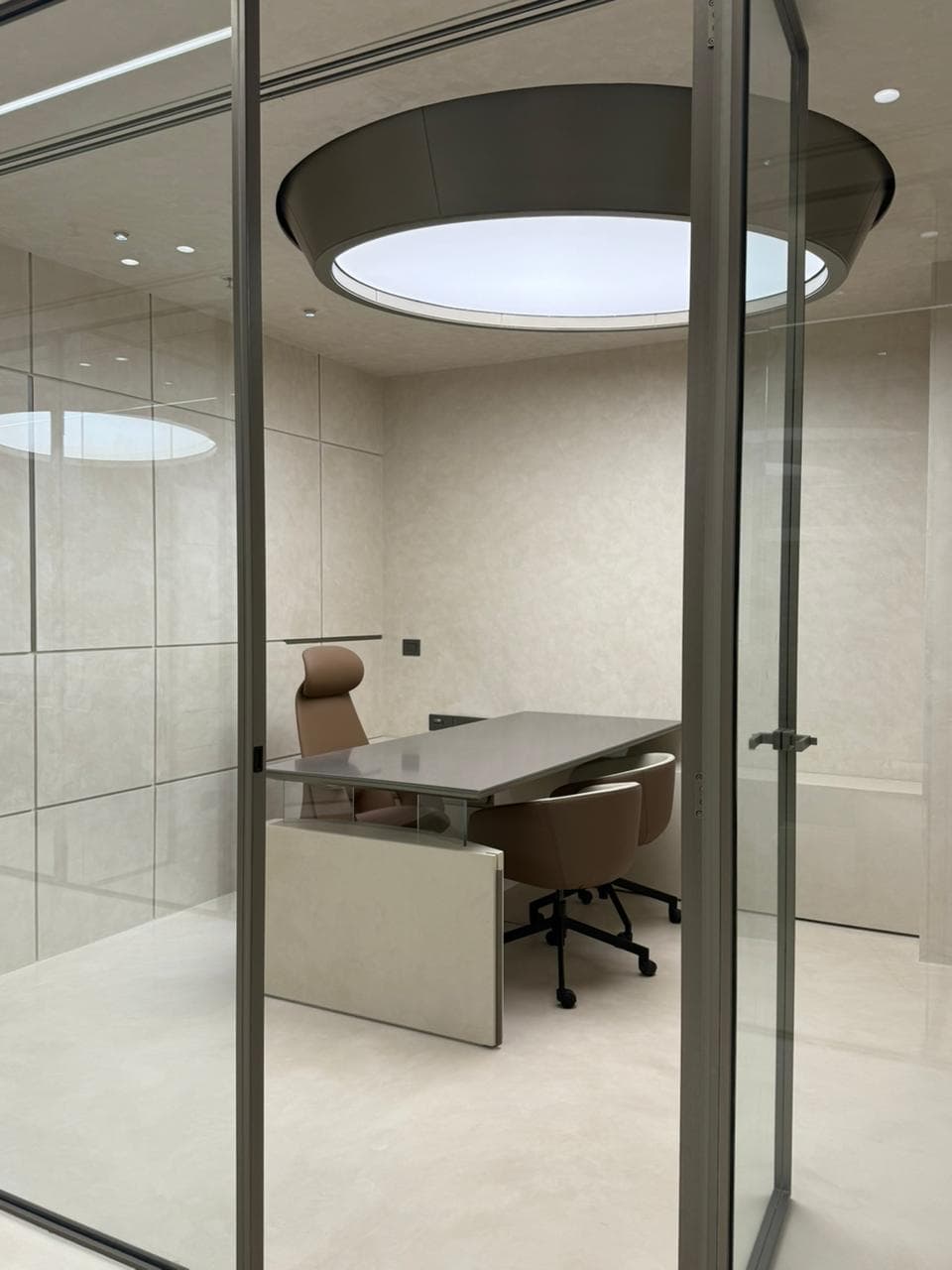
If your wall is plaster, brick or can be primed, and you want a quiet, natural finish that ages well, limewash is the better choice. If the wall is very uneven, sees heavy contact, or you want a bold pattern, texture paint is more practical. At our Faridabad Office project, limewash on the walls and ceiling gives a large workspace a soft, even glow that a patterned paint could not. For a side-by-side with ordinary emulsion, read limewash vs regular paint, or browse all types of wall texture finishes. When you are ready, contact us for a sample on your own wall.
Frequently Asked Questions About Limewash vs Texture Paint
Is limewash better than texture paint?
Limewash is better for a soft, breathable, natural look on plaster or brick. Texture paint is better for hiding uneven walls and for areas that need regular wiping.
Which lasts longer, limewash or texture paint?
Both can last many years indoors. Limewash is renewed by brushing a fresh coat over it, while worn texture paint usually has to be repainted or skimmed.
Is limewash good for damp walls?
It is better than a closed acrylic paint because moisture can escape, but the cause of the damp must be fixed first. No finish stops a leak.
Can I wash a limewashed wall?
Dust it or wipe gently with a damp sponge. Do not scrub, and do not use strong cleaners.
Can limewash be applied over texture paint?
Only after a mineral primer, and deep textures will show through. Skimming the wall smooth first gives a better result.
Is limewash texture paint the same as limewash?
Not always. Many limewash effect paints are acrylic. Ask what the binder is: real limewash is based on slaked lime.
Which is better for a living room feature wall?
Limewash suits most living rooms because its movement changes with daylight and lamplight. Choose texture paint if you want a bold, raised pattern.
Can limewash be used in a kitchen or bathroom?
Not in splash zones or showers. It can work on kitchen or bathroom walls away from water if the room is well ventilated.