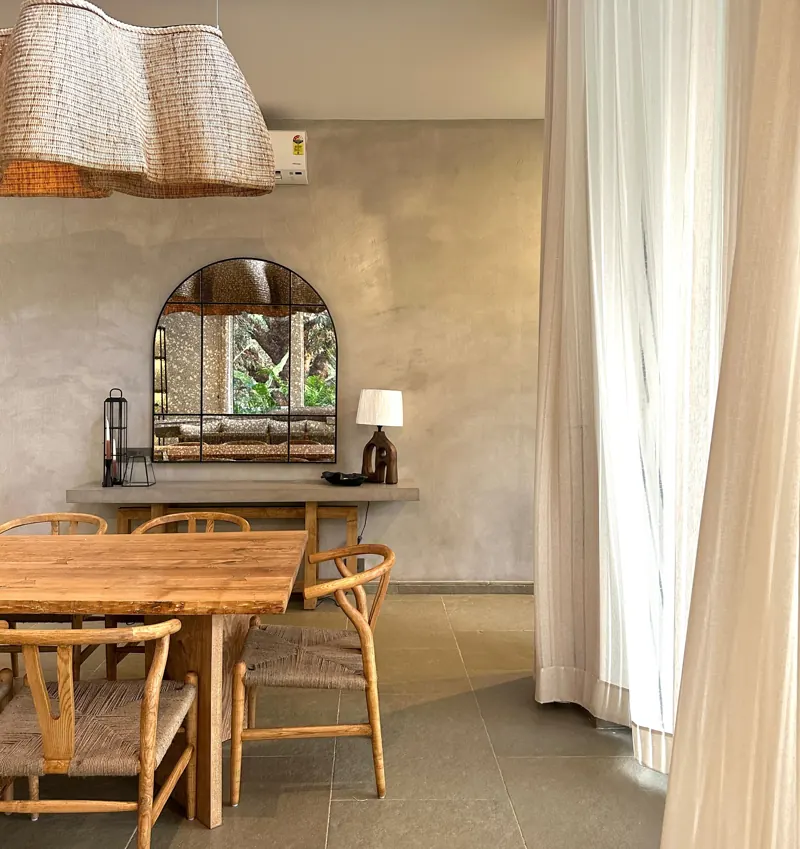
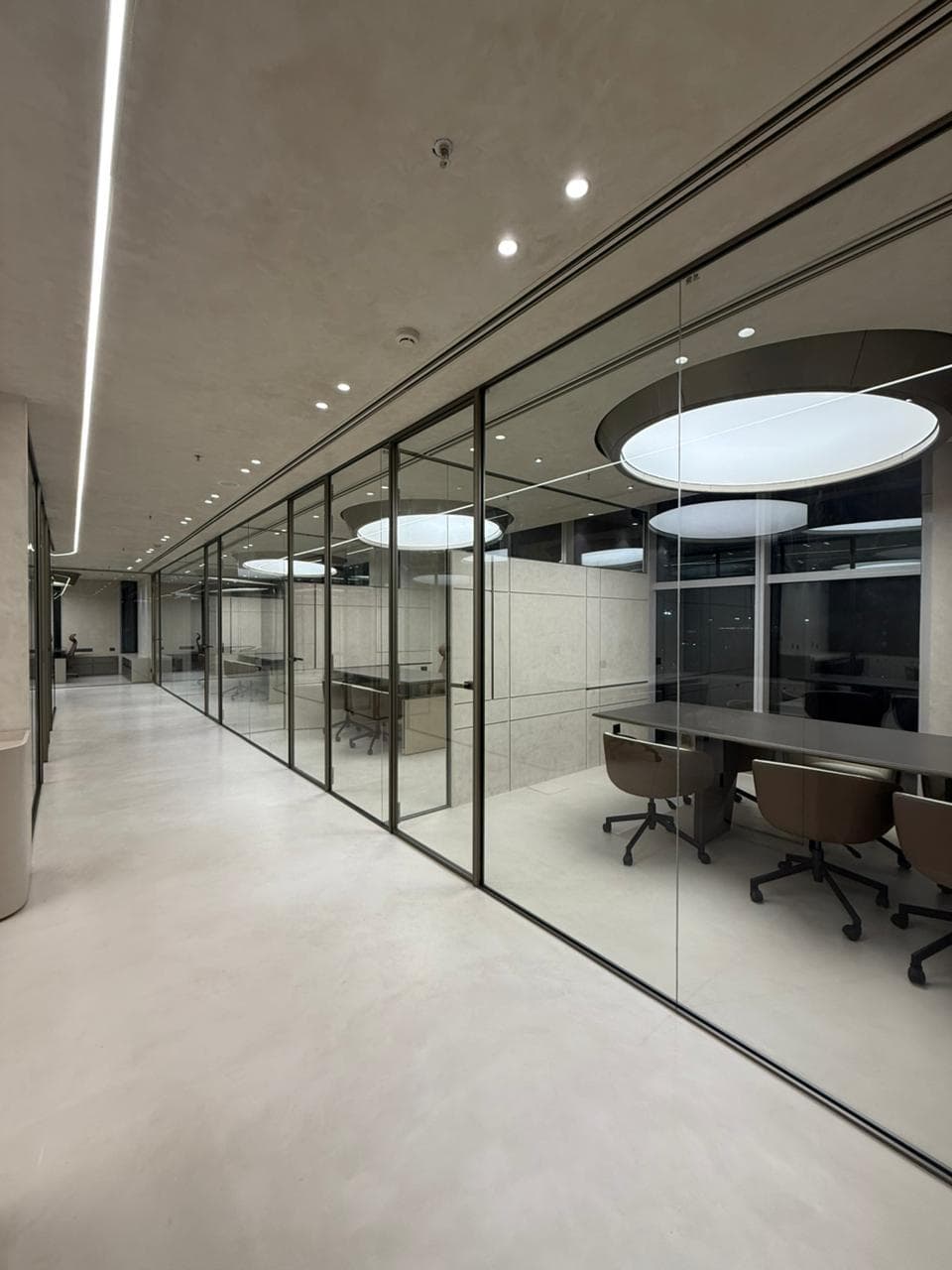
The main types of textured wall finish are limewash, lime plaster, microcement, Venetian plaster, stucco, tadelakt, metallic finishes and texture paint. The first group are real materials trowelled or brushed onto the wall; texture paint is a paint that imitates a texture. Choose by room, wall condition and how much upkeep you accept, not only by photo.
"Textured wall" covers everything from a sand-effect emulsion to hand-burnished marble plaster. They look similar on a phone screen and very different in a room. This guide sorts them into families, explains what each is made of, and shows where each one works in Indian homes.
Real Material or Paint Effect: The First Choice
Decide first whether you want a mineral finish or a paint effect. Mineral finishes such as limewash, lime plaster, Venetian plaster and microcement are made of lime, marble or cement. They have depth, age well and, in the case of lime, breathe. Paint effects are acrylic coatings shaped with tools; they are faster and cheaper, hide uneven walls and are easy to change, but repair like paint. Many products called "limewash texture" or "marble texture paint" are paint effects, so ask what the binder is.
Comparison Table
| Finish | Made of | Look | Breathable | Best for | Not for |
|---|---|---|---|---|---|
| Limewash | Slaked lime, water, pigment | Soft, cloudy, matt | Yes | Living rooms, bedrooms, ceilings, brick exteriors | Showers, splash zones |
| Lime plaster | Lime with aggregate, trowelled | Smooth to rustic, mineral | Yes | Whole rooms, heritage and damp-prone walls | Constant wet zones unless specified |
| Microcement | Cement, polymers, pigment | Seamless concrete, smooth to raw | Low once sealed | Feature walls, bathrooms over waterproofing, walls with floors | Moving or cracked bases |
| Venetian plaster | Lime and marble, burnished | Stone or polished marble depth | Yes | Foyers, feature walls, formal rooms | Showers; very uneven walls (polished) |
| Stucco | Cement, sand and lime | Textured, rough to subtle | Partly | Exteriors, semi-exteriors, rustic interiors | Small rooms if heavily textured |
| Tadelakt | Lime, polished and soaped | Satin, smooth, waterproof character | Yes | Showers, bathrooms, basins | Floors with heavy traffic |
| Metallic finishes | Metallic powders or liquid metal | Soft iridescence to solid metal | No | Accents, furniture, niches | Large walls with defects |
| Texture paint | Acrylic with fillers | Patterns in relief | Low | Budget accents, uneven walls, rentals | Damp walls (closed film) |
Limewash
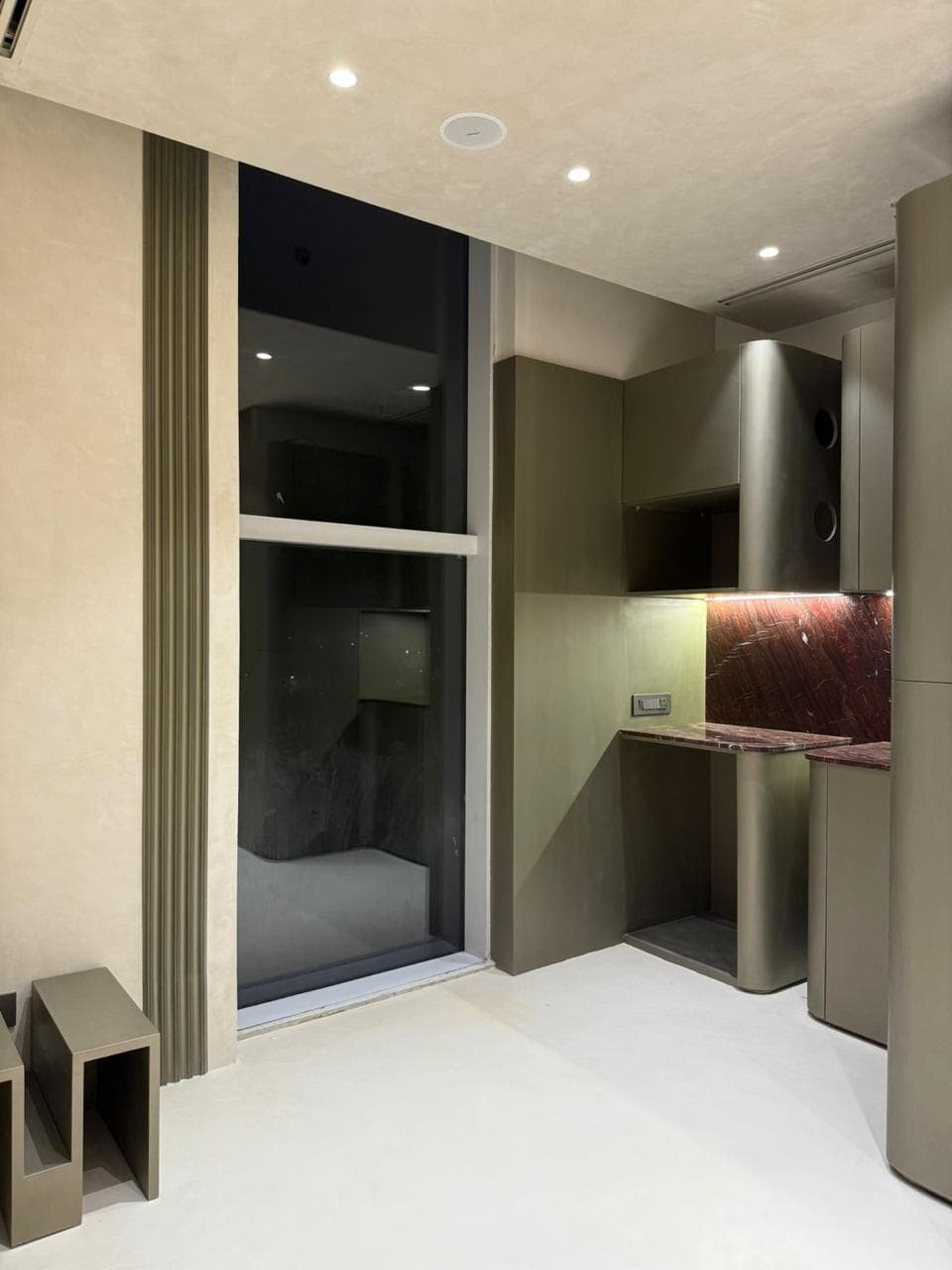
The softest, most natural-looking finish. Limewash is brushed on in thin coats and gives cloudy, matt movement that changes with daylight. It breathes, suits Indian monsoon humidity indoors, and is renewed by brushing a fresh coat over the old. Compare it with paint in limewash vs texture paint.
Lime Plaster
Lime plaster has more body than limewash and can be smooth, rustic or textured. Lime plaster is breathable and works across whole rooms and on older walls that need to dry out. Colortale's range also includes Classico Lime, which combines natural lime aesthetics with the texture of a concrete finish.
Microcement and Cement Finishes
For a seamless, modern concrete look. Microcement goes on in thin layers over plaster, concrete or sound tiles and is sealed. It can wrap walls and floors in one continuous surface. Read microcement walls for textures and limits.
Venetian Plaster
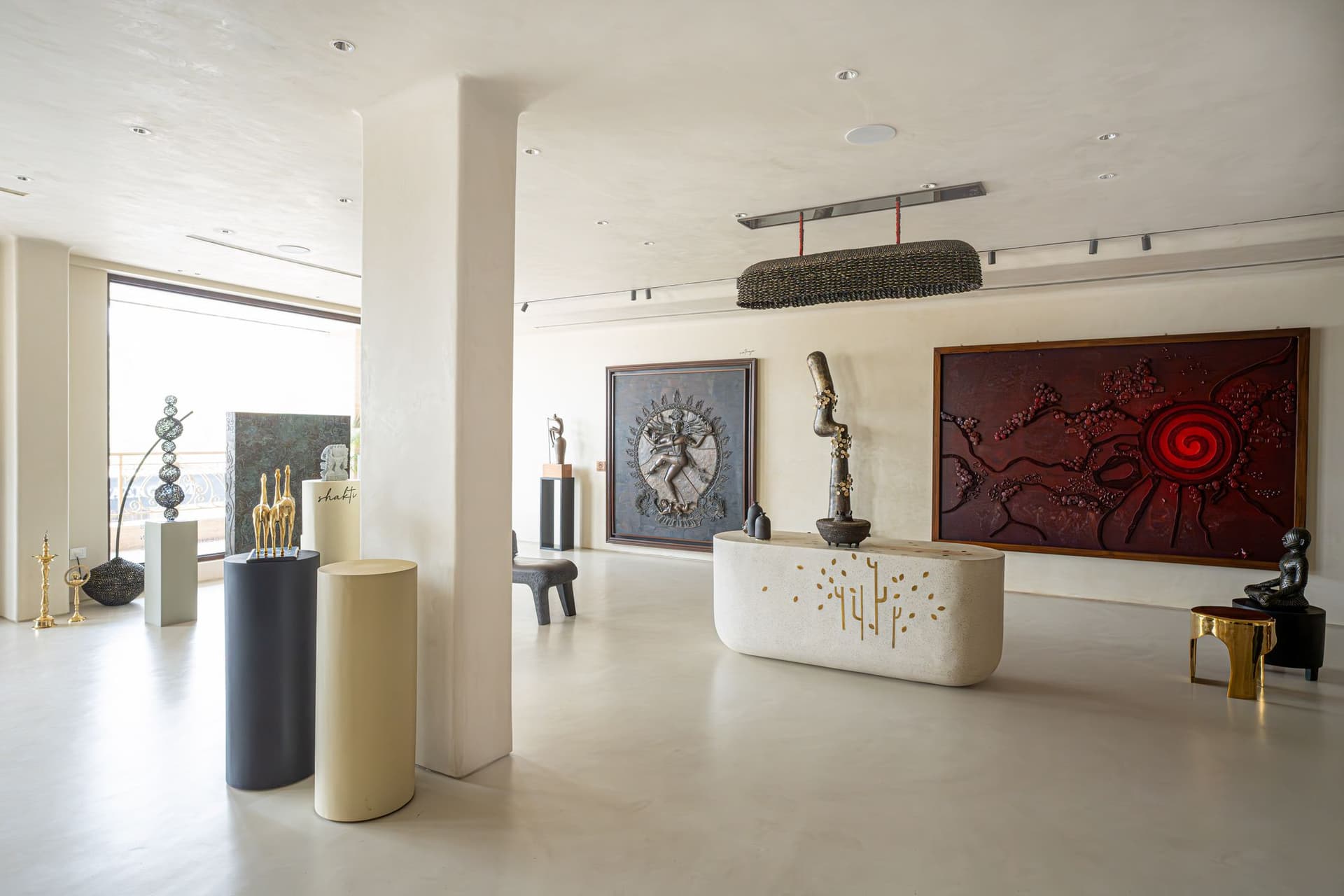
For depth, stone and marble looks. Venetian plaster is lime and marble, trowelled and burnished in layers, from matt marmorino to high-gloss polished finishes. It needs a flat wall and a skilled applicator. Our guide to Italian plaster finishes explains each type, and Venetian plaster vs texture paint helps if budget is the question.
Stucco
A tough, textured plaster built for exteriors and semi-exteriors. Stucco is mostly cement, sand and lime; it can be rough and deeply textured or smooth with little sheen. Read what is stucco for how it differs from render and plaster.
Tadelakt
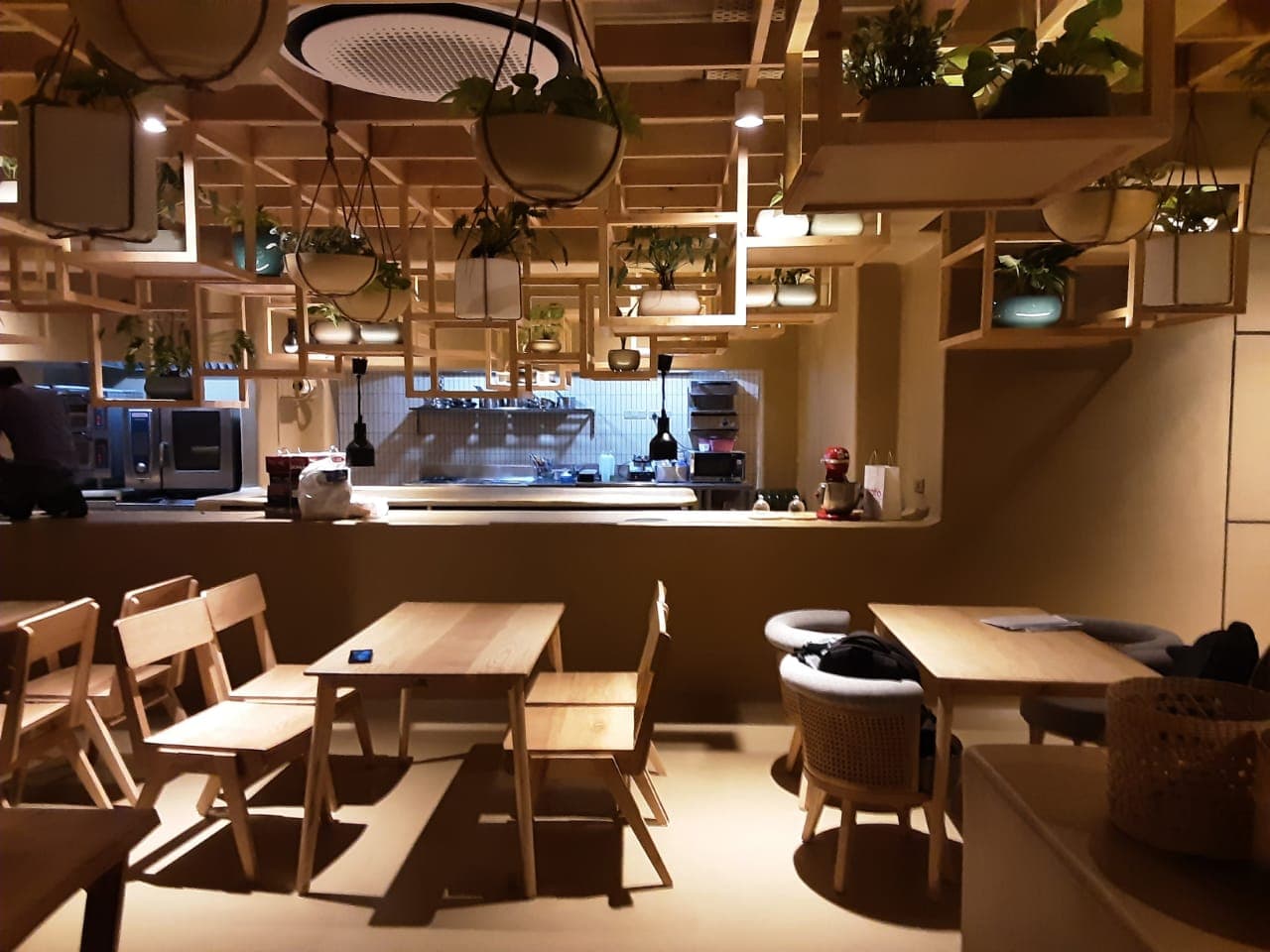
The lime finish made for water. Tadelakt originated in Morocco; it is a lime-based plaster with a smooth satin finish, traditionally polished with stones and treated with soap for hammams and bathrooms. At OMO Cafe, Colortale used tadelakt on the facade and interiors.
Metallic Finishes
For accents that catch the light. Options range from Classico Metallic, infused with metallic powders for a soft iridescence, to liquid metal coatings that look like solid metal on walls and furniture. Use them on smaller areas; reflective finishes show every defect.
Texture Paint
The budget and speed option. Texture paints come in sand, stucco, metallic and 3D effects and hide uneven walls well. They are not breathable, deep patterns collect dust, and patches show. Our decorative paints guide covers paint-based effects in detail.
How to Choose: Five Questions
1. Which room? Wet zones need tadelakt or sealed microcement; bedrooms suit limewash or matt plaster. 2. What is the wall like? Uneven walls suit textured or matt finishes; polished plaster needs a flat wall. 3. Is there damp? Choose breathable lime finishes, and fix the source first. 4. How long will you stay? Long-term homes justify mineral finishes; rentals suit paint. 5. What upkeep will you accept? Limewash is renewed with a fresh coat; microcement needs resealing; paint is repainted.
Which Texture Finish Is Right for Your Walls?
Start with the room and the wall, then choose the look. For a soft natural wall, start with limewash; for depth and stone, Venetian plaster; for a seamless modern look, microcement; for wet zones, tadelakt; for exteriors, stucco or exterior lime plaster. Browse all of them on our products page, and contact us to see real samples before deciding.
Frequently Asked Questions About Wall Texture Finishes
What are the main types of wall texture finishes?
Limewash, lime plaster, microcement, Venetian plaster, stucco, tadelakt, metallic finishes and texture paint.
What is the difference between texture paint and a plaster finish?
Texture paint is an acrylic coating shaped into a pattern. A plaster finish is a mineral material such as lime, marble or cement trowelled onto the wall, with more depth and a longer life.
Which wall texture is best for damp walls?
Breathable lime finishes such as limewash and lime plaster, once the source of damp is fixed. Closed paint films can blister on damp walls.
Which wall finish can be used in a shower?
Tadelakt or sealed microcement over proper waterproofing. Limewash and standard Venetian plaster are not for showers.
Which textured finish hides uneven walls best?
Texture paint and rustic plasters hide unevenness best. Polished Venetian plaster shows every flaw.
Which texture finish is easiest to maintain?
Limewash is renewed by brushing on a fresh coat. Sealed microcement wipes clean but needs resealing. Smooth washable paint is easiest to scrub.
Are textured walls still in trend?
Yes, but the move is towards subtle, natural textures such as limewash and soft plaster rather than bold patterns.
Which wall texture suits a bedroom?
Calm, matt finishes such as limewash, lime plaster or matt Venetian plaster. Avoid high gloss and heavy patterns behind the bed.