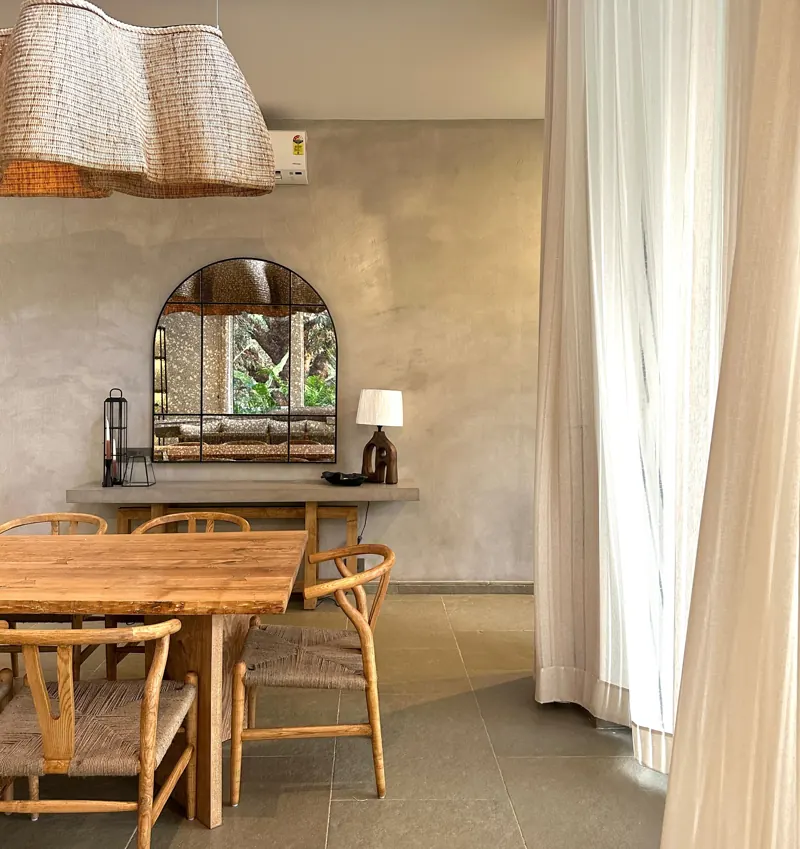
Limewash is a mineral finish that soaks into the wall and lets it breathe; regular paint is a plastic film that sits on top and can be scrubbed. Use limewash for a soft, natural, matt look on plaster, brick or stone, especially where walls hold moisture. Use emulsion where you need an even colour and a surface that takes regular washing.
Limewash is made from slaked lime, water and mineral pigments. Emulsion paint is made from pigments held in an acrylic or vinyl binder. The result looks and behaves very differently, and the choice is easier once you know why.
Is Limewash a Type of Paint?
Not really. It is applied with a brush like paint, but it works differently. Paint dries by forming a continuous film. Limewash cures by reacting with carbon dioxide in the air and turning back into calcium carbonate, essentially a thin layer of limestone bonded into the surface. That is why it needs a porous base and why it never peels in sheets the way paint can.
Comparison Table
| Factor | Limewash | Emulsion paint |
|---|---|---|
| Binder | Slaked lime (mineral) | Acrylic or vinyl (polymer) |
| How it bonds | Soaks in and cures into the surface | Forms a film on the surface |
| Finish | Matt, cloudy, varies with light | Even colour; matt to gloss |
| Breathability | High | Low to moderate |
| Washability | Dust or gentle sponge only | Washable grades can be scrubbed |
| Failure mode | Can chalk or rub off over time | Can blister and peel, especially over damp |
| Colour range | Earthy, mineral palette | Almost unlimited |
| Base needed | Porous: plaster, brick, stone, or primed paint | Most surfaces, with the right primer |
| Renewal | Brush a fresh coat over the old | Repaint; old film may need sanding |
| Skill to apply | Brush technique matters | Standard painting skills |
Which Is Better for Damp Walls and the Monsoon?
Limewash. Because it is vapour-open, moisture in the wall can evaporate through it instead of pushing it off. A closed emulsion film over a wall that holds moisture is a common reason for blistering after the monsoon. Fix leaks and rising damp first; neither finish solves them. See is limewash waterproof.
Which Is Easier to Live With?
Emulsion wins on wipe-ability; limewash wins on ageing and repairs. You can scrub a washable emulsion after a child draws on it. Limewash is dusted or sponged gently, and a stubborn mark is fixed by brushing a little limewash over it, which blends because there is no film edge. Emulsion touch-ups often show as a patch with a different sheen.
Does Limewash Cost More Than Paint?
Usually yes, but the cost comes from labour and preparation more than material. Limewash needs several thin coats with a specific brush technique, and over existing emulsion it needs a mineral primer. Regular paint is faster for any painter to apply. This page does not give rates; ask for a site quote, which should list preparation, primer, number of coats and any sealer separately.
Can You Paint Over Limewash Later?
Yes, but it takes preparation. Limewash is powdery compared with paint, so emulsion applied directly may not hold. The wall needs brushing down and a suitable primer, or a skim coat. Going the other way, limewash over emulsion also needs a mineral primer. Our guide on how limewash is applied covers this in detail.
Is Limewash More Eco-Friendly?
Generally yes. Lime is a natural mineral, limewash contains no plastic binder, and it is naturally alkaline, which discourages mould. Colortale describes its finishes as low-VOC (limewash, FAQ). Many emulsions are now low-VOC too, so compare the specific products' data rather than relying on labels.
Which Lasts Longer?
They age differently. Emulsion lasts until it peels, fades or gets dirty, then it is repainted. Limewash slowly softens and lightens, and a fresh coat renews it without stripping. Exterior walls need refreshing more often than interiors.
Should You Choose Limewash or Paint?
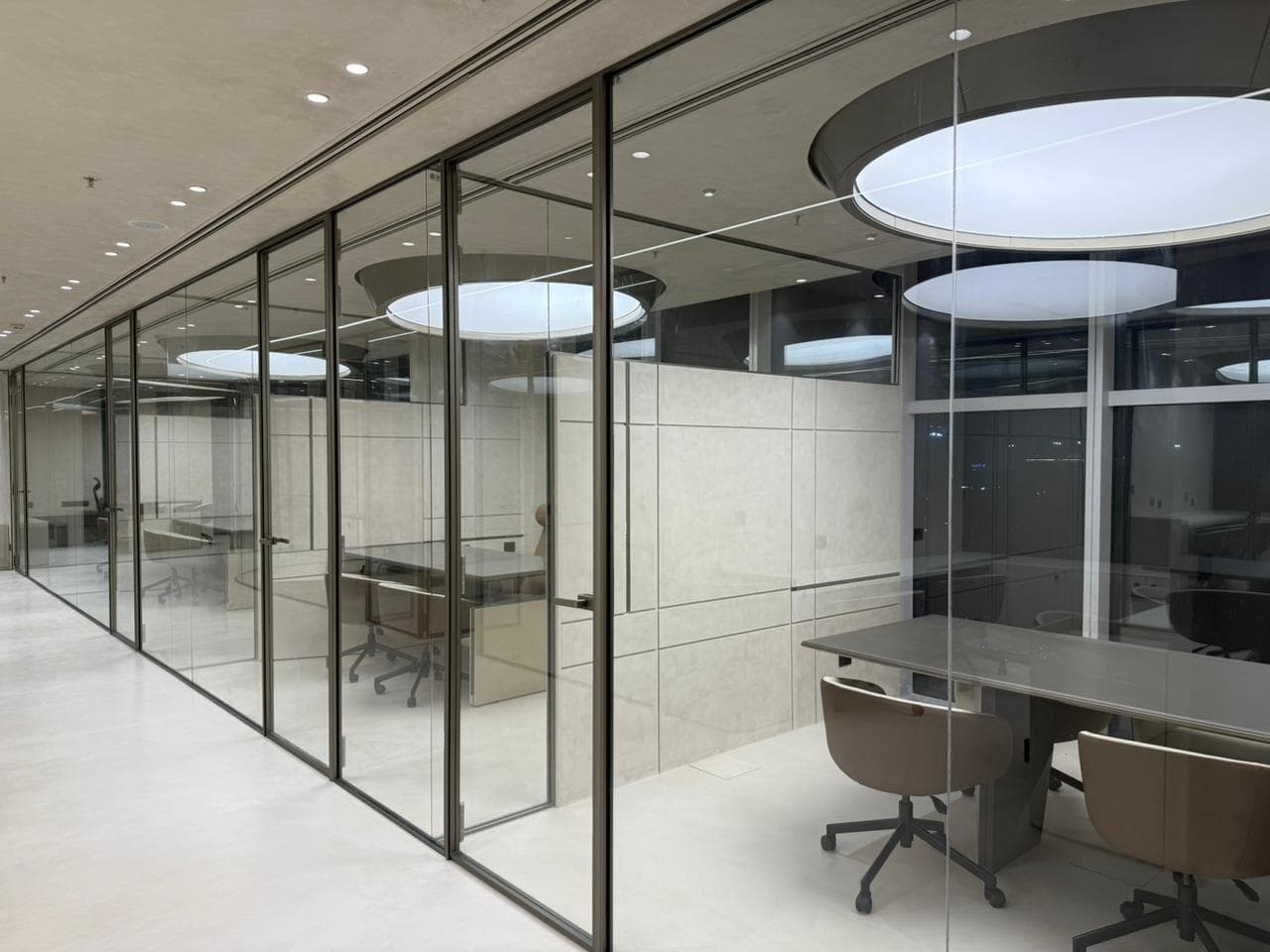
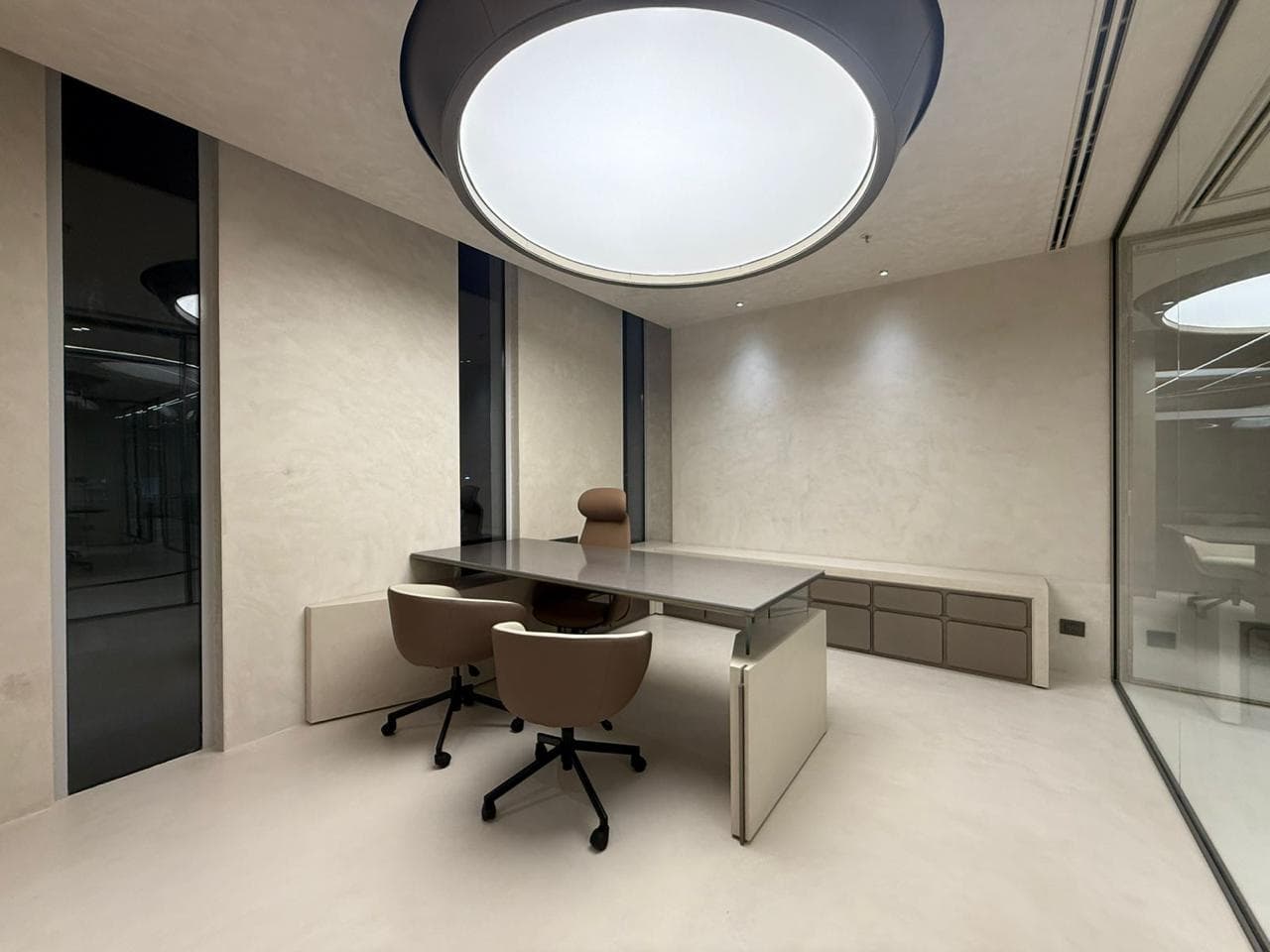
Choose limewash if you want a natural, breathable, matt finish with depth, and your walls are plaster, brick, stone or can be primed. Choose emulsion for rooms that need scrubbing, very bright or exact colours, or a quick refresh. Many homes use both: limewash on the living room and bedroom walls, and washable emulsion in the corridor and children's room. At our Faridabad Office project, limewash on the walls and ceiling gives a large office a warmth that a flat emulsion would not. Compare it with texture paint, or read how lime wash differs from lime plaster. Then contact us for a sample on your wall.
Frequently Asked Questions About Limewash vs Paint
What is the difference between limewash and normal paint?
Limewash is slaked lime, water and pigment that soaks into the wall and cures into it. Normal paint is pigment in a plastic binder that forms a film on top.
Is limewash washable?
Not like a washable emulsion. Dust it or wipe gently with a damp sponge, and touch up marks with a little fresh limewash.
Does limewash peel?
It does not peel in sheets like paint because it has no film. Over time it can chalk or rub off, and a fresh coat renews it.
Is limewash better than paint for damp walls?
Yes, because it lets moisture escape instead of trapping it. The cause of the damp still has to be fixed.
Can I apply limewash over emulsion paint?
Yes, after cleaning the wall and applying a mineral primer so the limewash has a porous surface to grip.
Can I paint over limewash?
Yes, after brushing down loose material and applying a suitable primer or a skim coat.
Is limewash more expensive than paint?
It usually costs more because it needs more skilled labour, more coats and sometimes a primer. Ask for a quote that lists each item.
Is limewash eco-friendly?
It is a natural mineral finish with no plastic binder. Compare VOC data for the specific products if that matters to you.