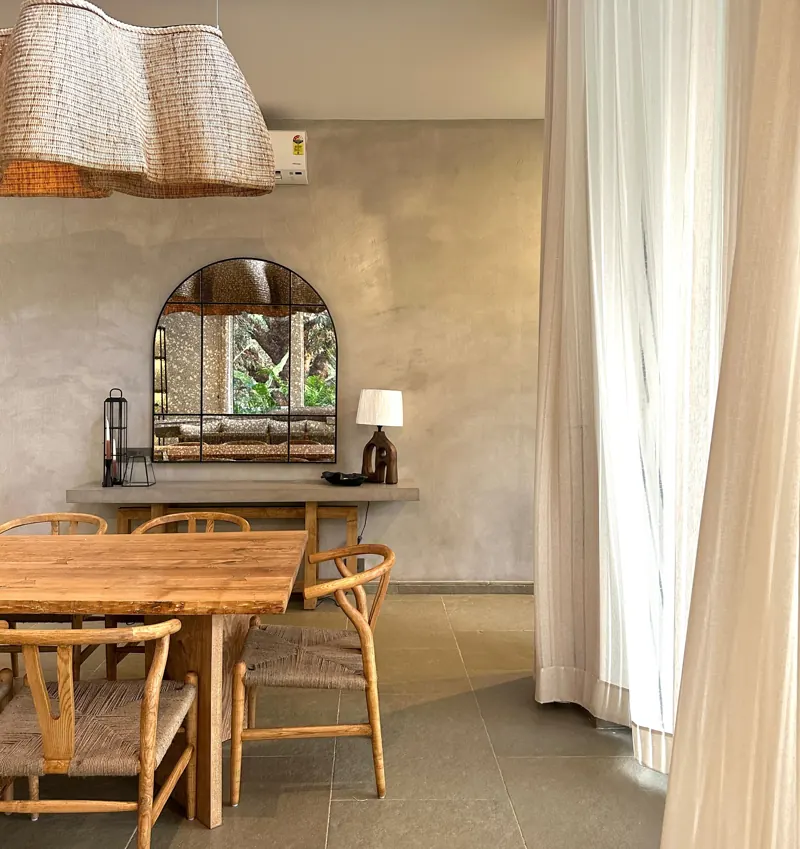
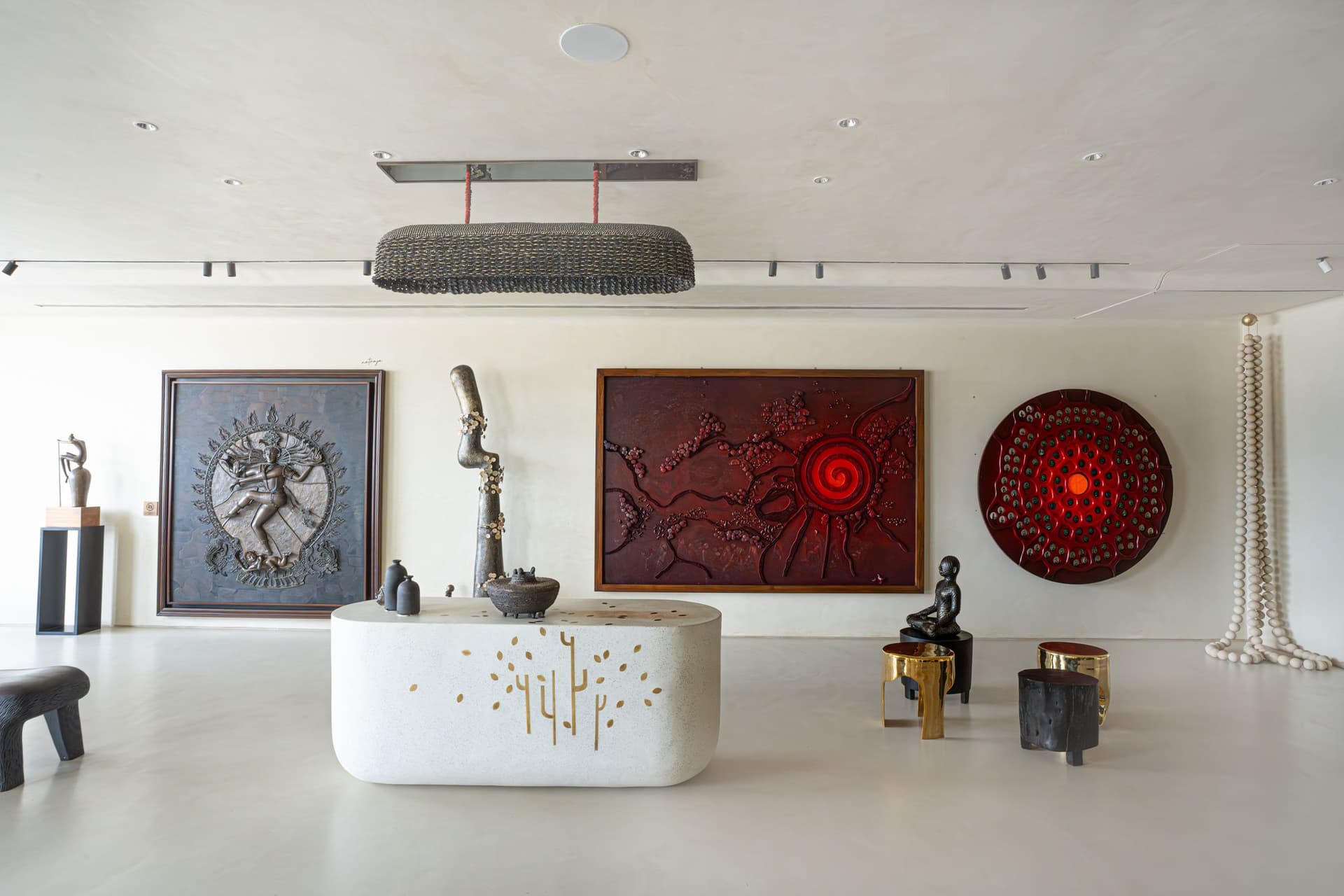
Marmorino is a type of Venetian plaster, not an alternative to it. When people compare the two, they usually mean matt marmorino against polished stucco veneziano. Marmorino uses a coarser marble grain and is compressed to a matt or soft satin, stone-like finish. Polished Venetian plaster uses finer marble flour in more coats and is burnished to a deep satin or near-mirror shine.
Both are made from slaked lime and crushed marble, both are applied by hand with a steel trowel, and both are Venetian plaster in the broad sense. The difference is grain size, number of coats and how hard the surface is burnished. That decides the look, the feel and where each one works best.
Is Marmorino the Same as Venetian Plaster?
Strictly, marmorino is one member of the Venetian plaster family. Same lime and marble family, same origin; what changes is the aggregate, the number of coats and how it is trowelled. In everyday use, "Venetian plaster" has come to mean the glossy, polished version, so the comparison is really matt versus polished.
Comparison Table
| Factor | Marmorino | Polished Venetian plaster (stucco veneziano) |
|---|---|---|
| Base material | Slaked lime and coarser marble grain | Slaked lime and fine marble flour |
| Typical coats | Fewer, thicker | More, thinner |
| Finish | Matt to soft satin | Satin to high gloss |
| Looks like | Honed natural stone, soft cloudy movement | Polished marble with depth |
| Feel | Slight tooth, tactile | Smooth, cool, glassy |
| Hides wall flaws | More forgiving | Shows every flaw in raking light |
| Best for | Whole rooms, calm spaces, exteriors (in hydraulic lime versions) | Feature walls, foyers, dining rooms |
| Wet areas | Some versions with sealing; not in showers | With sealing or wax; not in showers |
| Surface prep needed | Good | Excellent; very flat walls |
Which Looks More Luxurious?
Neither is "more" luxurious; they create different moods. Polished Venetian plaster catches and returns light and suits formal spaces such as an entrance foyer, a dining room or a double-height wall. Marmorino is quieter and reads as solid stone, which suits living rooms, bedrooms and whole-room applications where gloss would be tiring.
Which Is More Forgiving on Indian Walls?
Marmorino. Many Indian walls are not perfectly flat, and a high-gloss finish exaggerates every ripple. Marmorino's coarser grain and lower sheen hide minor unevenness. Polished Venetian plaster needs a very flat, well-prepared base, which can add preparation time.
Which Works Outdoors or in Humid Areas?
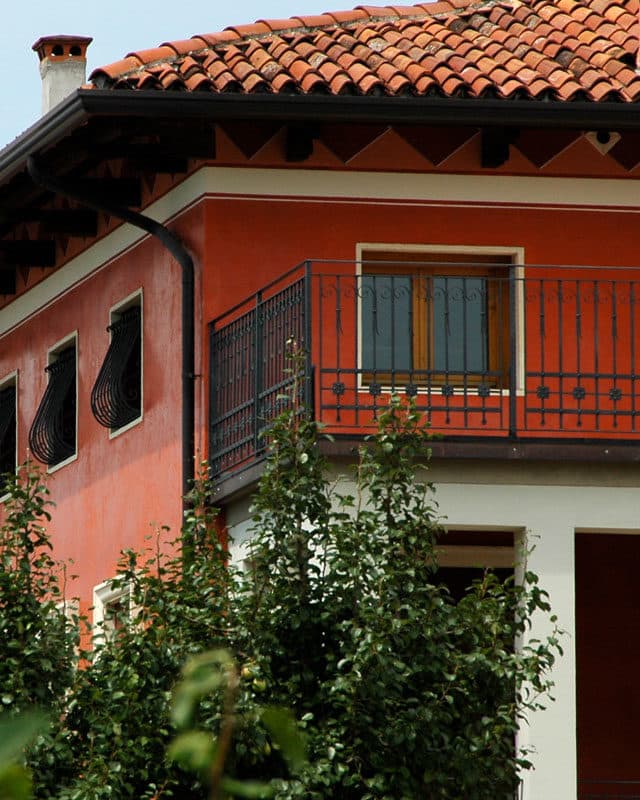
Marmorino-type finishes based on hydraulic lime are the usual choice for exteriors. Colortale's Venetian Facade is described as "a stronger Marmorino for durable exterior walls": a hydraulic lime-based Venetian plaster designed for very humid climates, with added protection against mould and algae. Polished Venetian plaster is generally an interior finish. Neither belongs inside a shower; for that, tadelakt is the lime plaster traditionally made for water.
Which Colortale Finishes Fit Each Look?

- Stone-like, coarser grain: Carrara, described as authentic Venetian plaster crafted with coarser marble granules, and Venetian Facade for exteriors.
- Classic Venetian, palace-inspired: Veniso, inspired by the interiors of Venetian palaces, and Pastellone.
- Soft sheen and silk effect: Seta, a silk-effect plaster finish.
At Takshini in New Delhi, Carrara covers the walls and the ceiling, giving a mineral, stone-like envelope that sits calmly with a seamless Cemento floor. See all options in our guide to Italian plaster finishes. Colortale describes Carrara as moderately glossy with subtle colour variation, made with marble powders up to 700 microns (Carrara), and Venetian Facade as satined (Venetian Facade).
Is "Marmorino Texture Paint" Real Marmorino?
Not always. Some paint brands sell a marmorino effect made with acrylic binders, applied to imitate the look. It can look similar from a distance but does not have the lime-and-marble body, breathability or ageing of true marmorino. Ask what the binder is. Our Venetian plaster vs texture paint comparison covers this in detail.
How Do You Care for Each Finish?
Both are durable lime finishes that harden over time. Dust or wipe with a soft damp cloth. Polished finishes are often protected with a wax that deepens the sheen; matt marmorino may be left natural or given a breathable protective coat in high-contact areas. Small scuffs on polished plaster can sometimes be re-burnished by the applicator.
Which Should You Choose?
Choose marmorino for a calm, stone-like finish across whole rooms, on walls that are not perfectly flat, or outdoors in a hydraulic lime version. Choose polished Venetian plaster for a statement wall in good light where you want depth and shine. If you are unsure, ask for two sample boards and view them in your room in daylight and in the evening. Start with our Venetian plaster range, and contact us for samples.
Frequently Asked Questions About Venetian Plaster and Marmorino
Is marmorino a Venetian plaster?
Yes. Marmorino is one type of Venetian plaster. The usual comparison is between matt marmorino and polished stucco veneziano.
What is the main difference between marmorino and Venetian plaster?
Marmorino has a coarser marble grain and a matt to soft satin finish. Polished Venetian plaster uses finer marble flour and is burnished to a high sheen.
Which is shinier, marmorino or Venetian plaster?
Polished Venetian plaster. Marmorino stays matt to soft satin, although more burnishing adds some sheen.
Which is better for uneven walls?
Marmorino. Its coarser grain and lower sheen hide minor unevenness, while a high-gloss finish shows every flaw.
Can marmorino be used on exterior walls?
Yes, in versions based on hydraulic lime made for exteriors. Colortale's Venetian Facade is described as a stronger marmorino for humid exterior walls.
Can Venetian plaster or marmorino be used in a bathroom?
On bathroom walls away from direct water, with suitable sealing. Not inside a shower, where tadelakt is the traditional lime choice.
Is marmorino texture paint the same as marmorino?
Not always. Many marmorino effect paints use acrylic binders. True marmorino is made from lime and marble.
Which suits a whole room better?
Marmorino. Its calm, stone-like finish works across a full room, while polished Venetian plaster is usually kept for a feature wall.