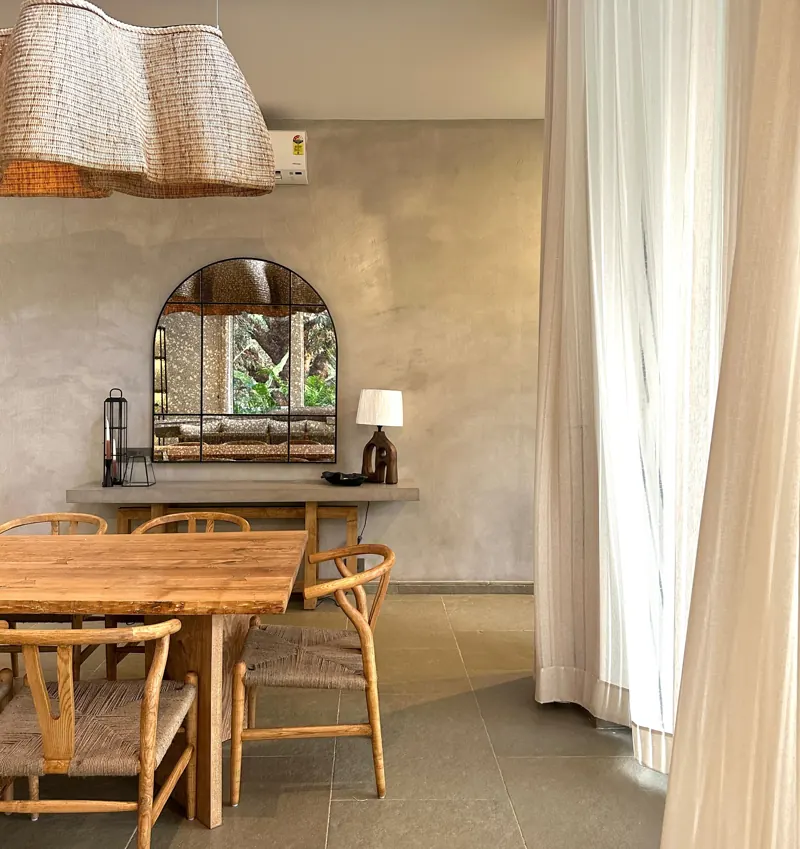
Choose tadelakt for a natural lime plaster with a soft satin sheen and an earthy, handmade feel, especially on shower walls and in steam rooms. Choose microcement for a calm, concrete-look surface that can also cover the floor, counters and stairs, and go over existing tiles.
Both suit showers. The difference lies in the material, the look and how far the finish can travel through the room.
What Are They?
Tadelakt originates from Morocco. It is a lime-based plaster trowel-applied to a smooth, satin finish. Colortale says it is easy to waterproof, making it a functional choice for bathrooms, shower walls, kitchens and steam rooms. A 100% natural "Green Line" version uses hydrated lime, marble powders and other natural agents, with no chemicals.
Micro cement is a blend of cement, polymers and pigments, trowelled in thin layers and sealed. Colortale states it is waterproof when sealed properly. It can be applied to walls, floors, countertops, stairs and furniture, and it adheres to tiles, wood and concrete.
Comparison Table
| Factor | Tadelakt | Microcement |
|---|---|---|
| Base | Lime (Moroccan tradition) | Cement, polymers, pigments |
| Look | Smooth satin, earthy, soft undulation | Seamless concrete look, matt to satin |
| Wet areas (Colortale wording) | Easy to waterproof; bathrooms, shower walls, kitchens, steam rooms | Waterproof when sealed properly; bathrooms, showers, kitchens |
| Floors | Not stated | Yes |
| Over existing tiles | Not stated | Yes, adheres to tiles |
| Counters, stairs, furniture | Not stated | Yes |
| Natural option | Green Line: 100% natural, no chemicals | No |
| Exterior | Interior and exterior applications | Exterior render for facades |
| Character | Handmade, organic | Calm, architectural |
Which Is Better for a Shower?
Both are described by Colortale for showers. Tadelakt suits shower walls and steam rooms when you want lime's warmth and satin depth. Microcement suits a shower that continues seamlessly into the floor and vanity. Whichever you choose, the wall behind must be sound and prepared, and the floor must fall to the drain. Ask your applicator what waterproofing goes behind the finish. See tadelakt bathroom and microcement bathroom.
Which Is Better for Floors?
Microcement. Colortale lists it for floors. The tadelakt page does not mention floors, so we do not recommend it for shower or bathroom floors without confirmation.
Which Is Better Over Old Tiles?
Microcement, which Colortale states adheres to tiles. The tadelakt page does not mention tiles.
Which Is More Natural?
Tadelakt, particularly the Green Line version, which Colortale describes as 100% natural and free of chemicals. Microcement contains polymers and is sealed.
Beyond the Bathroom
Tadelakt works outdoors too. At OMO Cafe, Colortale used it on the facade and interiors for warmth, heritage and a sculpted smoothness. Microcement goes onto counters, stairs and furniture, and is used as an exterior render.
Cost: What Drives It?
Both are hand-applied by specialists, so labour, preparation and area drive the price more than the material does. Compare written quotes that list preparation, coats and the protective finish.
Care
Clean both with mild products (Colortale advises mild soap and water for microcement) and avoid acidic limescale removers and abrasives. For microcement, see microcement maintenance.
Other Options
For a polished Venetian look in showers, Colortale offers Venetian Facade; see Venetian plaster in bathrooms. All tile-free bathroom options are compared in bathroom walls without tiles. For microcement against limewash, Venetian plaster and paint, read microcement vs other wall finishes.
The Short Answer
Tadelakt for natural, satin lime walls in showers and steam rooms. Microcement for a seamless surface from floor to wall, over tiles and onto counters. Contact us to see both.
Frequently Asked Questions About Tadelakt vs Microcement
What is the difference between tadelakt and microcement?
Tadelakt is a Moroccan lime plaster with a satin finish. Microcement is a sealed cement and polymer coating with a concrete look.
Which is better for a shower?
Both suit showers. Tadelakt gives natural lime warmth on walls; microcement can continue across the floor and vanity.
Is tadelakt waterproof?
Colortale describes tadelakt as easy to waterproof, making it suitable for shower walls and steam rooms.
Can tadelakt be used on floors?
Colortale's tadelakt page does not mention floors. Microcement is the choice for seamless bathroom floors.
Can microcement go over tiles?
Yes. Colortale states its micro cement adheres to tiles.
Which is more natural?
Tadelakt, especially the 100% natural Green Line version.
Is tadelakt more expensive than microcement?
Both depend mostly on specialist labour, preparation and area. Compare written quotes.
Can tadelakt be used outside?
Yes. Colortale lists interior and exterior applications, and used it on the facade at OMO Cafe.