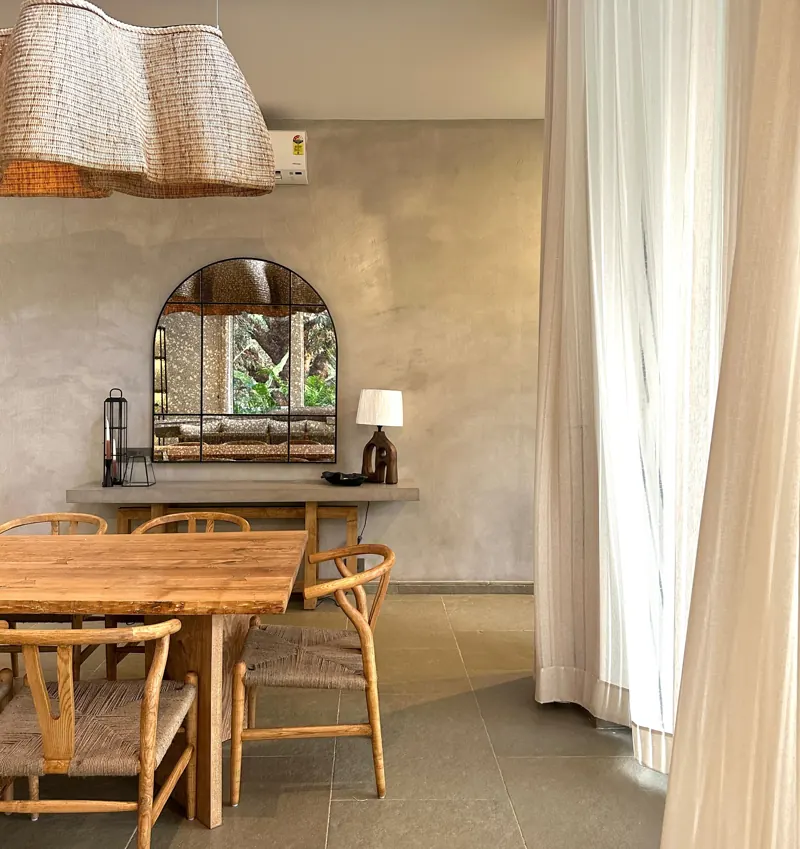
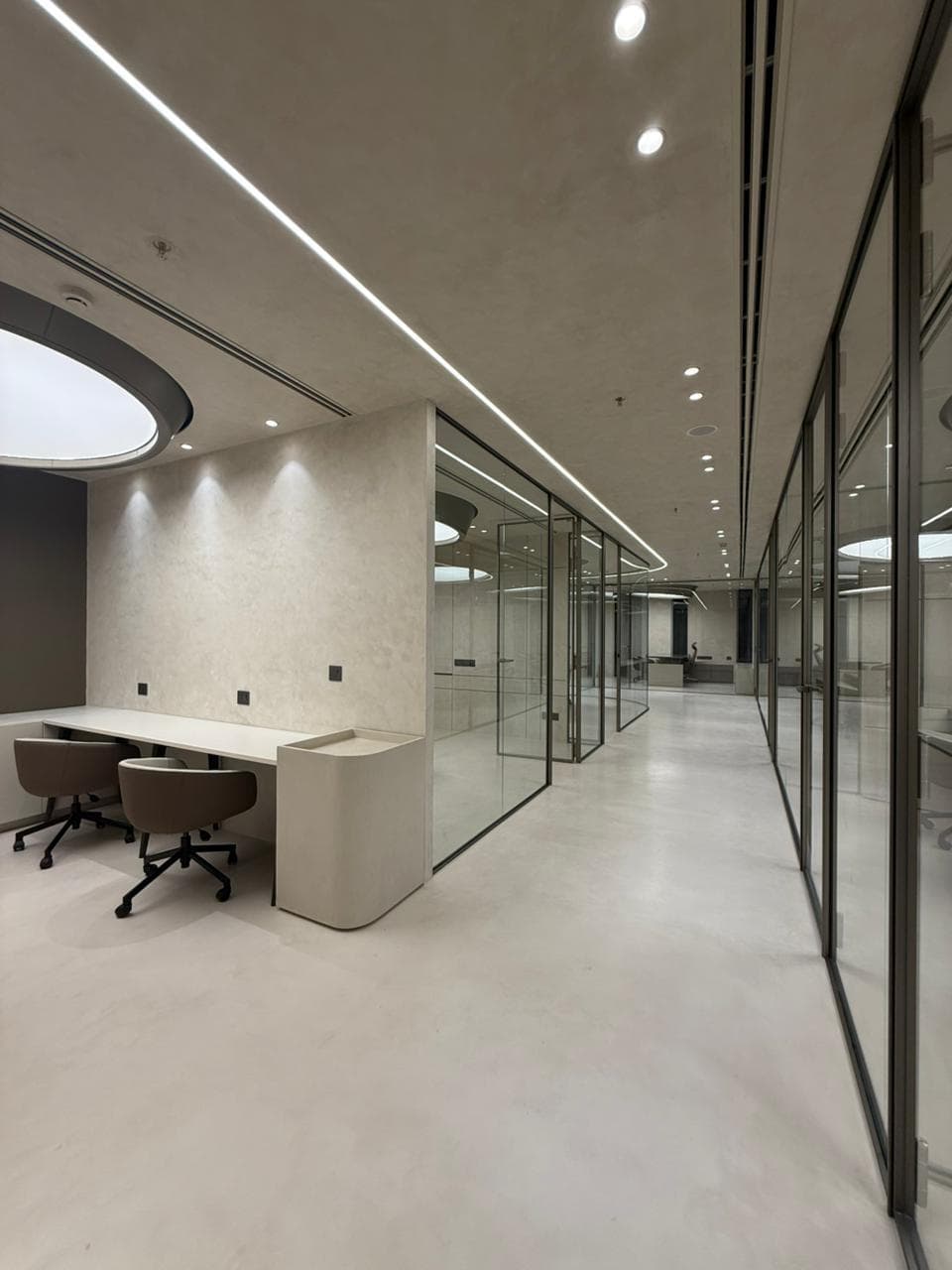
In India, traditional whitewash (chuna safedi) and limewash are close relatives: both are lime and water brushed onto masonry. The difference is in refinement. Whitewash is a quick, plain white, chalky wash made for protection and hygiene. Decorative limewash uses better-prepared lime and mineral pigments, applied in careful coats to create soft colour and movement.
So if you remember your grandparents' walls being freshly "chuna-ed" before Diwali, you already know the family. Modern limewash is the design-grade version of that tradition.
What Is Traditional Whitewash?
A simple lime wash for cleanliness and protection. Indian practice is set out in IS 6278:1971, Code of Practice for Whitewashing and Colour-washing from the Bureau of Indian Standards. It specifies fat lime and water, with gum, sodium chloride (common salt) and ultramarine blue among the listed materials. Adding mineral colours turns it into a colour wash. It is cheap, quick and renewed often.
What Is Decorative Limewash?
A refined lime finish made for appearance as much as protection. Colortale's limewash is made from slaked lime, water and mineral pigments, and can be applied to brick, plaster, concrete and stone, indoors and out. Applicators brush it in thin, crossing coats so the colour varies softly across the wall.
Comparison Table
| Factor | Traditional whitewash (chuna) | Decorative limewash |
|---|---|---|
| Base | Slaked fat lime and water | Slaked lime and water |
| Additives | Gum, salt, blue for brightness | Mineral pigments; maker-specific additives |
| Colour | White, or simple colour wash | Wide earthy palette |
| Look | Flat, chalky, even white | Soft, cloudy movement |
| Application | Quick, often one or two coats | Several thin, controlled coats |
| Purpose | Hygiene, protection, refresh | Design finish with breathability |
| Rubs off | Readily | Less, when well applied and cured |
| Renewal | Often | Less often; fresh coat over old |
| Typical use today | Outbuildings, boundary walls, ceilings, heritage upkeep | Living spaces, feature walls, facades |
Why Is Whitewash Cheaper?
Simpler material and faster labour. Whitewash is mixed on site from basic lime and applied quickly by any painter. Decorative limewash takes more careful material preparation, colour matching, more coats and a practised brush technique. Ask any quote to list material, number of coats and preparation.
Which Lasts Longer?
Decorative limewash, in most cases. Plain whitewash is chalky and rubs off easily, which is why it is redone often. A well-made, properly cured limewash holds better, though both are renewed by brushing a fresh coat over the old rather than stripping. See limewash maintenance.
Which Is Better for Brick?
Both suit brick; limewash gives more control. Whitewash gives a flat, bright white. Limewash can be thin enough to let red brick show through or built up to an even, chalky colour. Our limewash brick walls page shows the options.
Can You Apply Limewash Over Old Whitewash?
Usually yes, because both are lime. Brush off loose, powdery material first so the new coat bonds to a sound surface, then dampen and apply. If the old whitewash has been painted over with emulsion, it needs a mineral primer instead; see limewash vs regular paint.
Is Whitewash the Same as "Whitewashed" Wood or Paint?
No. Outside India, "whitewash" often means thinned white paint brushed on wood or brick for a weathered look. That is a paint effect, not a lime wash. When you read foreign guides, check which one they mean.
Limewash or Whitewash: Which Should You Use?
Use traditional whitewash for quick, low-cost upkeep of service areas, boundary walls and outbuildings. Use decorative limewash where the wall is part of the design: living rooms, bedrooms, feature walls and facades. Explore limewash colours, read how lime wash compares with lime plaster, then contact us for samples.
Frequently Asked Questions About Limewash vs Whitewash
Is limewash the same as chuna?
They are close relatives. Both are lime and water. Decorative limewash is more refined and coloured with mineral pigments, while chuna safedi is a quick, plain white wash.
What is the main difference between limewash and whitewash?
Refinement and purpose. Whitewash is a simple white lime wash for hygiene and protection; limewash is a design finish with colour and soft movement.
Which lasts longer, limewash or whitewash?
Well-applied limewash usually lasts longer. Traditional whitewash is chalky and is redone often.
Can whitewash be coloured?
Yes. Adding mineral colours makes it a colour wash, but the range is simpler than decorative limewash.
Can I apply limewash over old whitewash?
Usually yes. Brush off loose material first, dampen the wall and apply the limewash.
Which is better for exposed brick?
Both work. Limewash gives more control, from a light wash to an opaque chalky finish.
Why is whitewash cheaper than limewash?
It uses simpler material and quicker labour. Limewash needs more preparation, more coats and skilled brushwork.
Is whitewash still used in India?
Yes, for boundary walls, service areas, outbuildings, some ceilings and heritage upkeep.