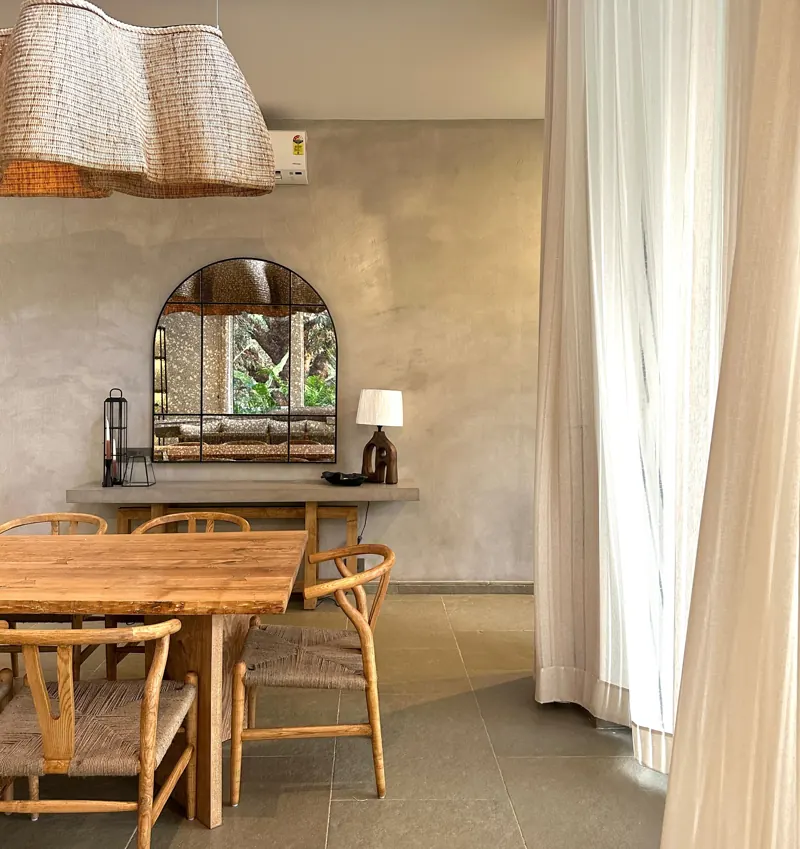
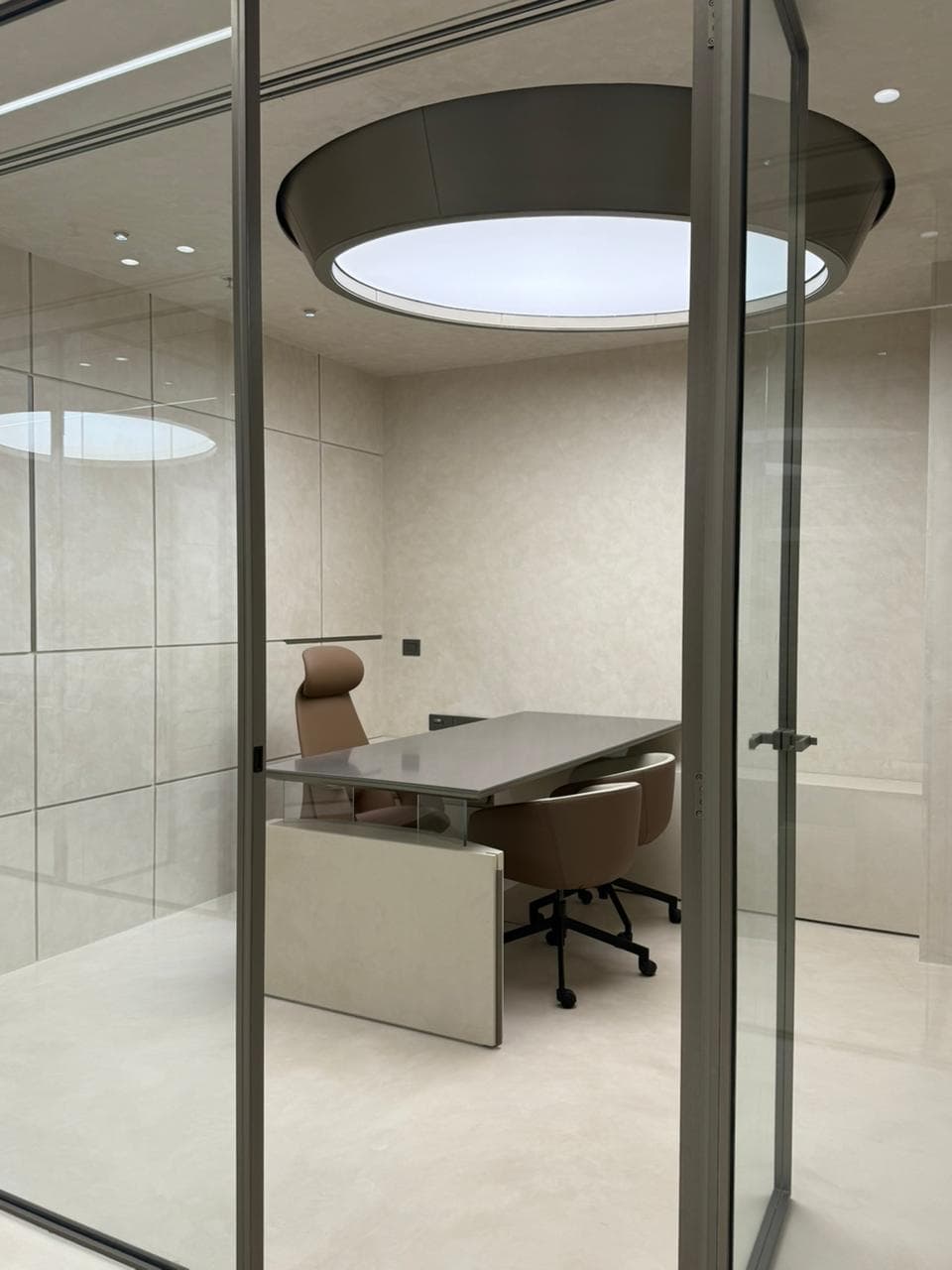
Limewash colours are mostly soft, earthy and mineral: whites, warm beiges, greys, clay and terracotta, muted greens and blues. Choose one in your own room's light, because limewash dries several shades lighter than it looks wet and shifts through the day. Test a large patch before committing.
Limewash takes its colour from mineral pigments mixed into slaked lime and water. That is why the palette leans natural, and why the same shade looks different on a north-facing wall at noon and under warm lamps at night.
Why Does Limewash Colour Behave Differently from Paint?
Because the colour sits in a translucent, matt mineral layer rather than an opaque film. Each brush stroke deposits slightly more or less pigment, and the lime dries unevenly, which creates the cloudy movement people want. The same effect means:
- It dries much lighter than it looks wet.
- It looks deeper with each extra coat.
- Light direction changes how much movement you see.
- A paint colour code can only be approximated, not matched exactly.
Colortale states its limewash is available in a wide range of colours and that every finish is customisable to your tone (Limewash).
Comparison Table: Shade Families and Where They Work
| Shade family | Mood | Works well in | Watch for |
|---|---|---|---|
| Warm whites and chalk | Bright, calm | Small rooms, ceilings, north light | Can look flat in very strong light |
| Beige, sand, greige | Warm, relaxed | Living and dining rooms, bedrooms | Can turn yellow under warm bulbs; test at night |
| Soft greys | Cool, modern | Studies, modern kitchens, offices | Can feel cold in north-facing rooms |
| Clay, terracotta, ochre | Earthy, rich | Feature walls, verandahs, dining | Strong in small rooms; use on one wall |
| Sage and olive | Natural, quiet | Bedrooms, reading corners, offices | Shifts between grey and green with light |
| Dusty blues | Airy, fresh | Bedrooms, bathrooms on dry walls | Can look chilly in low light |
| Deep mushroom, charcoal | Dramatic, cocooning | Bedrooms, media rooms | Shows brush marks more; needs skilled hands |
Light or Dark Limewash?
Light shades are easier and brighter; dark shades show more movement. Pale limewash forgives uneven brushwork and suits compact Indian apartments. Deeper colours give a velvety, dramatic wall, as Magicbricks' limewash ideas guide notes for bedrooms, but they show lap marks and need an experienced applicator. In hot, sunny rooms, lighter shades also reflect more light.
Which Limewash Colours Suit Indian Rooms?
Choose by room use and light, not only by mood board.
- Living room: warm beige, sand or clay; they look good in daylight and lamplight.
- Bedroom: greige, sage, dusty blue or a deep mushroom for a cocooning wall.
- Pooja room or entrance: warm whites and soft ochres keep the space calm and bright.
- Home office: soft grey or sage for focus.
- Exterior: off-whites, sand and terracotta weather gracefully; very dark shades show streaks.
For room-by-room layouts, see limewash wall design ideas.
Limewash Colour Combinations
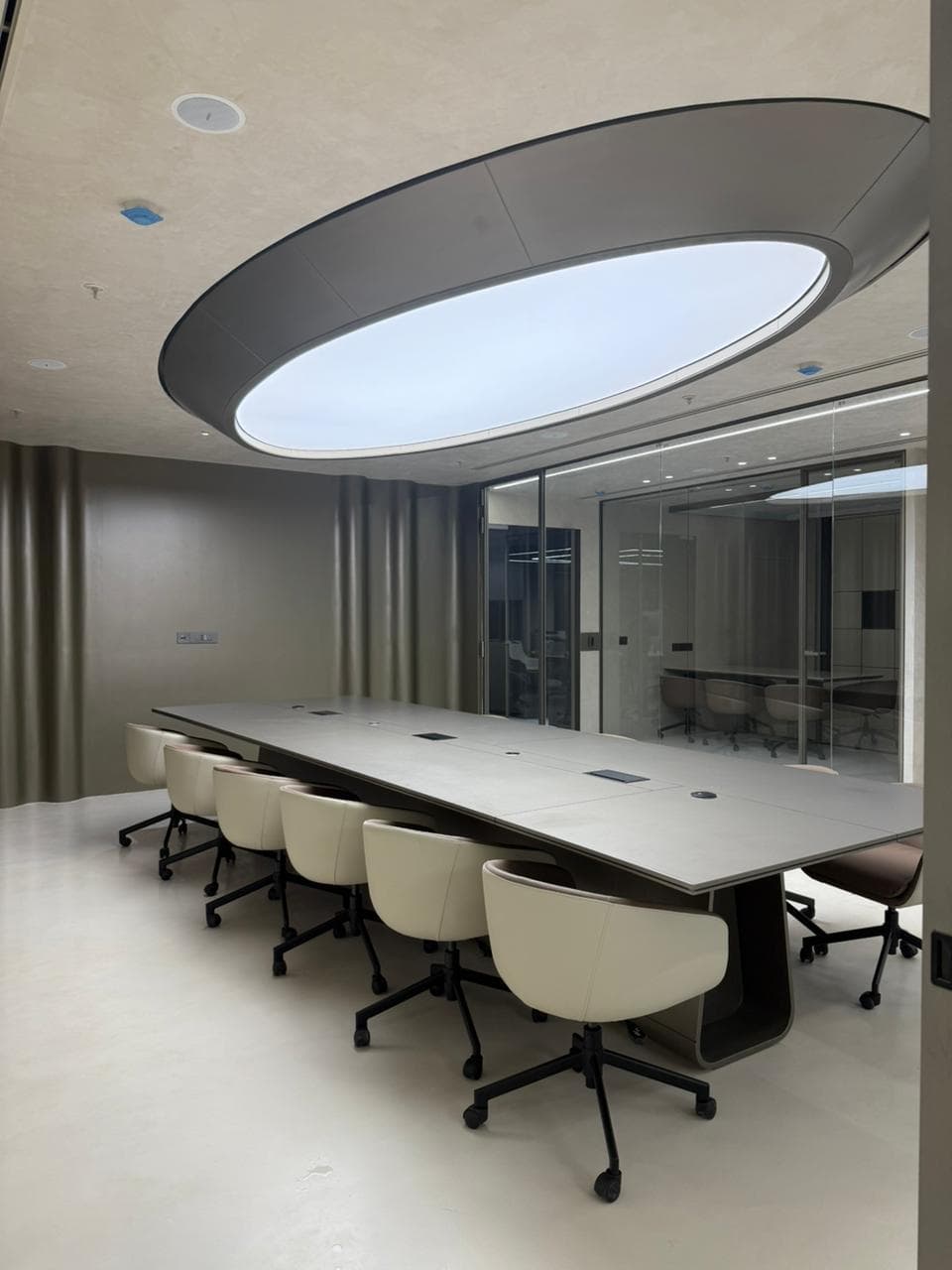
Keep combinations close and natural. A few that work:
- Limewash wall in warm sand, other walls in a lighter matching emulsion.
- Terracotta feature wall with off-white ceiling and wood furniture.
- Sage limewash with cane, linen and brass.
- Soft grey limewash with a seamless grey floor for a tonal room.
- Limewash wall and ceiling in the same shade for a wrapped, calm room, as at our Faridabad Office project, where limewash covers walls and ceiling over a seamless Pastellone floor.
How to Test a Limewash Colour
Test big and wait. Ask for a sample patch of at least a metre square on the actual wall, with the same number of coats planned. Let it dry fully, then look at it in the morning, afternoon and under your evening lights. Compare it beside the floor and fabrics. Our guide on how limewash is applied explains why the colour changes as it dries.
Ready to Choose Your Limewash Colour?
Start with the room's light, choose a shade family, then test two or three options on the wall. If you are still choosing between finishes, read limewash vs regular paint. When you are ready, contact us for samples.
Frequently Asked Questions About Limewash Colours
What colours does limewash come in?
Mostly soft, earthy mineral shades: whites, beiges, greys, clay, terracotta, muted greens and blues. Deeper shades are possible with more pigment and more coats.
Why does limewash dry lighter than it looks?
Lime dries much paler than it looks wet. Judge the colour only when the final coat is fully dry.
Can limewash match a paint colour code?
It can be brought close, but not matched exactly, because limewash is translucent and varies with brushwork and light.
Which limewash colour is best for a living room?
Warm beige, sand or soft clay suit most living rooms because they look good in daylight and in warm evening light.
Can limewash be dark?
Yes. Deep shades such as mushroom or charcoal give a velvety wall, but they show brush marks and need an experienced applicator.
Do limewash colours fade?
Limewash softens and lightens slowly, especially outdoors. A fresh coat renews the colour without stripping.
How big should a limewash colour sample be?
At least about a metre square on the actual wall, with the full number of coats, viewed at different times of day.
Which limewash colours suit exteriors?
Off-whites, sand and terracotta weather gracefully. Very dark shades show streaks and fading more.