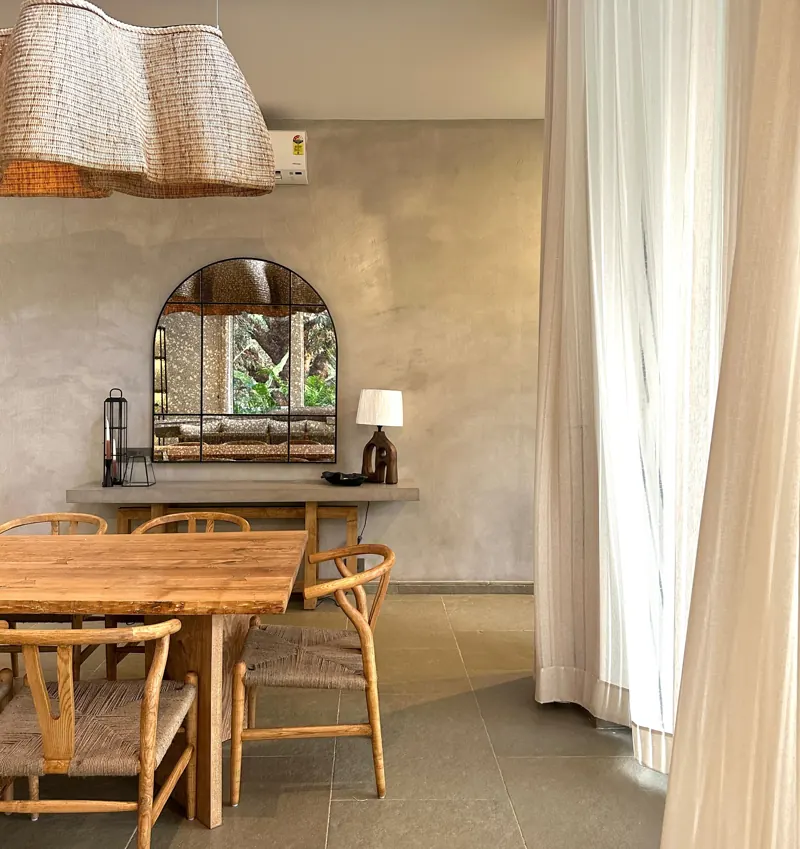
Choose Italian marble if you want a natural stone that is hard, can be re-polished for decades and carries a classic, luxurious look. Choose microcement if you want a seamless, joint-free surface with a calm, contemporary feel that can go over your existing floor with little demolition.
Neither is "better". They suit different looks, budgets of effort and tolerance for upkeep.
Decision Table: Microcement or Italian Marble?
| Decision factor | Choose microcement if... | Choose Italian marble if... |
|---|---|---|
| Look | You want a calm, hand-trowelled, matt to satin surface with soft tonal movement | You want natural veining, polished sheen and the variation of real stone |
| Joints | You want no joints at all, across floors, walls, stairs and vanities | You are happy with slab joints, or want book-matched veining at the joints |
| Continuity | The same finish should run from floor to wall, stairs and counters | Floors are the main surface and walls can be a different material |
| Daily maintenance | You will use a pH-neutral cleaner and wipe spills quickly | You will use a pH-neutral cleaner and wipe acidic spills quickly |
| Long-term maintenance | You accept resealing when the surface dulls, and local repairs that may show | You accept periodic grinding, polishing and sealing by a stone specialist |
| Acids and stains | Spills are wiped promptly, because the sealer protects the surface | Spills are wiped promptly, because marble etches from lemon, vinegar and some cleaners |
| Wear | Traffic is household-level and you will use mats and felt pads | You want the harder surface for heavy traffic and are fine with re-polishing |
| Retrofit over an existing floor | You want to keep the old floor, avoid breaking it, and add little height | You are replacing the floor anyway, or the old floor is unsound |
| Bathrooms | You want grout-free showers and vanities (waterproof when sealed properly) | You want a classic stone bathroom and will choose cleaners carefully |
| Living and dining | You want a contemporary, minimal room | You want a classic or formal room |
| Kitchens | You want a seamless floor or backsplash (see counters page) | You want a hard, re-polishable floor |
| Timeline | You prefer layered work with no demolition | You can allow for breaking, laying, curing and polishing |
| Cost | Compare written quotes for your area and preparation | Compare written quotes, which depend on the marble grade and wastage |
The Retrofit Question: Can You Keep Your Marble and Change the Look?

This is the most common reason Indian homeowners consider microcement. Colortale states its micro cement is applied in thin layers and adheres to tiles, wood and concrete, which is why it is used in renovations without heavy demolition. Polished marble is not on that list. It is very smooth and dense, so a direct coat depends on preparation. Hollow, cracked or loose slabs must be fixed first in every case. Before you decide, ask for a site check of how sound your marble is and what the preparation involves.
How Do They Look?
Marble is natural stone with veining, sheen after polishing and slab-to-slab variation; joints between slabs are visible. Micro cement is a hand-trowelled, seamless surface with soft tonal movement, usually matt to satin, running across floors, walls and stairs without a break. If you love the look of marble on walls, Colortale's lime and marble plasters such as Veniso and Carrara are another route.
Comparison Table
| Factor | Microcement | Italian marble |
|---|---|---|
| Material | Cement, polymers, pigments, sealed | Natural calcite stone |
| Joints | None | Slab joints |
| Thickness | Thin layers | Slabs plus bedding |
| Over existing floor | Usually, after preparation | Normally replaces it |
| Hardness | Moderate; sealer protects | Harder, but scratches |
| Acids (lemon, vinegar) | Can mark; wipe quickly | Etches; wipe quickly |
| Water | Waterproof when sealed | Porous unless sealed |
| Renewal | Reseal; local repairs | Grind and re-polish |
| Walls and stairs | Same finish continues | Separate cladding |
| Look | Contemporary, handmade | Classic, natural |
Which Is More Durable?
Marble is harder and can be ground and re-polished many times. Microcement relies on a sealer that wears and must be renewed; deeper damage is repaired locally and may show. Both dislike grit and acids. See the honest list in microcement disadvantages.
Which Is Easier to Maintain?
Different, not easier. Both need pH-neutral cleaners and quick wiping of acidic spills. Marble needs periodic polishing and sealing; microcement needs periodic resealing. Microcement has no joints to clean. More in microcement maintenance.
Bathrooms and Kitchens
Microcement gives seamless showers and vanities with no grout; marble is classic in bathrooms but etches from some cleaners and cosmetics. For counters, see our microcement kitchen countertops page.
What About Tiles and Terrazzo?
If you are also weighing tiles or terrazzo, read microcement vs tiles and terrazzo vs marble.
Marble or Microcement: The Short Answer
Pick marble for a natural, hard, re-polishable classic. Pick microcement for a seamless, modern look and a renovation without demolition. Contact us to see samples in your own light.
Frequently Asked Questions About Microcement vs Italian Marble
Is microcement better than marble?
Neither is better. Microcement is seamless and modern; marble is natural, harder and re-polishable.
Is microcement cheaper than Italian marble?
It depends on the marble, the area and the preparation, so compare written quotes for your project.
Can microcement be applied over marble flooring?
It depends on the marble's condition and preparation. Polished marble is dense and smooth, so ask for a site check first.
Which scratches more easily?
Microcement is less hard than marble, so use doormats and felt pads. Marble also scratches and etches.
Does lemon or vinegar damage both?
Yes. Acids etch marble and can mark microcement. Wipe acidic spills quickly.
Does microcement have joints like marble?
No. Microcement is seamless, which is one of its main attractions.
Which is better for bathrooms?
Microcement gives grout-free showers when sealed properly. Marble works but can etch from some cleaners.
Can microcement look like marble?
Not really. For a marble look on walls, lime and marble plasters such as Veniso or Carrara suit better.