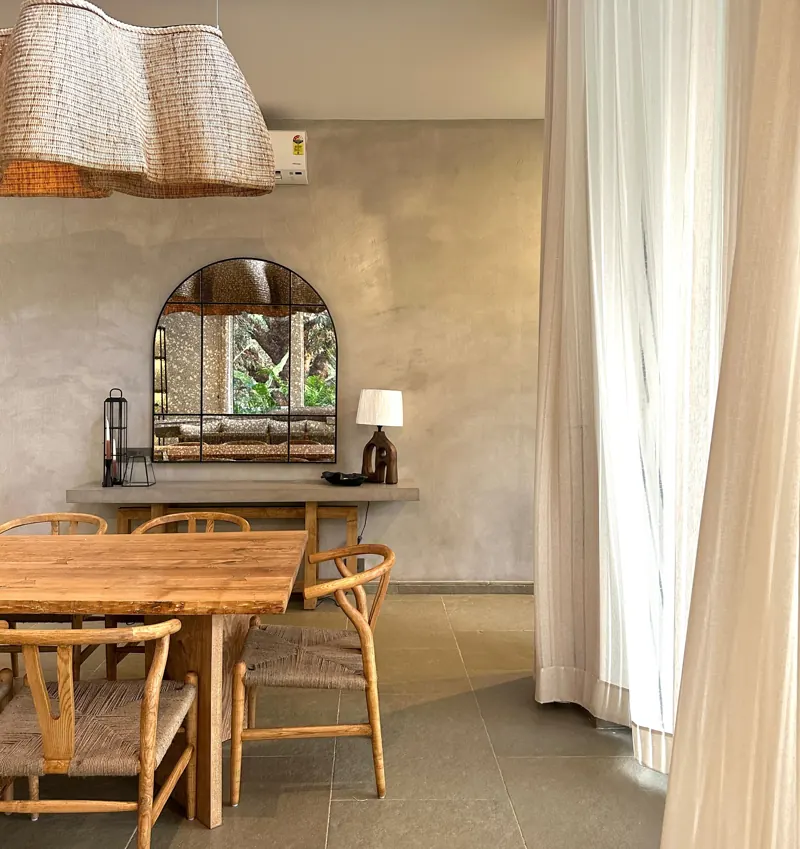
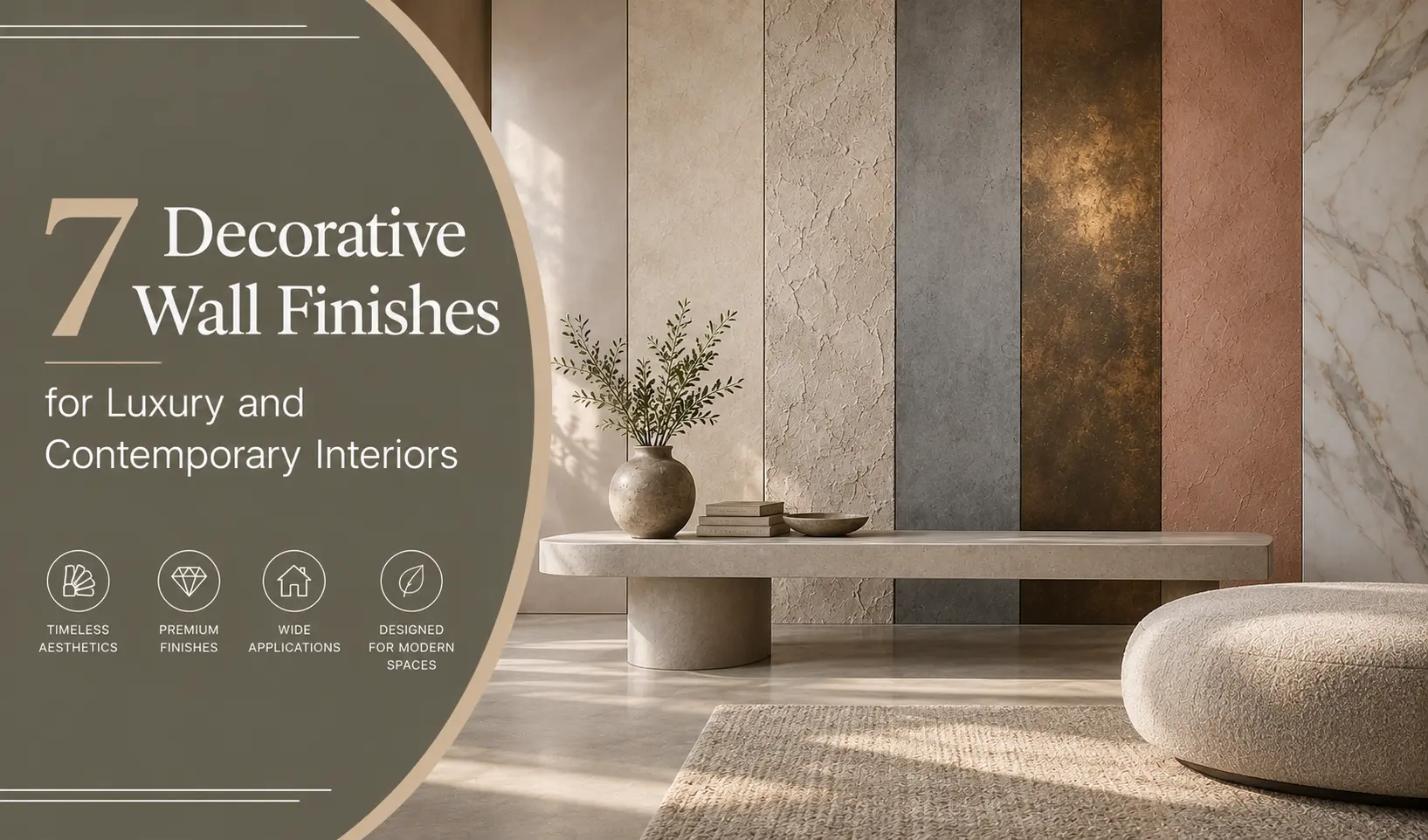
Walls do more than define a room. They influence how natural light moves through a space, how colours and materials work together, and whether an interior feels calm, dramatic, warm or architectural.
That is why decorative wall finishes have become an important part of contemporary interior design. Instead of relying entirely on flat paint or wallpaper, homeowners, architects and interior designers can explore mineral finishes, polished plaster effects, concrete-inspired surfaces, metallic accents and textured decorative coatings to give walls a more distinctive character.
The challenge is choosing the right finish. A softly textured wall that works beautifully in a bedroom may not create the same effect in a hotel reception or a contemporary retail space. Colour, lighting, substrate, application technique and maintenance all influence the final result.
At ColorTale, the range of decorative and architectural surface finishes offers different ways to approach these decisions. This guide explores seven finish types, what makes each one distinctive, where it can work best, and what to consider before specifying it.
7 Decorative Wall Finishes at a Glance
| Wall finish | Visual character | Consider it for |
|---|---|---|
| 1. Venetian and polished plaster effects | Refined, layered and subtly luminous | Feature walls, formal living areas and entrances |
| 2. Limewash | Soft, matte and naturally tonal | Bedrooms, living rooms and understated interiors |
| 3. Lime plaster and artisanal textures | Tactile, mineral and handcrafted | Feature walls and material-led interiors |
| 4. Concrete-inspired finishes | Minimal, understated and architectural | Contemporary homes, offices and retail spaces |
| 5. Metallic decorative finishes | Reflective, expressive and dramatic | Niches, reception areas and selected accent walls |
| 6. Textured decorative paint | Patterned, dimensional or softly varied | Living rooms, dining areas and feature walls |
| 7. Marble-inspired decorative finishes | Veined, layered and stone-like | Statement walls and sophisticated interior settings |
These are broad finish families, not seven interchangeable products. The exact appearance and performance depend on the chosen material system, application method and substrate.
1. Venetian and Polished Plaster Effects: Refined, Layered Walls
Venetian and polished plaster effects are associated with walls that have greater visual depth than a conventional flat coating. Depending on the system and finishing technique, the surface may appear softly polished, subtly cloudy or reminiscent of natural stone.
The appeal comes from the relationship between material, craftsmanship and light. Instead of relying on a printed pattern, the finish develops its character through application, layering and surface refinement.
Where does this finish work best?
Venetian and polished plaster effects can be considered for:
- Living room feature walls
- Entrance foyers and corridors
- Formal dining spaces
- Boutique hospitality interiors
- Selected commercial reception areas
In contemporary interiors, restraint is often more effective than using a highly polished surface everywhere. A carefully selected wall can introduce visual richness without competing with furniture, artwork or architectural detailing.
What should you consider?
The desired sheen, wall flatness, lighting direction and applicator skill all affect the result. Samples should be viewed under the lighting conditions planned for the finished room.
Explore ColorTale's Venetian Facade finish and Veniso finish to investigate relevant surface options.
2. Limewash: Soft, Matte and Naturally Varied
Limewash is valued for its understated appearance. Rather than creating a perfectly uniform colour, it can introduce gentle tonal variation that gives a wall a softer, more organic character.
Its appeal is particularly strong in interiors where the objective is to create atmosphere without introducing an obviously decorative pattern.
A limewashed wall can complement timber, natural stone, linen, muted colours and simple architectural forms. Depending on the formulation, substrate and application technique, the final result may show subtle brush movement and changes in tone.
Where does limewash work best?
Consider limewash for:
- Bedrooms and relaxed living spaces
- Contemporary homes with natural materials
- Quiet feature walls
- Boutique cafés and hospitality interiors
- Interiors where soft tonal variation is preferred over pronounced texture
Limewash is not limited to rustic or traditional interiors. When its colour and variation are carefully controlled, it can work well in minimal and contemporary spaces.
What should you consider?
The substrate and existing coating matter because limewash is generally a relatively thin finish. Compatibility, surface preparation and the intended exposure must be checked before application. Limewash should not automatically be treated as waterproof or suitable for every wall.
Explore ColorTale Lime Wash and the guide to limewash colours for further selection guidance.
3. Lime Plaster and Artisanal Textures: Make the Wall Part of the Architecture
Some interiors need more than colour variation. They need the wall itself to contribute texture, depth and material character.
Lime plaster and other artisanal plaster finishes can provide this quality. Depending on the specific system, the surface may be smooth and restrained, softly textured or visibly shaped by the applicator's technique.
The result can feel handcrafted without necessarily appearing rustic. Subtle movement can bring warmth to a minimalist interior, while a stronger texture can give a feature wall a more expressive role.
Where does artisanal plaster work best?
- Large living room walls
- Bedroom feature walls
- Entrance spaces
- Boutique hotels and restaurants
- Selected retail and commercial interiors
A textured finish can be especially effective when paired with controlled lighting. Grazing light may reveal surface movement and shadows that are less noticeable under diffuse illumination.
What should you consider?
The intended texture, colour variation, substrate preparation and acceptable degree of handcrafted variation should be agreed upon before the full installation. A larger sample or site mock-up can be more informative than a small colour card.
Explore ColorTale Lime Plaster and Classico Lime for relevant finish options.
4. Concrete-Inspired Finishes: Minimal and Architectural
Concrete-inspired decorative finishes create a restrained, contemporary appearance associated with urban interiors, minimalist architecture and industrial-influenced design.
Depending on the selected material, the surface may feature soft grey tones, subtle tonal movement or a more pronounced cement-like character. This allows designers to introduce the visual language of concrete without assuming that exposed structural concrete is the only way to achieve the effect.
Where do concrete-inspired finishes work best?
- Contemporary living rooms
- Home offices and studios
- Retail interiors
- Restaurants and cafés
- Feature walls in modern residential projects
The finish often works best when balanced with warmer materials such as timber, natural fabrics and carefully selected lighting. Otherwise, a large expanse of cool grey can make a room feel visually hard or monotonous.
What should you consider?
“Concrete finish” describes an appearance, not a single technical specification. Decorative coatings, microcement systems and other cement-based finishes have different requirements. Their suitability for floors, wet areas and other applications must be confirmed for the actual system rather than inferred from the visual effect.
Explore ColorTale Cemento and Micro Cement to compare relevant options.
5. Metallic Decorative Finishes: A Carefully Controlled Statement
Metallic decorative finishes introduce reflection and visual movement that ordinary matte coatings do not provide in the same way. Depending on the finish, the result may suggest brushed metal, bronze, warmer metallic tones or a more luminous accent.
Their strength lies in selective use. A metallic finish can establish a focal point or reinforce a design concept, but applying a highly reflective treatment across every wall may overwhelm the rest of the interior.
Where do metallic finishes work best?
- Entrance niches
- Reception areas
- Selected dining room walls
- Retail display backgrounds
- Boutique hospitality interiors
Metallic finishes can work with stone, dark timber, neutral plaster and carefully chosen lighting. Their appearance may change substantially with the angle and intensity of illumination.
What should you consider?
Request samples and evaluate them under the intended lighting. The underlying material, application technique and final sheen will determine whether the result feels subtle or dramatic.
Explore ColorTale Classico Metallic and Fuso Mettalo for metallic surface possibilities.
6. Textured Decorative Paint: Add Character Without Changing the Entire Material Palette
Decorative paint finishes offer a wide range of visual effects, from understated texture and tonal movement to more pronounced patterns. They can be a useful choice when a project calls for a distinctive wall treatment while retaining the flexibility of a coating-based finish.
The term covers different techniques and formulations, so not every decorative paint creates the same texture, sheen or durability.
Where do textured decorative paints work best?
- Living room feature walls
- Dining areas
- Bedrooms
- Studios and creative workspaces
- Selected retail and hospitality interiors
The best result usually comes from matching the intensity of the finish to the room. A subtle effect can support a calm interior, while a more expressive treatment can establish a focal point.
What should you consider?
Confirm the exact product, substrate requirements, cleaning guidance and suitability for the intended location. Do not assume that every decorative coating has the same washability or wear resistance.
ColorTale's Decorative Paints collection is the relevant starting point for exploring these options. For a more detailed introduction to paint-based effects, read the Decorative Paints Guide.
7. Marble-Inspired Decorative Finishes: The Appeal of Veining and Depth
Marble-inspired decorative finishes aim to bring the visual character of stone into a wall surface through colour, veining, tonal variation and layered effects.
They can be useful when the design calls for a sophisticated focal point but the project team wants to explore a decorative surface rather than automatically specifying natural stone slabs.
The appearance varies considerably between systems. Some finishes aim for a restrained, softly veined look; others create a stronger, more dramatic stone-inspired statement.
Where do marble-inspired finishes work best?
- Living room feature walls
- Entrance and reception areas
- Selected dining spaces
- Boutique commercial interiors
- Statement backgrounds for furniture or artwork
A marble-inspired finish should work with the wider material palette rather than compete with every other surface. If the room already contains strongly veined stone, patterned flooring or expressive furniture, a quieter wall may create a better balance.
What should you consider?
Ask to see the actual finish sample and understand how the pattern is created. Decorative marble effects are not the same as natural marble in composition, physical properties or maintenance requirements.
Explore ColorTale Carrara as a starting point for marble-inspired surface options. Confirm the specific finish and application with the ColorTale team before making a project specification.
How to Choose the Right Decorative Wall Finish
The best decorative wall finish is not necessarily the most expensive, reflective or textured. It is the one that meets the design objective and the practical requirements of the space.
Use the following questions to narrow your options.
1. What should the wall contribute to the room?
If the wall should remain a quiet backdrop, a soft limewash or restrained decorative paint effect may be appropriate.
If it needs to become a focal point, consider a more dimensional plaster, metallic accent or marble-inspired finish.
2. How will the finish respond to light?
Natural daylight, warm artificial lighting and grazing light can produce very different results on the same surface.
Evaluate samples in the actual room whenever possible, especially when selecting polished, metallic or strongly textured finishes.
3. What is the condition of the substrate?
A decorative finish cannot compensate for an unstable, damp or poorly prepared wall. Existing coatings, cracks, unevenness and moisture must be assessed before the finish is selected.
Read ColorTale's guide to substrate preparation for seamless surface finishes for further context.
4. How will the space be used?
A bedroom feature wall, a busy retail corridor and a hotel reception have different requirements. Contact, cleaning, moisture exposure and repair expectations should influence the specification.
Bathrooms and other wet areas require particular care. A decorative finish should not be assumed to replace a suitable waterproofing system.
5. How much variation do you want?
Hand-applied finishes may have intentional differences in colour, texture and surface movement. Decide whether the project needs a highly consistent appearance or whether visible variation is part of the design.
For larger projects, a site mock-up can help establish the desired finish before full application.
Where Decorative Wall Finishes Make the Biggest Difference
Decorative wall finishes can support different design objectives depending on the room and its materials.
Living rooms: Use a restrained mineral finish for atmosphere or a more expressive surface for a focal wall. The finish should complement the furniture, flooring and lighting.
Bedrooms: Soft, matte finishes can create a quieter visual environment. More pronounced texture may work where the wall is intended to be a central design feature.
Offices and studios: Concrete-inspired or carefully selected textured finishes can reinforce a contemporary material palette. Maintenance and the character of the workspace should guide the selection.
Restaurants, cafés and retail spaces: A distinctive wall treatment can help establish the identity of a space. The chosen system should also suit the expected level of contact, cleaning and use.
Hotels and hospitality interiors: Decorative surfaces can contribute to a coherent visual experience across reception areas, guest spaces and other selected applications. Consistency of specification and execution becomes especially important across larger areas.
ColorTale's project portfolio provides a starting point for exploring completed work and understanding how architectural finishes can be incorporated into different kinds of spaces.
Why Samples and Application Quality Matter
A finish selected from a photograph may look different when applied to a full wall. Scale, natural light, artificial lighting, surrounding materials and application technique all influence the final appearance.
Before confirming a decorative wall finish:
- Review a physical sample rather than relying only on a digital image.
- View the sample under the room's intended lighting.
- Compare it with the flooring, furniture, stone, timber and other nearby materials.
- Confirm the substrate preparation and application requirements.
- Establish acceptable colour and texture variation.
- Check cleaning, maintenance and repair guidance for the specific system.
For premium interiors, the quality of the final result depends on more than the material name. Appropriate preparation, a suitable specification and skilled application are all essential.
Final Thoughts: Choose a Finish That Belongs in the Space
Decorative wall finishes offer different ways to shape the atmosphere of an interior. Venetian and polished plaster effects can introduce refined depth; limewash can create soft tonal variation; artisanal plaster can add texture; concrete-inspired surfaces can support contemporary architecture; metallic finishes can establish a focal point; textured decorative paint can introduce pattern; and marble-inspired effects can bring a stone-like visual character to selected walls.
There is no universal winner. The right choice depends on the architecture, desired appearance, substrate, lighting, room function and maintenance expectations.
ColorTale's range of decorative and architectural surface finishes provides options to explore across these different design directions. Start by identifying the effect you want, compare suitable samples, and confirm the technical requirements before finalising the specification.
Planning a residential or commercial interior? Explore ColorTale's decorative paints and wall finishes, browse the product collection, or contact ColorTale to discuss the finishes relevant to your project.