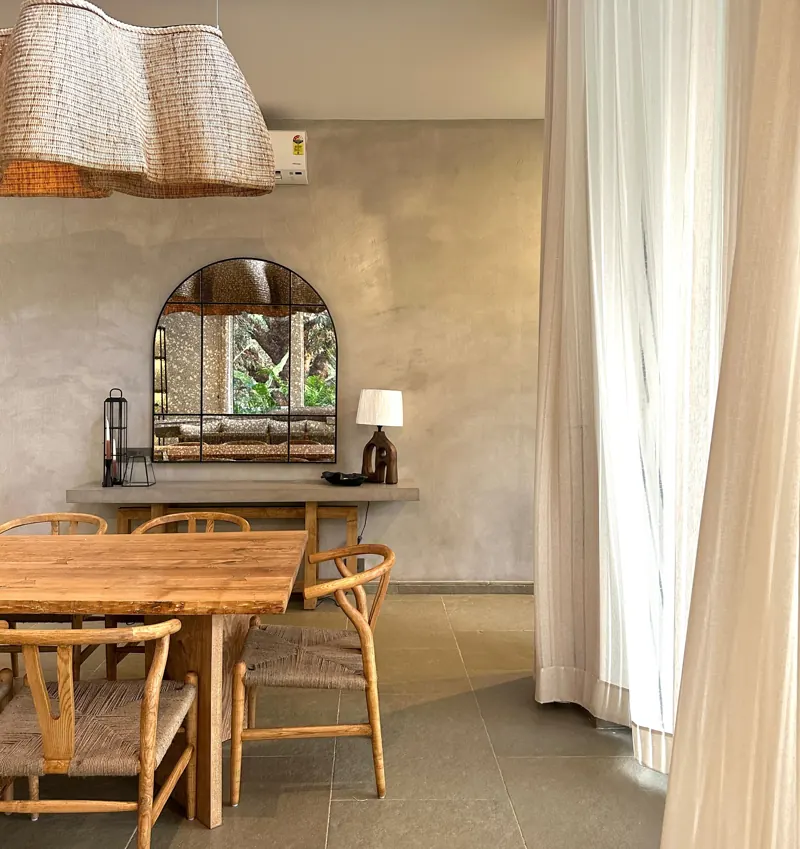
For a joint-free floor, you have five main decorative options:
- micro cement: thin, seamless, can go over tiles;
- micro concrete: stronger, for heavy traffic;
- Cemento: a smooth concrete look in a minimal-thickness coat;
- Pastellone: smooth lime and marble tradition, also for wet areas;
- epoxy terrazzo: poured, with chips.
Choose by traffic, by wet areas, by whether you are keeping the existing floor, and by the look you want.
The Options Compared
| System | Base | Look | Strength stated by Colortale | Over existing floor | Wet areas |
|---|---|---|---|---|---|
| Micro cement | Cement, polymers, pigments | Seamless, matt to satin | Applied to floors and stairs | Yes: adheres to tiles, wood, concrete | Waterproof when sealed |
| Micro concrete | Cement composite with micro silica | Seamless, concrete | Durable against heavy traffic; crack-resistant | Yes: low density, spreads over existing substrates | Used in bathrooms per product page |
| Cemento | Concrete-based | Smooth, matt, natural concrete texture | Durable walls, floors and furniture | Minimal thickness preserves dimensions | Not stated |
| Pastellone | Pastellone Veneziano tradition; natural option with hydraulic lime and marble | Smooth, lightly matt | Durability with timeless finish | Not stated | Bathrooms and saunas |
| Epoxy terrazzo | Resin with chips | Speckled, poured | See page 09 | See page 09 | See page 09 |
Colortale's terrazzo range is also available as lightweight tiles, which give the terrazzo look but with joints. Colortale describes terrazzo as chips of marble, granite, quartz or glass set in resin or cement and polished; it is low maintenance with a non-porous surface, many versions use recycled material, and the tiles are lightweight and easy to install, for floors, walls and countertops, with glossy interior and exterior finishes (terrazzo).
Micro Cement: Thin and Versatile
A strong choice when you want to keep the existing floor and continue onto walls, stairs or a vanity. Colortale's micro cement adheres to tiles, wood and concrete, is applied in thin layers, and is waterproof when sealed properly. Compare it with tiles in microcement vs tiles.
Micro Concrete: For Heavy Traffic
Colortale's micro concrete uses micro silica for strength. It is described as durable against heavy traffic and crack-resistant, and its low density lets it spread over existing substrates. Mix ratios are tailored per project. It suits busy homes, shops and commercial floors. The difference from micro cement is explained in micro cement vs micro concrete. If you are replacing an old IPS floor, read micro concrete vs IPS flooring.
Cemento: A Smooth Concrete Look
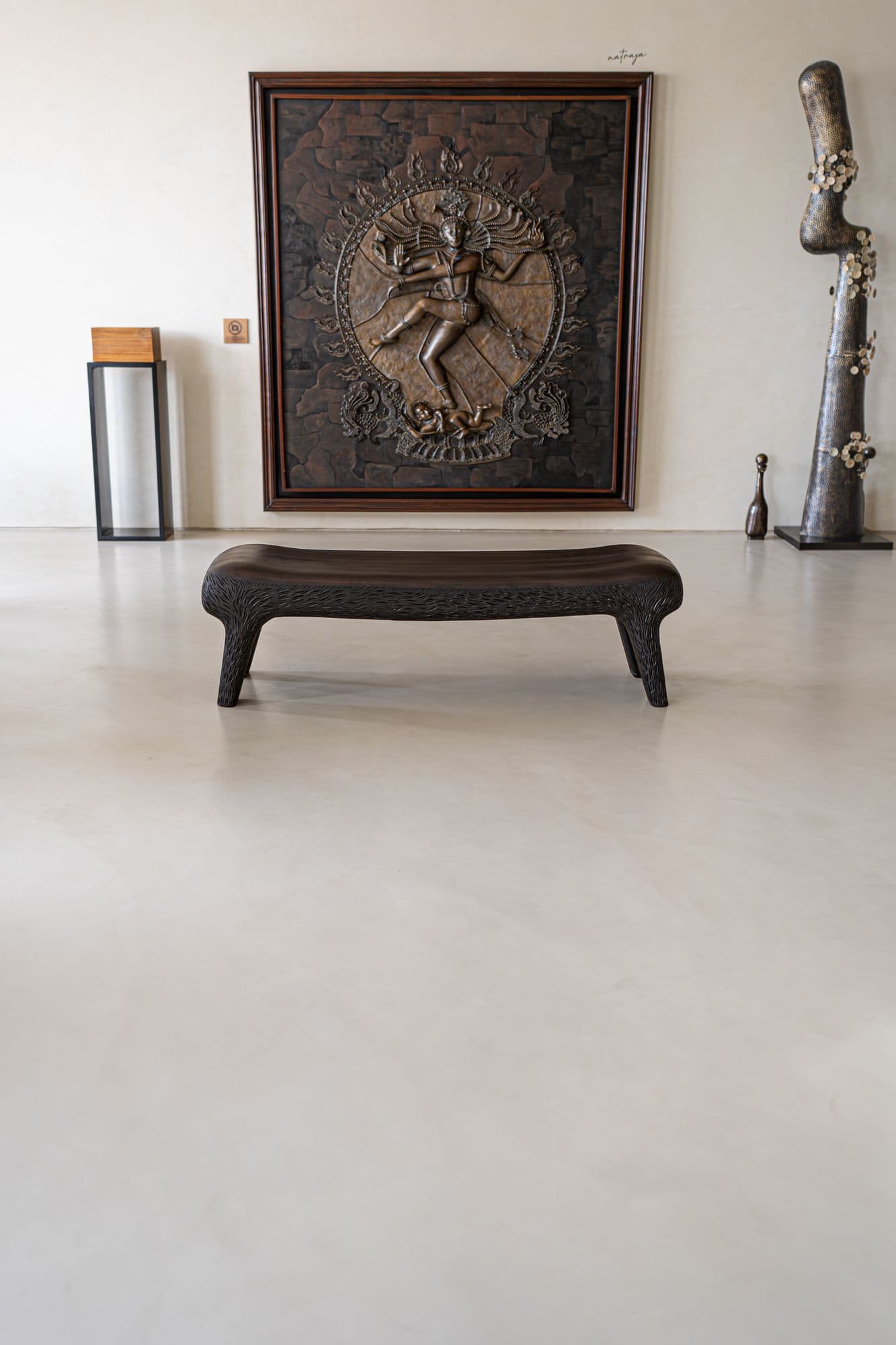
Cemento is a concrete-based finish applied in a minimal-thickness coat, preserving the original dimensions of the surface. It gives seamless, matt, industrial-style floors and walls. Colortale has used it on floors at Takshini (New Delhi), the Skin Story clinic and the Bluorng store. See microcement flooring ideas.
Pastellone: Seamless Floors Into Wet Areas
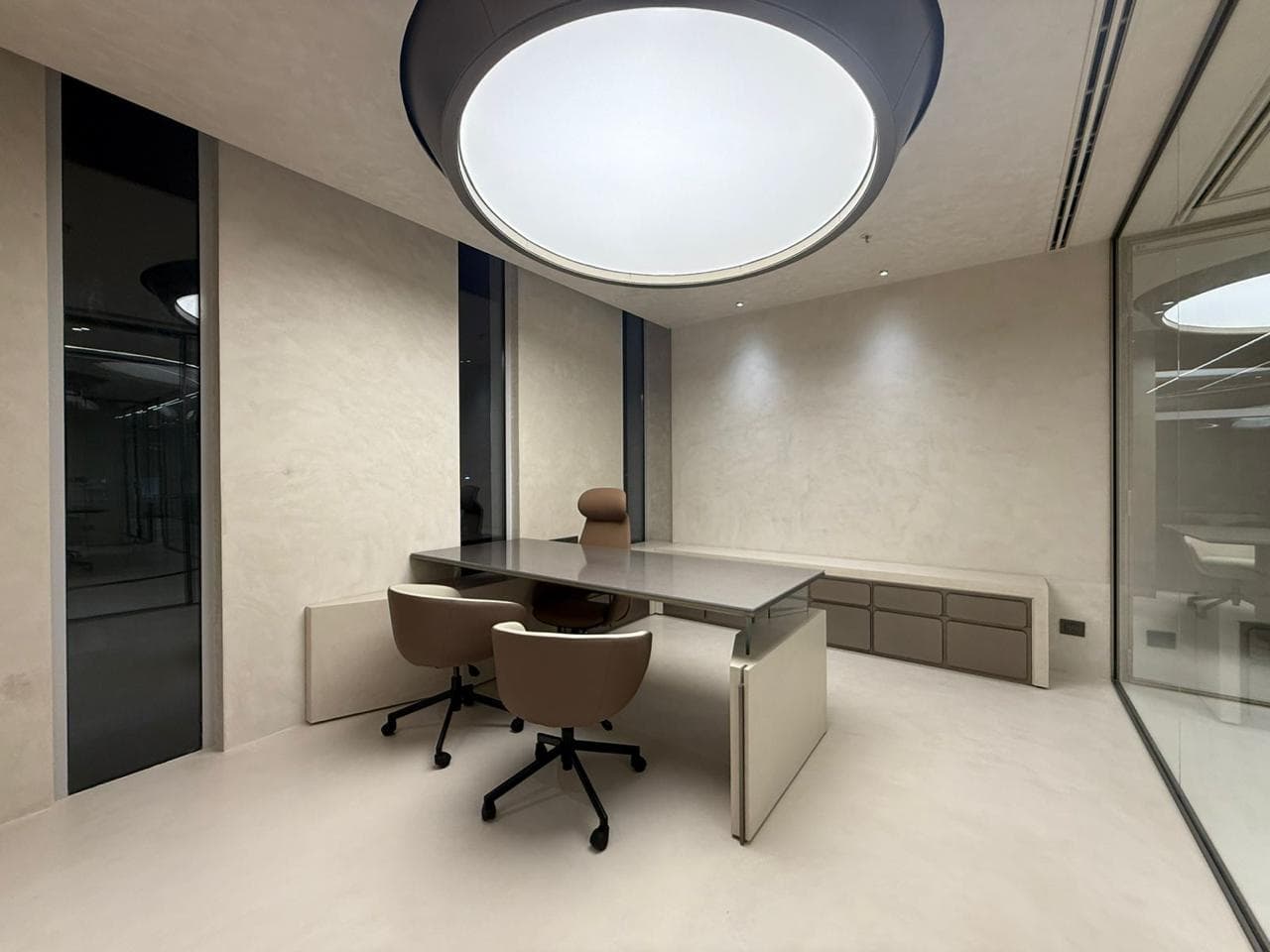
Pastellone combines the Pastellone Veneziano tradition with modern technique. Colortale lists it for floors, walls, stairs and wet areas such as bathrooms and saunas, plus worktops, for a continuous finish. A 100% natural version uses hydraulic lime and marble powders. It runs under the limewash walls at Colortale's Faridabad Office.
Epoxy Terrazzo and Epoxy
Epoxy terrazzo is a poured resin floor with decorative chips; batch page 09 covers it. Plain epoxy is a resin coating often used in industrial settings; for how it compares, read microcement vs epoxy flooring.
How to Choose
| If your priority is... | Consider |
|---|---|
| Keeping the existing tiles | Micro cement; micro concrete |
| Heavy traffic (shops, commercial) | Micro concrete; Cemento (used in a store and a clinic) |
| One finish from floor into the bathroom | Micro cement; Pastellone |
| A smooth, minimal concrete look | Cemento |
| A natural, lime-based option | Pastellone Green Line |
| Speckled chips | Epoxy terrazzo; terrazzo tiles (with joints) |
Questions to Ask Before You Choose
- Is my existing floor sound enough to go over?
- What preparation does it need?
- What is the slip resistance of the finished floor, especially in bathrooms and near entrances?
- How long is each area out of use?
- How do I clean and reseal it?
The Short Answer
Micro cement for thin, versatile floors over existing tiles. Micro concrete for heavy traffic. Cemento for a smooth concrete look. Pastellone for a lime-based floor that continues into wet areas. Contact us for a site assessment.
Frequently Asked Questions About Seamless Flooring
What is seamless flooring?
A floor finish applied as one continuous surface without tile or slab joints, such as micro cement, micro concrete, Cemento, Pastellone or epoxy terrazzo.
Which seamless floor is best for heavy traffic?
Colortale describes micro concrete as durable against heavy traffic and crack-resistant.
Can a seamless floor go over existing tiles?
Yes. Micro cement adheres to tiles, and micro concrete spreads over existing substrates, after preparation.
Which seamless floor works in bathrooms?
Micro cement, which is waterproof when sealed properly, and Pastellone, which is listed for bathrooms and saunas.
What is the difference between micro cement and micro concrete?
Micro concrete is a stronger cement composite with micro silica for heavy traffic; micro cement is thinner and also used on walls.
Is terrazzo seamless?
Epoxy terrazzo is poured and seamless. Colortale's terrazzo tiles have joints.
Is terrazzo better than tiles?
Terrazzo is itself available as tiles. Colortale's terrazzo tiles are lightweight and low maintenance with a non-porous surface; choose poured epoxy terrazzo if you want no joints at all.
Is there a natural seamless floor option?
Yes. Pastellone has a 100% natural Green Line version made with hydraulic lime and marble powders.
Which seamless floor gives a concrete look?
Cemento, micro cement and micro concrete all give a concrete-like look.